
PE Pipe vs Steel Frame Fabric Buildings: What Buyers Should Know Before Building
Steel frame fabric buildings have become a go-to solution for commercial storage, warehousing, and industrial operations. As demand grows, so does the number of construction approaches available. One of the most common questions buyers face early in the process is whether a pipe frame fabric building or a steel frame fabric building is the right choice.
At a glance, both options use fabric as the enclosure. The differences lie beneath the surface. Understanding how each system works, how it performs over time, and what it handles best can help ensure the structure you choose supports your operation today and well into the future.
What Is a Pipe Frame Fabric Building?
Manufacturers typically build pipe frame fabric buildings using curved or straight pipe members made from PE pipe, PVC pipe, or light-gauge steel tubing. Most pipe frame fabric buildings use single tube framing, where one round tube forms each structural member. These pipe elements come together to form the structure, and the fabric membrane pulls tight across the frame. Because of their simplified construction, pipe frame fabric buildings suit short-term or seasonal coverage. For example, common applications include temporary storage, seasonal shelter, or overflow space where long-term structural performance is not the primary concern.
Pipe frame fabric buildings often appeal to buyers looking for a lower upfront cost and faster assembly. However, their design limitations can affect load capacity, durability, and long-term adaptability depending on the environment and use.
How To Define Steel Frame Fabric Buildings?
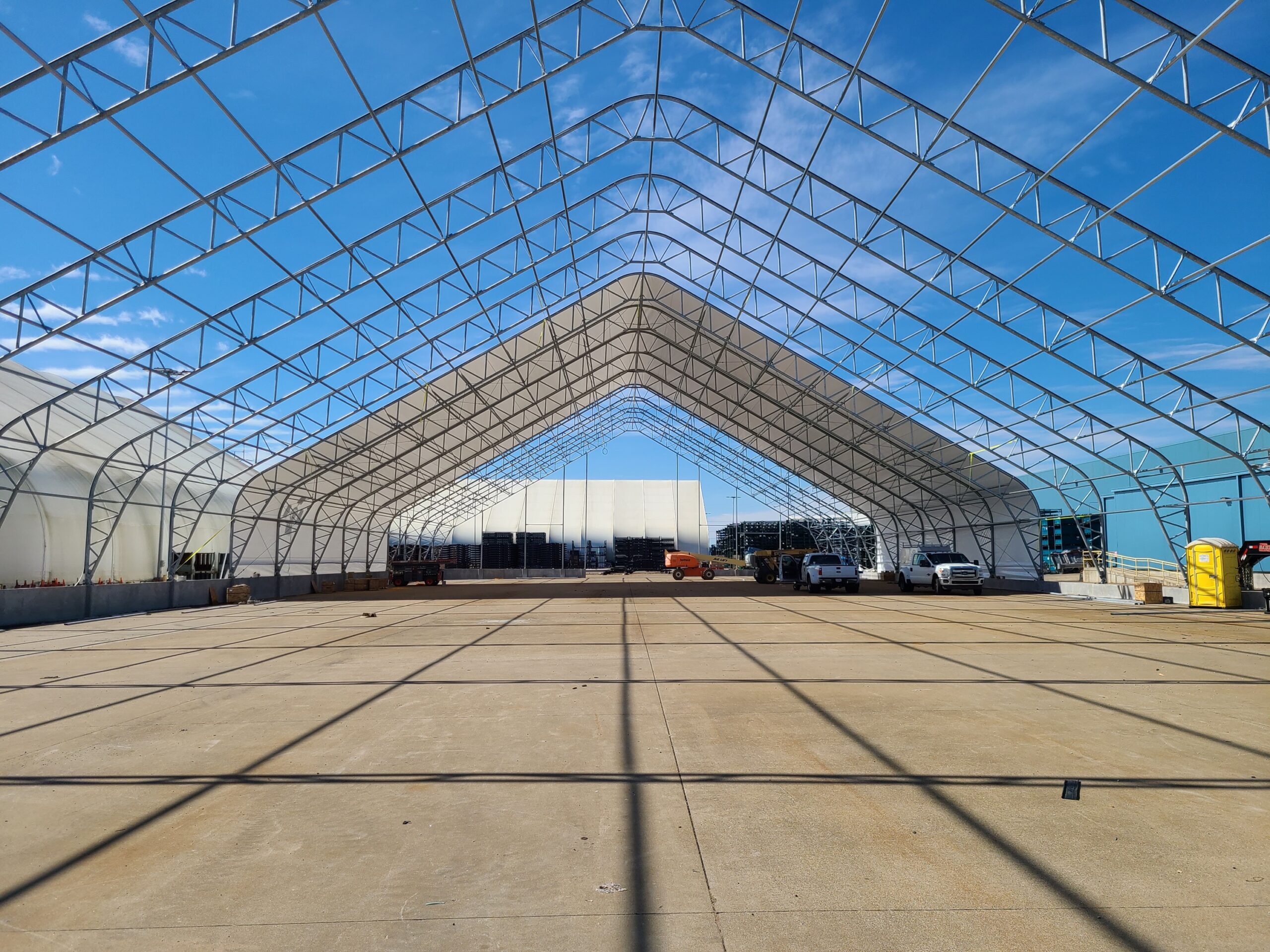
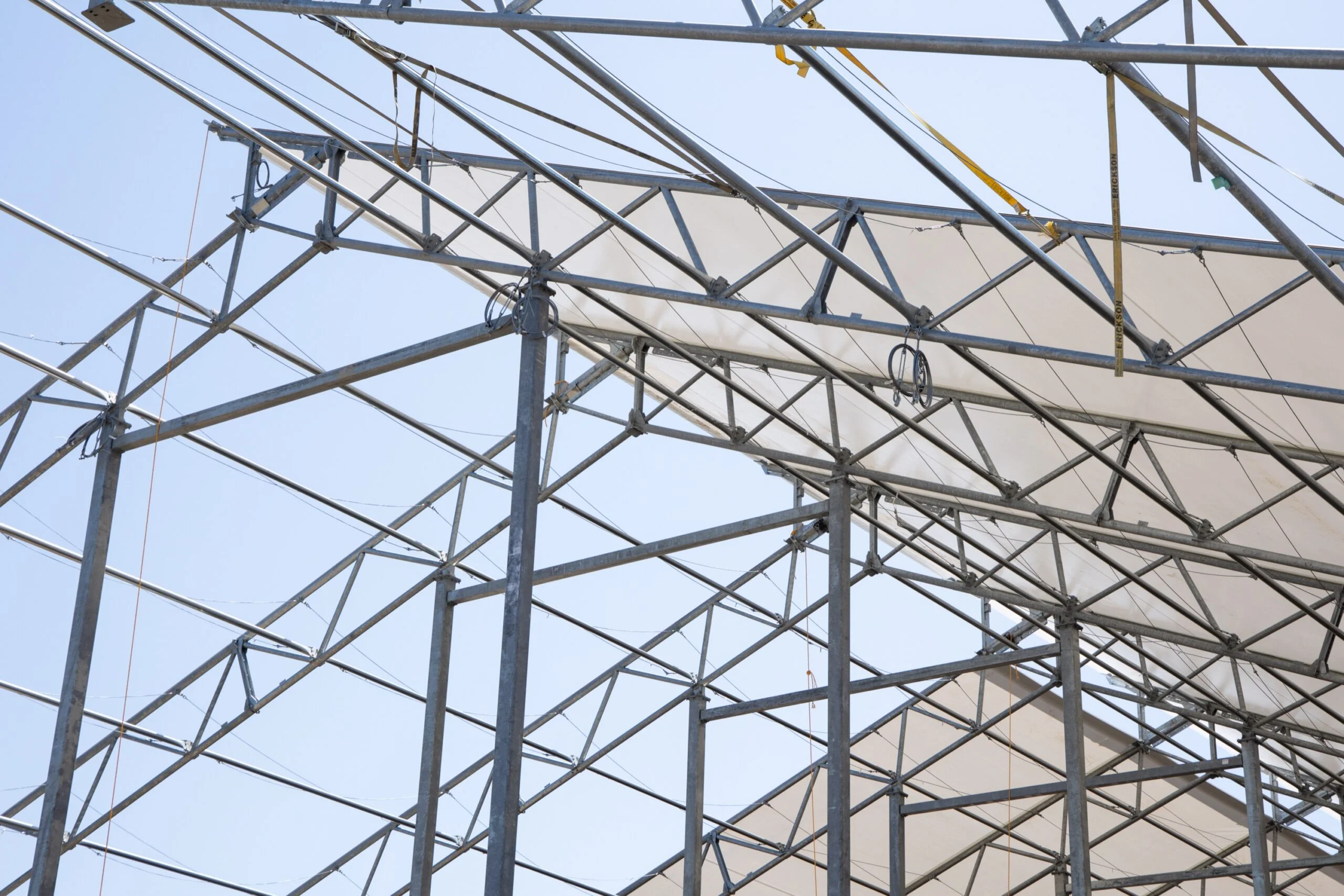
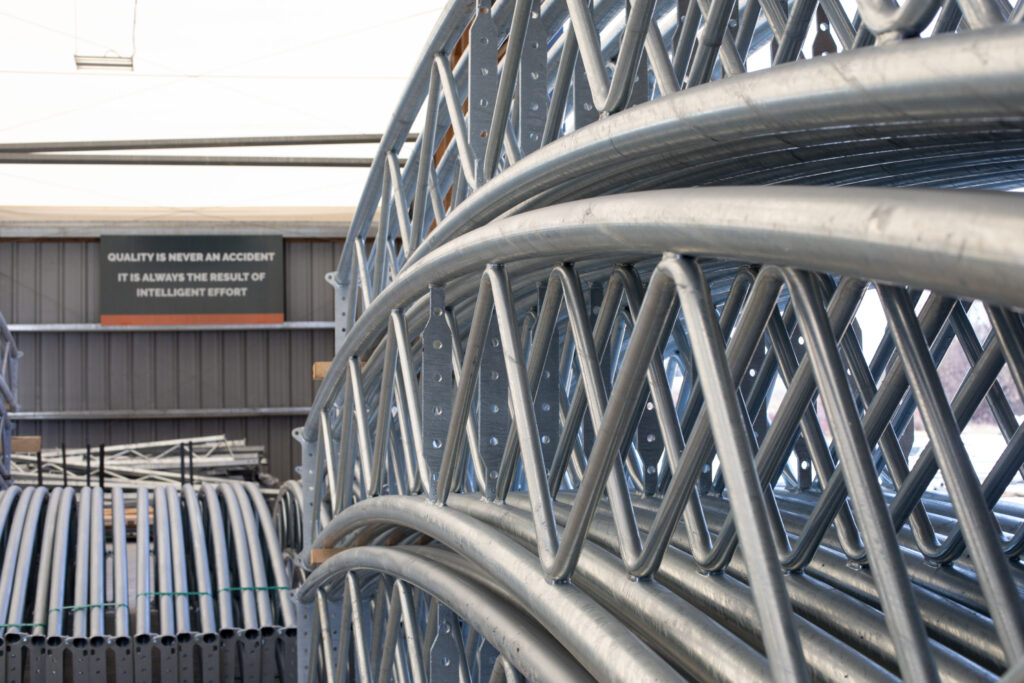
Steel frame fabric buildings use engineered steel components to carry structural loads. The fabric acts as a durable enclosure, not a structural element. Britespan’s steel frame buildings are built around a double chord truss system, where two parallel steel chords are connected by webs to form each structural member. This design carries significantly greater loads, spans wider clear distances, and holds alignment and rigidity under conditions that would stress a single tube frame. These buildings serve prefab applications, manufactured warehouse space, and permanent operational facilities.
Britespan designs steel frame systems around site-specific requirements. Factors such as snow loads, wind exposure, occupancy type, and foundation conditions all inform the engineering process. This approach results in a structure that behaves much like traditional construction while retaining the speed, flexibility, and natural light benefits of fabric buildings.
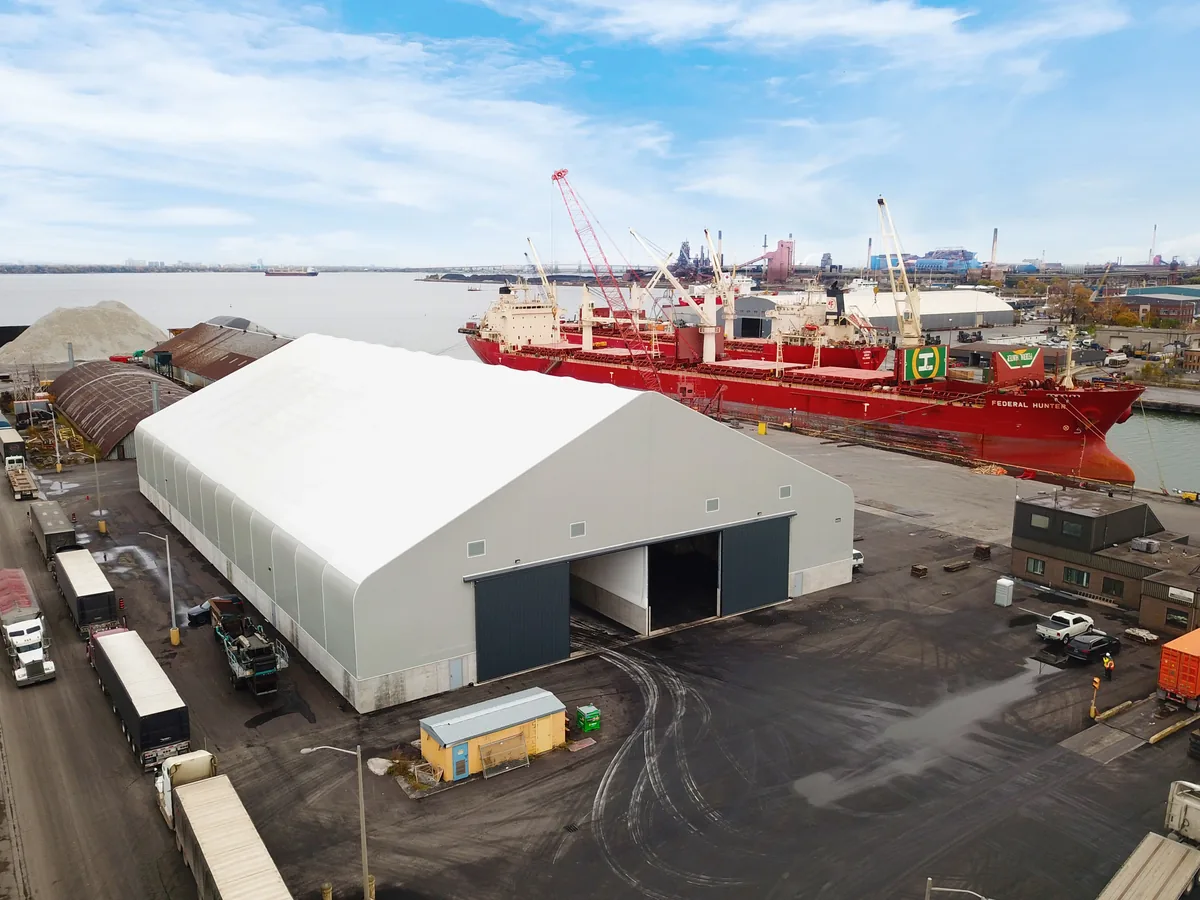
Overall, steel frame fabric buildings serve long-term applications well, including warehousing, manufacturing, equipment storage, salt and sand storage, and logistics operations where reliability and consistency matter.
How Steel Frame Fabric Buildings Handle Load, Stability, and Longevity
One of the most important differences between pipe frame and steel frame fabric buildings is how they handle structural loads over time.
Pipe frame fabric buildings, built on single tube framing, typically rely on the flexibility of the pipe itself to absorb loads. This can work in mild conditions or controlled environments, but performance may vary in areas exposed to heavy snow, strong winds, or frequent freeze-thaw cycles.
Steel frame fabric buildings are engineered systems. Loads are transferred through steel members designed to maintain shape, alignment, and tension under stress. This results in greater structural stability and more predictable performance across seasons.
For buyers planning a steel frame warehouse or a manufactured warehouse facility, this consistency is often a deciding factor. Stable frames help maintain fabric tension, protect door alignment, and reduce wear caused by movement or deflection.
Maintenance, Lifespan, and Re-Cover Planning
Naturally, maintenance expectations differ significantly between the two systems.
Pipe frame fabric buildings may require more frequent adjustments to maintain fabric tension and alignment, especially as materials flex or settle. Over time, exposure to UV, temperature swings, and mechanical stress can affect pipe integrity and connections.
Steel frame fabric buildings deliver long-term performance. Hot-dip galvanized steel components resist corrosion and, according to the American Galvanizers Association, can deliver 70 to 90+ maintenance-free years on large structural steel before requiring any touch-up or repair. In turn, that makes them a reliable long-term material choice for fabric building frames. The building typically needs only routine inspections, basic cleaning, and seasonal checks.
When the fabric enclosure reaches the end of its service life, steel frame fabric buildings allow for straightforward re-covering without replacing the frame. As a result, this extends the usable life of the building while preserving the original investment.
Flexibility and Expansion for Growing Operations
Both pipe frame and steel frame fabric buildings offer flexibility compared to traditional construction, but the degree of adaptability differs.
Pipe frame fabric buildings typically offer less flexibility in size and modification potential. As a result, expanding or reconfiguring the structure can require significant changes to the frame system.
However, Britespan commonly designs steel frame fabric buildings with future growth in mind. You can often add modular length extensions, additional door openings, and layout changes without disrupting daily operations. Consequently, this makes them well suited for prefab buildings that need to scale alongside business growth.
For operations planning a manufactured warehouse or expanding production footprint, this flexibility can be a major advantage.
Steel frame fabric buildings aren’t one-size-fits-all. Britespan offers multiple configurations designed to match the scale, load requirements, and long-term goals of different operations.
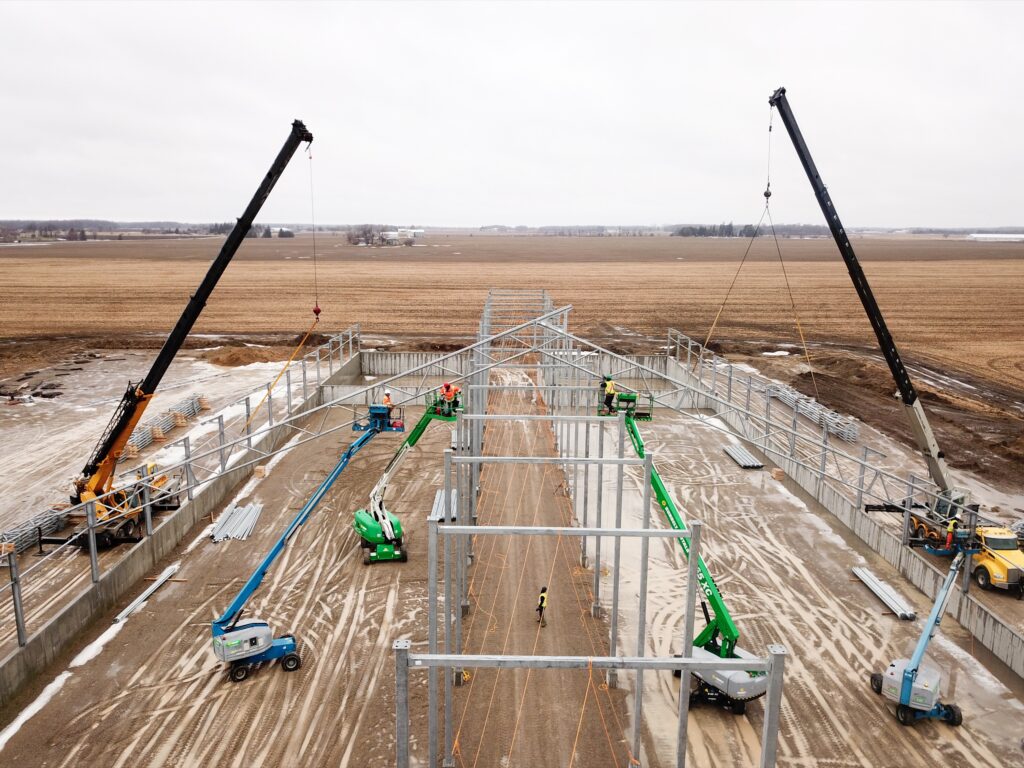
Steel Frame Fabric Building Series: Atlas and Magnum
The Atlas
A scalable, configurable option suited for operations that need open, flexible space with room to expand. You can add bays as the operation grows, making it a practical fit for prefab buildings and adaptable storage applications.
The Magnum
Engineered for heavy snow loads, large spans, and demanding environments. The Magnum excels in large-scale manufactured warehouse use, industrial storage, and high-exposure sites where structural performance is non-negotiable.
Which Steel Frame Fabric Buildings Make Sense for Your Use?
Choosing between a pipe frame fabric building and a steel frame fabric building comes down to how you plan to use it and how long it needs to perform.
Pipe frame fabric buildings may be appropriate for short-term coverage, seasonal applications, or situations where structural demands are minimal.
In contrast, steel frame fabric buildings suit long-term use, higher load requirements, and facilities that support daily operations. Buyers commonly select them for steel frame warehouse applications, industrial storage, and prefab buildings that serve as permanent infrastructure.
Choosing the Right Structure for Your Operation
Fabric buildings offer speed, versatility, and efficiency across many industries. Understanding the differences between pipe frame and steel frame systems ensures those benefits align with your operational goals rather than creating limitations down the road.
For buyers evaluating fabricated building structures, the key is to match the system to the demands of the site, the environment, and the work being done inside. When reliability, longevity, and adaptability matter, steel frame fabric buildings provide a foundation built to perform.
Finally, if you are weighing your options or planning a new facility, working with a team that understands engineered fabric structures can help ensure the building you choose supports your operation for years to come. Contact us today to get started.
Written by: Lindsay Kenny | Technical Review by: George Lawless