
Fabric Cow Barn Design for U.S. Cattle Operations
For cattle producers across the United States, cow barn design is no longer just about covering livestock. From dairy operations in Wisconsin managing long winters to beef producers in Texas planning for heat and airflow, a cattle shed has to work hard every day. Climate, equipment size, and local permitting all vary by region, but expectations around durability and efficiency stay the same.
In fact, a modern cow barn is not simply a shelter. It is part of the operation itself. The right design supports cattle movement, simplifies daily chores, and holds up season after season. Let’s break down what defines effective cattle housing in the U.S., why fabric structures are increasingly chosen by producers, and how engineered design supports long term growth.
What Defines a Modern Cow Barn in the United States
A modern cattle shed is a purpose built agricultural structure that accounts for how cattle are actually managed today, not retrofitted to keep up later. Britespan engineers these buildings from the outset to support modern equipment, consistent ventilation, and the regional weather conditions producers face across the U.S.
In practice, a well-designed cattle shed prioritizes:
- Wide, unobstructed interiors that support feeding, bedding, and equipment flow
- Sidewall heights sized for today’s loaders, mixers, and cleaning equipment
- Ventilation strategies matched to local climate and seasonal housing needs
- Structural systems engineered to county-level snow and wind load requirements
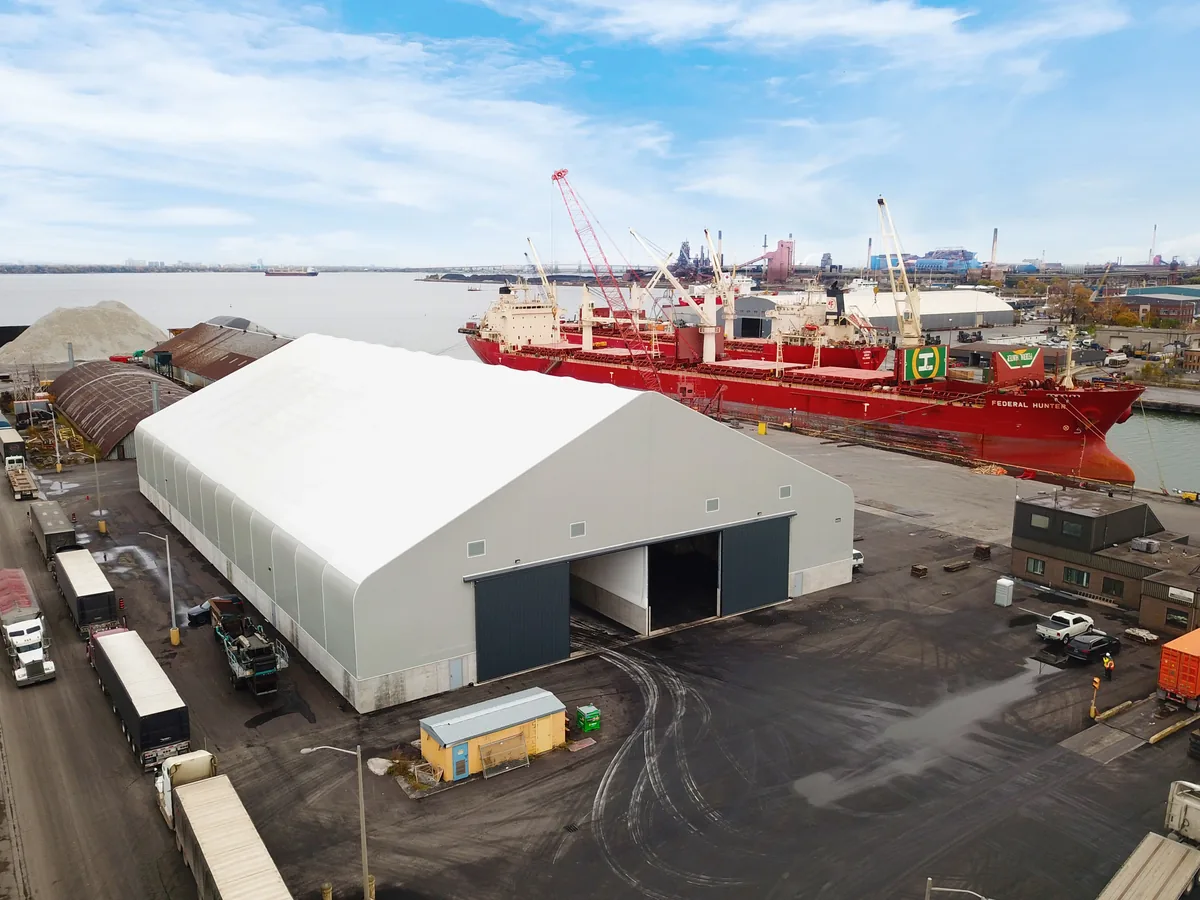
To meet these demands, Britespan designs its fabric cattle housing with engineered precision. By using engineered clear-span truss systems and a high-performance fabric enclosure, Britespan buildings deliver predictable interior space, efficient airflow, and long-term adaptability. The result is a cattle shed that performs like a permanent structure while offering the scalability, speed of installation and long term flexibility.
Fabric Cattle Housing vs Traditional Livestock Buildings
Traditional livestock sheds such as wood pole barns or rigid metal buildings are still common across U.S. farms. While they can meet basic needs, many producers find they become limiting as operations expand and equipment grows.
Still, fabric cattle housing addresses several of those limitations.
Faster construction timelines
Because manufacturers pre-engineer and produce fabric buildings off site, crews can install them quickly. In northern states like Minnesota or Michigan, where construction seasons are short, this can make a meaningful difference.
More usable interior space
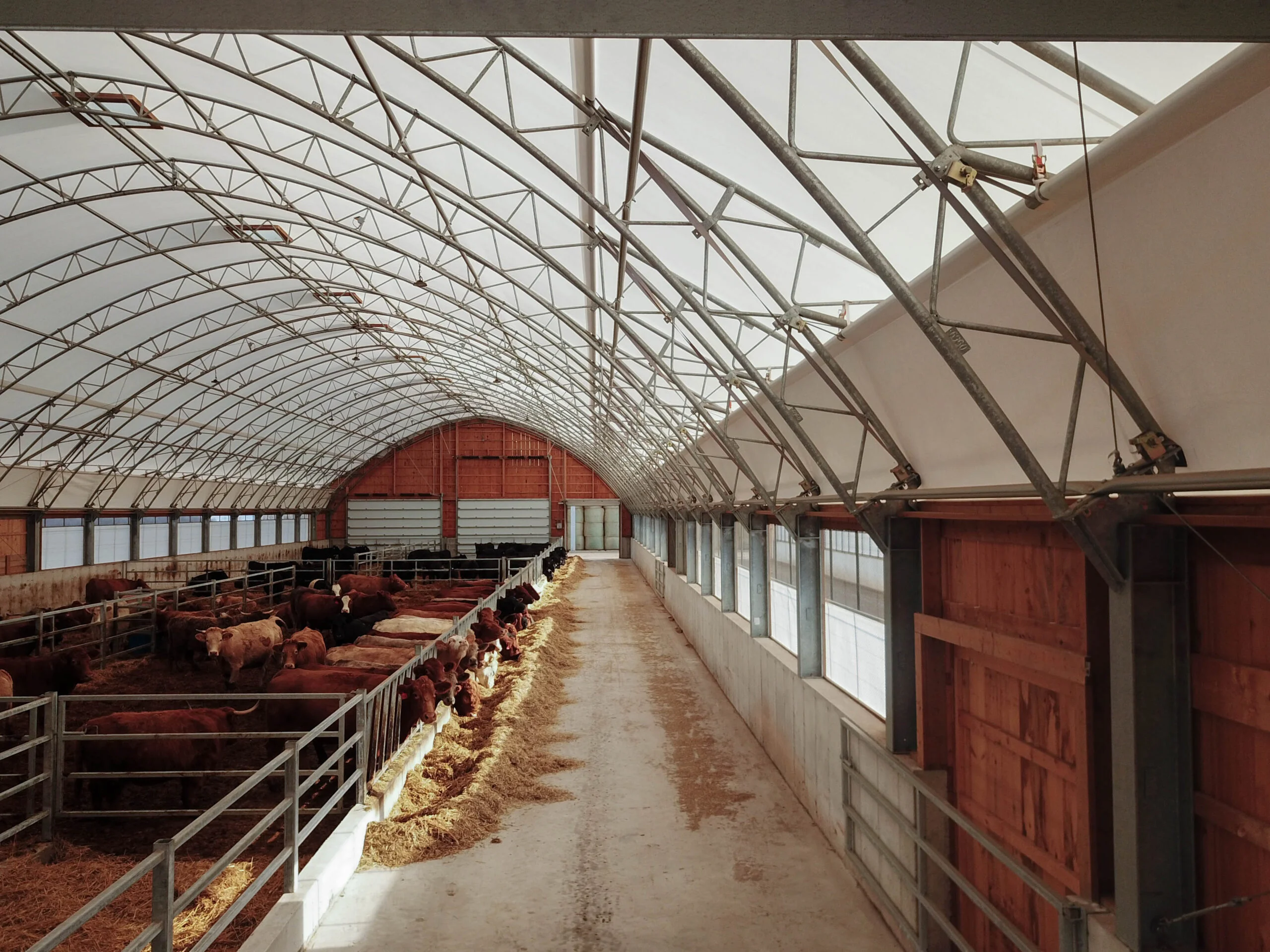
Additionally, clear span design removes interior posts, making cattle movement smoother and reducing equipment bottlenecks. This is especially valuable in larger operations running mixers, loaders, and skid steers daily.
Light and interior environment
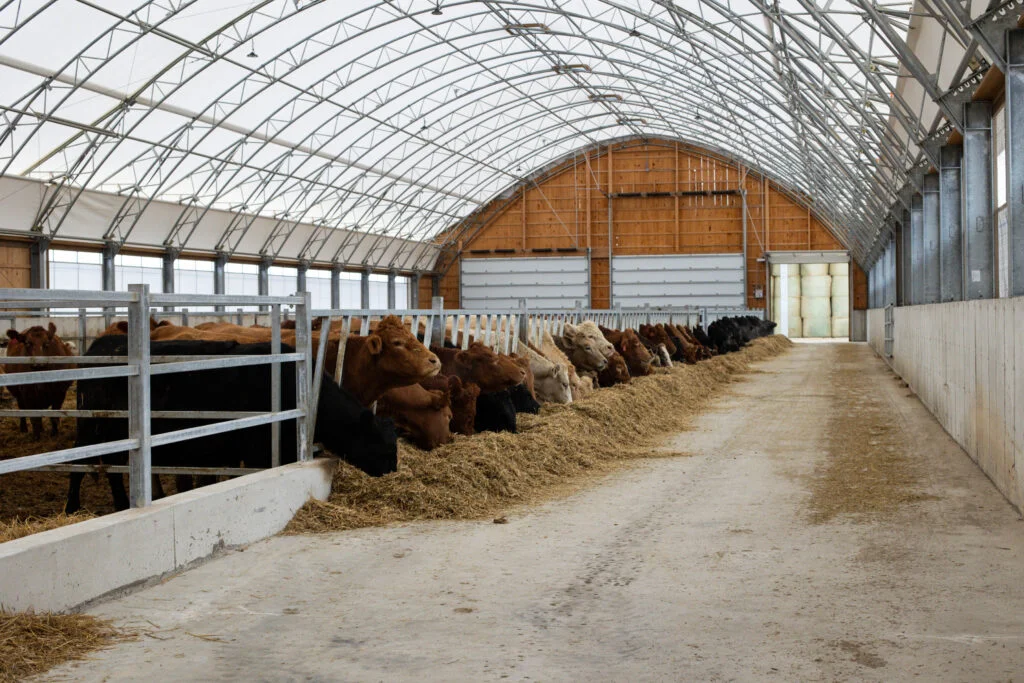
Furthermore, translucent fabric allows natural daylight to fill the cattle shed, cutting down on artificial lighting and creating a calmer space for livestock and staff.
Long term durability
When combined with hot dip galvanized steel trusses, fabric livestock buildings provide corrosion resistance well suited to manure rich and high moisture environments.
Ultimately, for producers weighing options like a cattle hoop barn, small cow barn, or traditional metal structure, engineered fabric cattle sheds often strike the best balance between performance and long term value.

Clear Span Cow Barn Design and Daily Equipment Flow
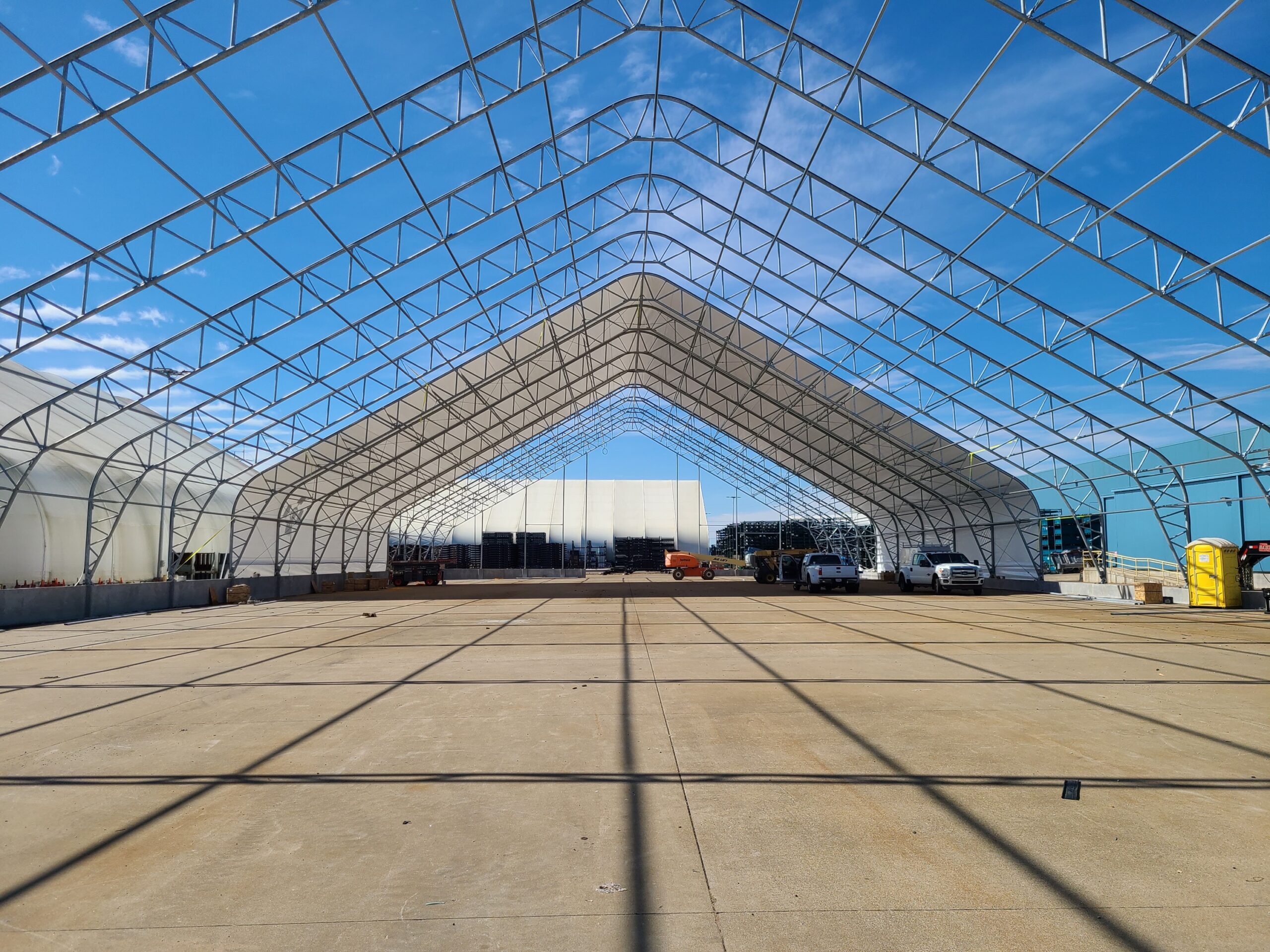
Clear span design is one of the most important considerations in modern cow barn planning. By eliminating interior columns, the full footprint of the building becomes usable.
Specifically, this directly supports:
- Safer cattle flow with fewer pinch points
- Efficient feeding lane layouts
- Easier access for cleaning and bedding equipment
- Flexible pen configurations as herd size changes
Britespan Apex and Epic Series buildings are commonly used in cattle operations because their steel truss systems support wide spans without interior supports. In particular, these clear span designs work well for both beef and dairy housing.
A standout case is the John and Bill Haines 90′ × 500′ beef feedlot, where they added an Epic cow barn to support a herd of more than 700 head. By improving equipment access, feed delivery, and overall cattle flow, the operation saw measurable results. As a result, cattle gained weight at roughly 20 percent higher rates, and labor dropped by nearly half. Consequently, the clear span layout allowed the Haines operation to manage daily tasks more efficiently, with fewer bottlenecks and less manual handling.
Overall, this type of result highlights how thoughtful cow barn design goes beyond shelter. When space, equipment flow, and animal movement are aligned, clear span fabric buildings can directly support productivity and long-term operational efficiency.
Ventilation and Light in a Fabric Cow Barn
Moreover, animal comfort plays a direct role in productivity, and ventilation is one of the biggest factors. Beyond structure, fabric cattle housing relies on smart design rather than complex mechanical systems to manage air quality.
Natural daylight
Specifically, the translucent fabric membrane provides consistent daylight throughout the cattle shed. As a result, even lighting improves visibility and contributes to calmer animal behavior.
Ventilation flexibility
Additionally, fabric buildings can incorporate ridge vents, endwall openings, roll up sides, or mechanical ventilation when needed. In warmer states like Texas or Oklahoma, airflow helps manage heat stress. In colder regions such as North Dakota or Vermont, ventilation balances fresh air with protection from winter conditions.
Moisture management
With proper detailing, fabric structures manage condensation effectively, helping protect bedding quality and interior air conditions.
Durability of a Cattle Shed in U.S. Weather Conditions
For many American cattle producers, durability is the deciding factor. In the Midwest and Northeast, snow load engineering plays a major role in cattle shed design. Counties in upstate New York or northern Wisconsin can see ground snow loads exceeding 50 psf. In open Plains states like Kansas or Nebraska, wind exposure often governs the design.
Britespan fabric cattle housing is engineered to meet:
- County specific snow load requirements
- Regional wind speed criteria
- Agricultural zoning and permitting standards
Above all, the strength of these buildings comes from the frame. Britespan uses hot dip galvanized steel trusses, coating every weld and connection point after fabrication to protect against corrosion in demanding farm environments.
Unlike lightly framed livestock sheds or temporary hoop structures, engineered fabric cattle sheds serve decades of use with routine maintenance.
Planning a Cow Barn for Long Term Farm Growth
A cow barn should meet today’s needs while leaving room for tomorrow’s growth. Fortunately, fabric livestock buildings offer flexibility that traditional structures often cannot.
For instance, producers can plan for:
- Modular length extensions
- Adaptable interior layouts
- Optional insulation systems
- Compatibility with doors, liners, and ventilation upgrades

Common Questions About a Cow Barn or Cattle Shed
Is a fabric cattle shed considered permanent?
Yes. Authorities permit fabric cattle sheds as permanent agricultural buildings, and they require engineered foundations similar to traditional construction.
How do fabric cow barns handle heavy snow?
Fabric surfaces shed snow efficiently, and steel trusses handle the ground snow load requirements of each state.
Can fabric cattle housing be insulated?
Yes. Producers can add insulation and liner systems when temperature control is required.
How long does a fabric cow barn last?
The steel frame handles decades of use. Producers can replace fabric covers, allowing the structure to remain in long term service.
Why Fabric Cattle Housing Works for U.S. Farms
For cattle producers across the United States, the right cow barn supports efficiency, animal welfare, and predictable long term performance. Together, fabric cattle housing combines engineered steel frames, clear span interiors, natural light, and adaptable ventilation into a practical building solution.
Whether housing cattle through winter in northern states or managing heat and airflow in warmer regions, modern cattle sheds provide a scalable approach to livestock housing. If you are planning a new cattle shed or upgrading an existing facility, a Britespan team engineers your structure for your specific U.S. location. To explore options for your operation, connect with a Britespan building expert to discuss layout, sizing, and engineering considerations.
Written by: Lindsay Kenny | Technical Review by: George Lawless
Updated: July 24, 2026