
Indoor Sports Facilities: A Municipal Procurement Guide
Municipal recreation programs are under pressure from every direction. Meanwhile, community demand for year-round programming is growing, and construction budgets are tighter than ever. Traditional indoor sports facility projects carry timelines that stretch years before a single game is played. For recreation directors and municipal planners, the goal is a faster, more flexible path to a covered indoor sports facility. Engineered fabric buildings are delivering results that conventional construction rarely matches. That includes clear span interiors, natural light, and a public procurement pathway through Sourcewell that fits how municipalities actually buy.
A purpose-built indoor sports facility using a clear span fabric structure gives municipalities the column-free interior space, natural light, and structural permanence that community programs need. It delivers this without the cost and timeline of a traditional arena or recreation centre build. Here is what planners need to know before the next budget cycle. New to evaluating indoor recreation infrastructure? Our overview of the advantages of building an indoor sports complex is a good starting point before diving into the municipal-specific details below.
What Municipalities Need From an Indoor Sports Facility
Community recreation facilities carry demands that most commercial buildings do not. Specifically, they need to accommodate multiple sports across different seasons, handle high daily traffic from youth programs through adult leagues, and hold up to decades of public use without significant maintenance investment.
In practice, municipal planners are evaluating indoor sports facilities against a specific set of requirements:
- Multi-sport floor configurations that support more than one program without costly retrofits
- Year-round operational capability regardless of climate
- Natural light and ventilation that reduce operating costs over the life of the building
- Structural systems engineered and permitted to local building codes
- Procurement pathways that meet public tendering requirements
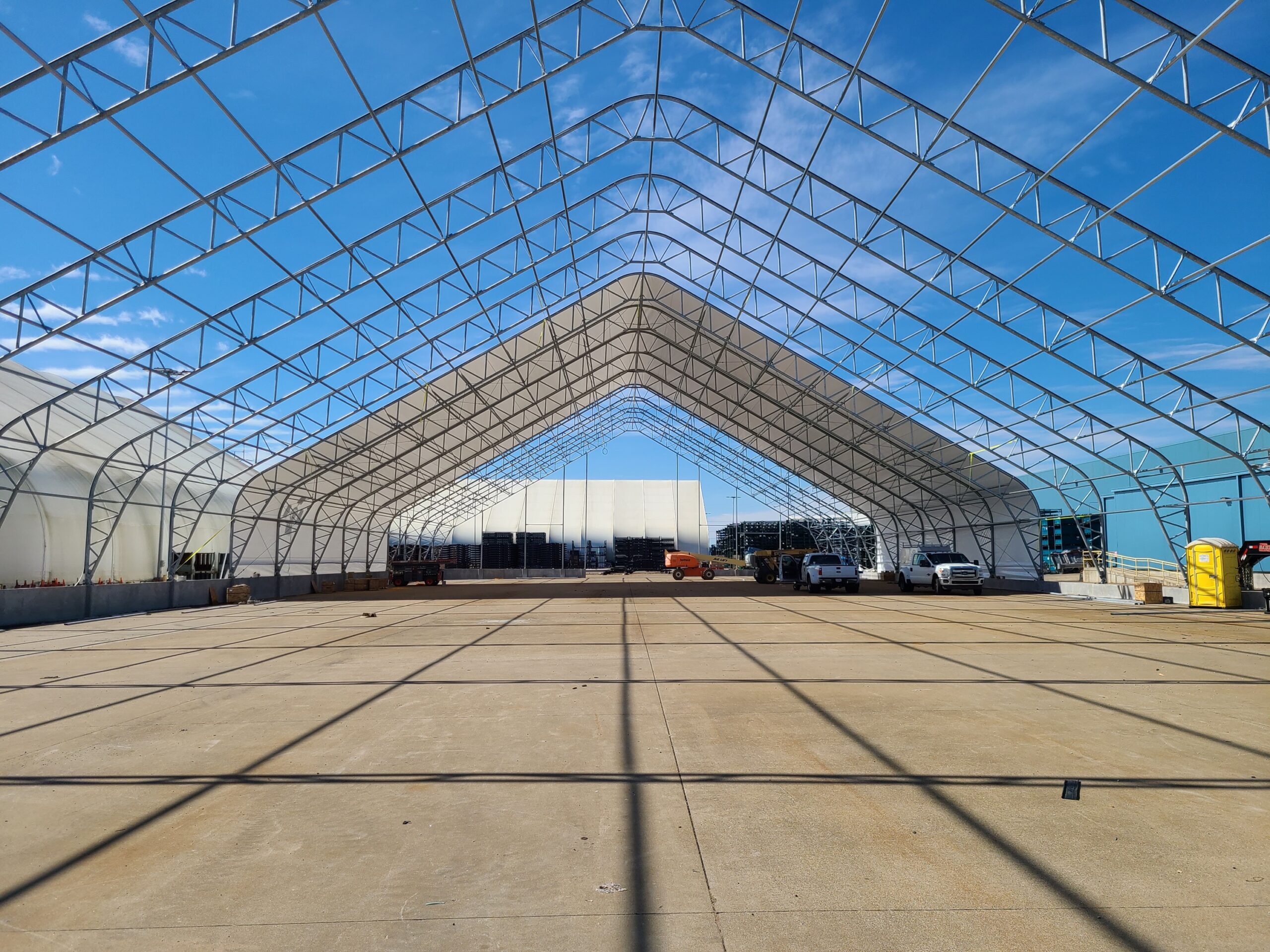
A municipal sports facility built on a clear span fabric structure addresses each of these directly. The building goes up faster than conventional construction. In addition, the interior adapts to program changes without structural constraints, and the engineered frame meets the permanent building standards municipalities require.
How Clear Span Design Supports Multi-Sport Use in an Indoor Sports Facility
The single most important design decision in a multi-sport facility is the absence of interior columns. As a result, in a clear span sports building, the full floor width is open from sidewall to sidewall. You can paint, move, or overlay court lines without working around posts. Similarly, operators can position nets, dividers, and retractable equipment anywhere across the floor based on the program, not the structure.
For municipalities running pickleball leagues alongside soccer programs and community fitness classes, that flexibility is operationally significant. For example, a clear span recreation building might accommodate three pickleball courts this weekend. Next week, it can be reconfigured for an indoor soccer session without any structural change.
Additionally, clear span interiors improve safety by eliminating the collision risk that interior posts create in active sports environments. For high-traffic community facilities, that is a practical benefit that shows up in reduced liability exposure over time.

Natural Light and Ventilation in a Fabric Recreation Building
A fabric recreation building brings diffused natural daylight across the full playing surface through its translucent fabric cover. For athletes, that even light distribution reduces glare and harsh shadow contrast that players experience under conventional artificial lighting. For facility operators, it reduces daytime artificial lighting demand significantly, which lowers operating costs across every hour the building is in use.
Ventilation in high-activity indoor spaces is equally important. For instance, fabric buildings support passive ventilation through ridge vents and adjustable sidewall openings that maintain steady air exchange without complex mechanical systems. As a result, in a year-round sports facility running back-to-back programs, that airflow keeps interior air quality consistent and temperature manageable without the energy overhead of a fully mechanical HVAC system.
In fact, for municipalities managing long-term operating budgets, the combination of reduced lighting and ventilation costs in a fabric sports facility contributes meaningfully to total cost of ownership over a 20 or 30 year facility lifespan.
Indoor Sports Facility Applications: Pickleball, Soccer, and Ice Rinks
Different sports place specific demands on building dimensions, and fabric structures can be engineered to meet each of them.
Indoor pickleball facilities require court dimensions of 20 by 44 feet per court. A minimum ceiling height of 18 feet works for standard play, with 20 feet or more recommended for competitive use. A clear span building in the 60 to 80 foot width range accommodates two courts side by side, with divider netting and safe runoff space between them. Because the building can be manufactured to any length, additional courts can be added down the structure to match program demand. Pickleball demand from municipal recreation programs has grown significantly across North America. Purpose-built fabric buildings are one of the fastest ways to add dedicated court capacity.
Indoor soccer facilities require more floor area and ceiling clearance. A typical five-a-side indoor soccer field runs approximately 82 by 49 feet, though many recreational formats run larger. Ceiling heights of 25 feet or more are standard for safe ball trajectory. Fabric buildings in the 100 foot and wider span range accommodate full indoor soccer configurations. That includes room for player benches, spectator space, and field turf installation.
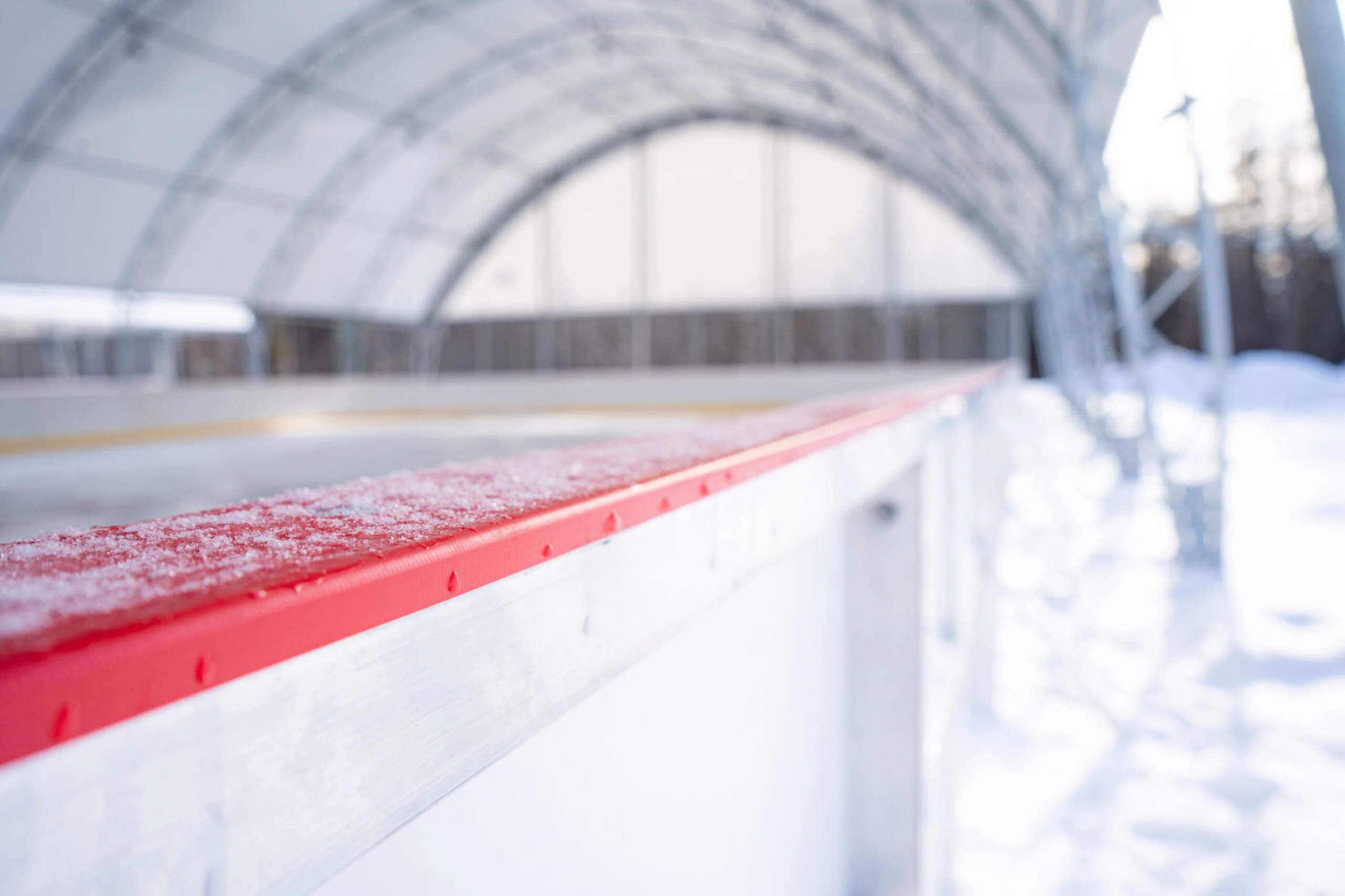
Finally, indoor ice rink buildings add insulation and refrigeration system considerations to the structural requirements. For example, a standard NHL-size ice surface runs 200 by 85 feet, and the building envelope needs to support the temperature differential between the ice surface and the ambient interior environment. Fabric buildings for ice applications typically include insulated liner systems and vapor barriers that manage condensation and support the mechanical refrigeration system beneath the ice surface.

Durability, Engineering, and Municipal Compliance
Municipal procurement requires permanent buildings that meet local code, carry engineered documentation, and perform reliably over a long service life. In particular, fabric buildings from Britespan meet those requirements directly.
The structural system uses hot-dip galvanized steel trusses that coat every weld and connection point after fabrication. In high-use public facilities with humid interiors and frequent cleaning cycles, that corrosion protection supports a long service life with predictable maintenance requirements. As a result, municipalities get a building that holds its structural integrity well beyond the initial program payback period.
When the fabric cover eventually reaches the end of its service life, a re-cover extends the building’s operational lifespan without replacing the steel frame. For municipal asset managers planning long-term capital replacement schedules, that separation of structure and enclosure provides meaningful lifecycle planning flexibility.
Britespan also offers buildings through Sourcewell cooperative purchasing, which simplifies procurement for municipalities that require a competitive tendering process. For planners working within public procurement frameworks, that pathway reduces the administrative burden of bringing a new facility project to council approval.
Britespan Building Options for Municipal Sports Facilities
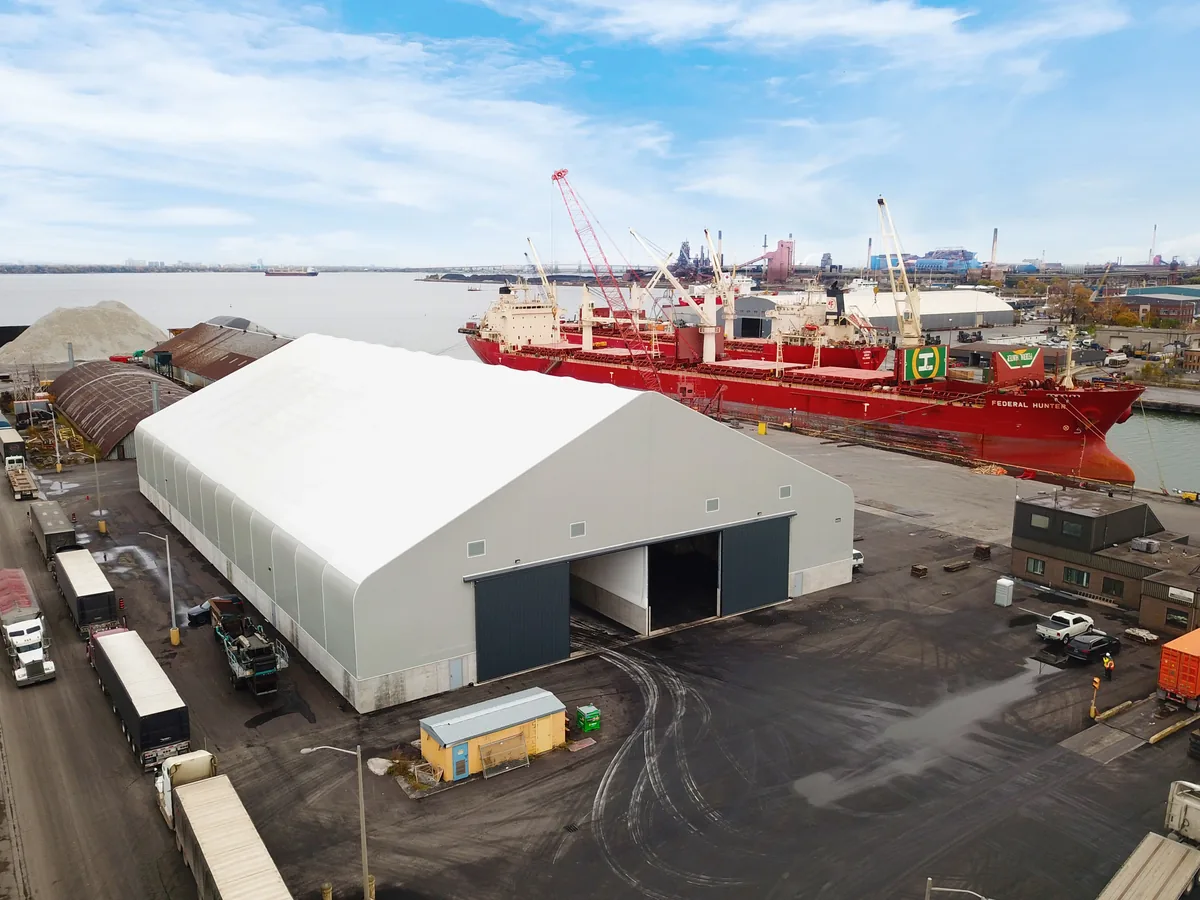
Britespan engineers fabric buildings for municipal indoor sports facility applications across Canada and the United States, with two series well suited to sports facility use.
The Apex Series is a strong fit for mid-size community recreation facilities and multi-sport court buildings. Its high-pitched roof profile supports the ceiling clearance that pickleball and court sports require, and its clear span interior accommodates flexible court configurations across a range of building widths. The Apex also handles snow load efficiently in northern climates, which matters for municipalities planning year-round operations.
The Genesis Series suits larger-scale municipal applications requiring maximum span width. With spans available up to 210 feet, the Genesis accommodates full indoor soccer fields, NHL-size ice surfaces, and multi-court configurations that require unobstructed width across the full building. For municipalities planning a flagship municipal fabric building that serves the full community program, the Genesis delivers the interior volume that large-scale recreation use demands.
Both series are engineered to local building code requirements and carry the structural documentation that municipal permitting requires.
Planning a Municipal Indoor Sports Facility
Sizing a municipal indoor sports facility starts with the primary sport program and works outward from there. Identify the sport with the largest footprint and ceiling height requirement first, then confirm whether secondary programs can share the same floor area or require dedicated zones.
From there, consider the following:
- Court or field dimensions and the minimum clear span width required for the primary sport
- Ceiling height requirements for the tallest equipment or highest-trajectory sport in the program
- Spectator and lobby space needs that add to the overall building footprint
- Mechanical requirements specific to ice rink applications including refrigeration, insulation, and vapor management
- Procurement pathway and whether Sourcewell cooperative purchasing applies to the project
A clear span sports building from Britespan can move from design to installation significantly faster than conventional recreation centre construction. If your municipality is planning new indoor recreation infrastructure or expanding an existing program, connecting with a Britespan building expert is a practical first step. They can work through sport-specific sizing, structural requirements, and procurement options based on your community’s needs. Reach out to the Britespan team to start the conversation.

Common Questions About Fabric Indoor Sports Facilities
Can a fabric building be used as a permanent indoor sports facility?
Yes. Municipalities can permit engineered fabric buildings as permanent structures that meet local building code requirements, including snow, wind, and occupancy standards for public recreation facilities.
What size fabric building do I need for an indoor soccer facility?
A five-a-side indoor soccer configuration typically requires a clear span width of approximately 100 feet and a ceiling height of 25 feet or more, with larger formats requiring proportionally wider spans. A Britespan building expert can work through specific dimensions based on your program requirements.
Are fabric sports facilities eligible for municipal procurement programs?
Yes. Britespan buildings are available through Sourcewell cooperative purchasing, which provides municipalities with a compliant procurement pathway without a full public tender process.
How does natural light affect athletic performance in a fabric sports facility?
Diffused natural light through a translucent fabric cover reduces glare and harsh shadow contrast on playing surfaces. Even light distribution improves visibility for athletes and reduces eye strain during extended play, while also lowering daytime artificial lighting costs for facility operators.
Can a fabric building accommodate an indoor ice rink?
Yes. Fabric buildings used for ice rink applications are configured with insulated liner systems, vapor barriers, and the structural clearances required to support refrigeration equipment and ice surface installation. The Genesis Series is well suited to full-size ice rink applications given its available span widths.