
Why Hot Dip Galvanized Fabric Buildings Offer the Best Long Term Protection
In many working environments, winter brine, fertilizer dust, salt spray, and routine washdowns are hard on metal. If you want a building that stays straight, safe, and good looking after years of exposure, start with hot dip galvanized fabric buildings. As a result, galvanizing protects the steel truss frame that supports the entire structure, and it delivers proven corrosion resistance in some of the toughest working environments.
For operators comparing corrosion resistant fabric buildings, this guide explains how hot dip galvanizing works, why zinc coatings outperform alternatives, and where these advantages matter most for agriculture, commercial, and municipal operations.
What Makes Hot Dip Galvanizing Different
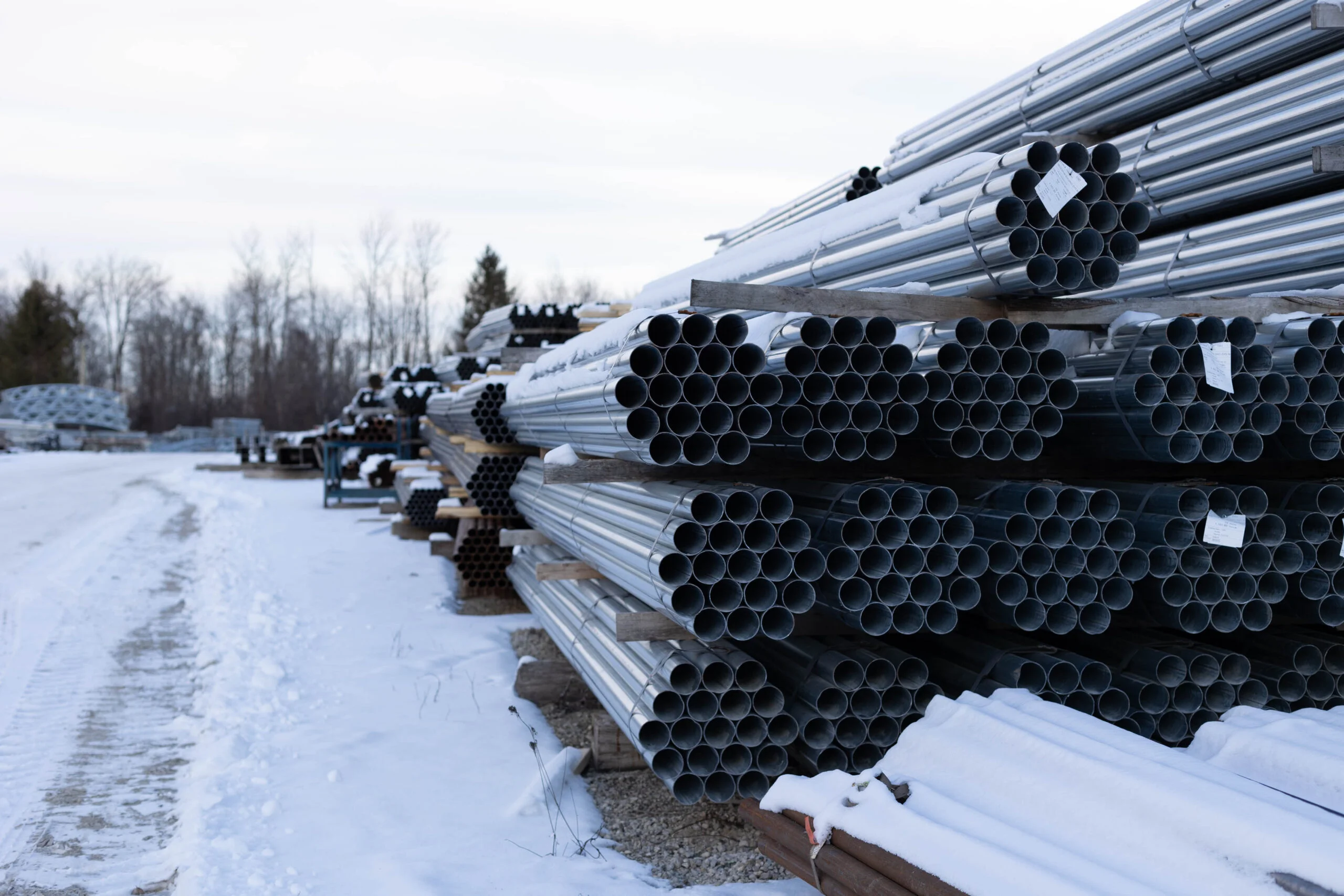
To begin, hot dip galvanizing immerses fabricated steel components into a molten zinc bath. The zinc bonds directly to the steel to form a continuous, metallurgically fused coating. Because of this, it protects every reachable surface inside and out. Importantly, this includes welds, corners, edges, bolt holes, and the interior walls of tubes where corrosion often begins.
In hot dip galvanized building frames, you can expect:
- Uniform and durable zinc layers on complex truss geometry
- Consistent edge and corner coverage that paint tends to miss
- Internal protection on hollow sections where moisture can sit
- Long service life in splash, spray, and deicing environments
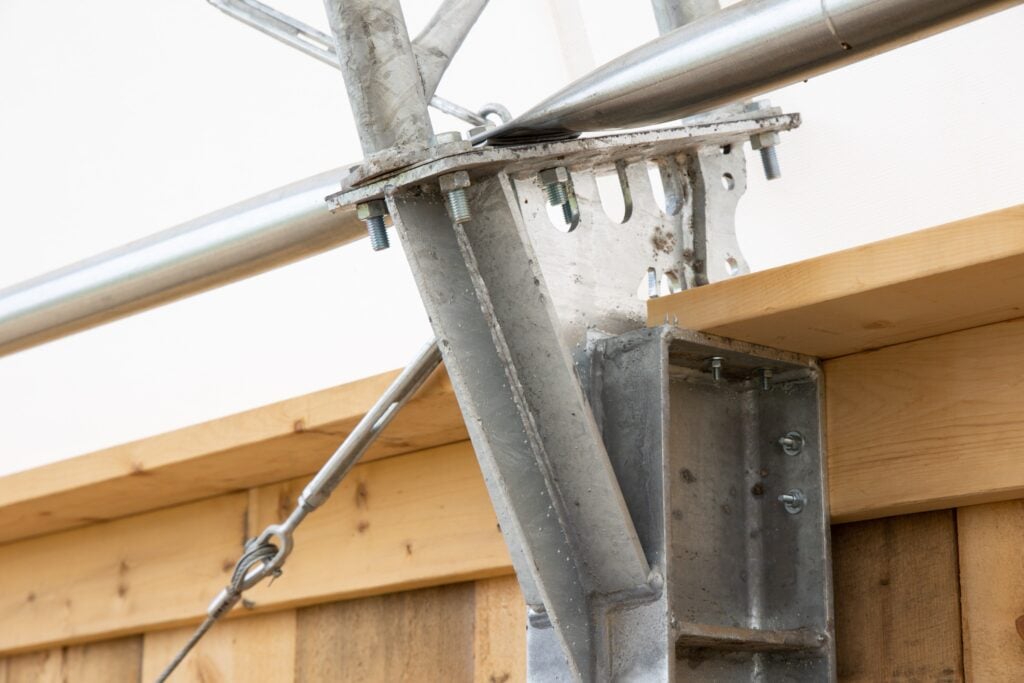
In a galvanized fabric building, this means the structural frame keeps its alignment, bolts remain tight, and door systems track smoothly as the building ages.
How Zinc Protects Steel In Real Conditions
In practice, zinc shields the frame in three complementary ways. First, it acts as a physical barrier that blocks moisture, salt, and oxygen. Second, zinc provides sacrificial protection by corroding preferentially to the steel beneath it. Third, zinc forms a stable patina over time, which slows corrosion even further.
Coating weight and zinc thickness are measured, documented, and verifiable. When you specify the correct zinc thickness for the exposure level, you create consistent corrosion protection for fabric buildings from day one.
This protection matters most in:
- Road salt storage and winter maintenance yards
- Fertilizer storage and loadout areas
- Equipment shops with frequent washdowns
- Coastal or high humidity locations
Hot Dip Galvanizing vs Paint & Powder Coating
Choosing a protective finish is not only about appearance. However, it is about service life, maintenance, and lifecycle value.

Hot dip galvanizing vs paint
Paint offers colour flexibility and a clean start, but it depends heavily on surface preparation and application consistency. Film thickness often thins at corners and welds, and chips create pathways for underfilm rust. Hot dip galvanizing forms bonded zinc alloy layers that protect edges, interiors, and abrasion points more reliably.
Hot dip galvanizing vs powder coating
Powder coating is smooth and durable, but it can chip under high impact and does not coat the inside of tubes. In environments with salt, chemicals, or abrasive dust, the zinc layers in a galvanized system usually provide longer lasting protection than a standalone powder coating.
Why Fabric Buildings Perform Better With Galvanized Frames
In many applications, fabric structures operate outdoors in conditions that test both the cover and the supporting frame. A clear span galvanized building frame carries significant loads while providing open floor space for machinery, vehicles, and bulk material. These frames face condensation cycles, airflow, organic materials, and frequent equipment traffic.
Galvanizing supports daily performance by offering:
- Lower maintenance requirements for the primary steel frame
- Improved door performance because jambs and headers remain true
- Fewer corrosion hot spots near fastener lines and curtain systems
- Clean, bright interiors that help with inspections and visibility
Great examples of strength and long term durability in our lineup are the Genesis and Apex building profiles. Both are engineered for demanding environments with corrosive materials, frequent equipment traffic, and high airflow. For full frame specifications and material details, see each profile to find the right fit for your operation.
Built for Agriculture; Fertilizer, Livestock, and Composting Sites
In particular, agricultural operations expose steel frames to corrosive materials such as manure, fertilizer dust, and moisture from livestock activity. Luckily, hot dip galvanized fabric buildings perform well in these conditions because the zinc coating protects both the exterior and interior of the truss members.
Ideal agricultural uses include:
- Fertilizer storage and mixing
- Dairy and beef livestock shelters
- Composting and waste handling
- Crop storage buildings

For real project insight, take a look at the P&H Gladstone Site, where a 72,000 square foot fabric structure supports large scale grain storage for Parrish and Heimbecker Limited in Manitoba. For example, this building demonstrates how hot dip galvanized building frames perform in active agricultural operations. The galvanized steel trusses carry significant grain loads, resist corrosion from dust and moisture, and maintain alignment through constant seasonal temperature swings. The result is a reliable storage environment that stays bright, clean, and easy to operate.
Reliable Protection for High Traffic Industrial Operations
Likewise, commercial and municipal sites often deal with heavy equipment, winter brine, deicing chemicals, and constant movement of materials. A corrosion resistant fabric building with galvanized steel trusses provides the durability needed for long term operations.
Best fit applications include:
- Salt and sand storage
- Public works and fleet maintenance
- Waste and transfer stations
- Warehousing and logistics yards
For planning in fertilizer and aggregate environments, see “Building a Fabric Fertilizer Storage Facility: Key Considerations for Safety and Efficiency”.
Maintenance and Lifecycle Planning for Your Building
Fortunately, galvanized frames require simple care. Rinse after heavy salt events, especially around base plates. Inspect bolts, door hardware, and tension components on a consistent schedule. For the membrane, perform tension checks and plan for a future re-cover as part of your long term maintenance strategy.
Additionally, Britespan supports this long term approach with a comprehensive warranty program that covers both the steel frame and the fabric membrane. The galvanized coating is backed by documentation and inspection standards that confirm coating weight, which helps ensure consistent performance throughout the building’s service life. The membrane is covered by its own warranty period, giving you confidence in both the structure and the enclosure.
Quick Answers for Buyers and Specifiers
How long will hot dip galvanized fabric buildings last?
Service life depends on the environment and zinc thickness. In typical inland conditions, galvanized frames can perform for decades with routine rinsing and inspections.
Do scratches reduce protection?
No. Zinc provides sacrificial protection at scratches, which slows rust creep. Touch up exposed areas as needed.
Ultimately, in most commercial, agricultural, and municipal applications, the reduction in touchups, repainting, and corrosion repairs makes galvanizing a strong long term value.
Let’s Get Started
Overall, choosing hot dip galvanized fabric buildings with engineered steel truss frames is one of the most reliable ways to protect your assets and reduce long term maintenance. Britespan designs every frame with documented zinc thickness and verified inspection standards, giving you proven corrosion resistance from day one. As a result, when paired with the right enclosure details and a simple maintenance plan, your building stays strong, straight, and dependable in real working conditions.
If you are planning a new structure, start by reviewing The Value of Custom Engineered Fabric Structures for Your Unique Project. When you are ready to move forward, connect with our team. We can help you choose the right profile, confirm site requirements, and begin planning a building that supports your operation for the long term.