
The Ultimate Hay Storage Buyer’s Guide: Fabric Barns That Keep Bales Dry, Nutritious, and Easy to Move
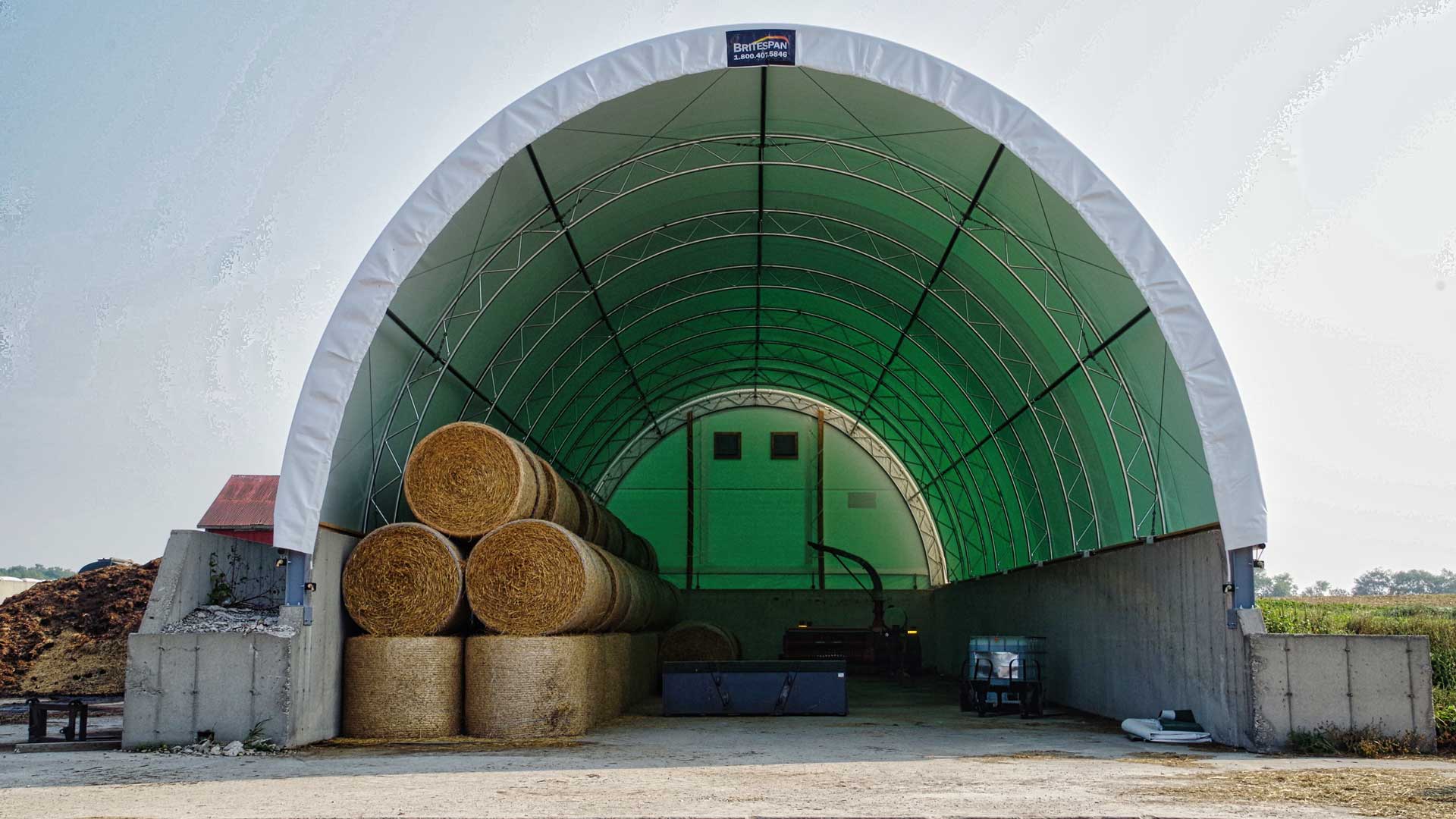
Hay storage is one of the most consequential infrastructure decisions on a working farm. Store hay well and it comes out of the building in the same condition it went in. Store it poorly and you lose dry matter, nutritional value, and money — quietly, bale by bale, across a full feeding season.
A purpose-built fabric hay storage building addresses the conditions that cause those losses: moisture infiltration, poor ventilation, UV exposure, and inadequate access for handling equipment. This guide covers what buyers need to know before choosing a hay storage building, from sizing and ventilation to foundation options and long-term cost.
How Much Hay Do You Need to Store and How Does That Translate to Building Size?
Before evaluating building options, establish your storage requirement. A typical horse consumes between one and two percent of its body weight in dry matter per day. Cattle and dairy operations have their own feed requirements that drive annual hay volume. From that number, calculate peak inventory — the maximum quantity on hand at any point in the season — and size the building to that figure, not the average.
From there, bale type determines floor area and clearance requirements. Round bale storage requires more floor area per ton but less vertical clearance. Square bale storage stacks more densely and benefits from greater eave height. For mixed operations, a longer building with clearly zoned areas handles both without compromising either.
Britespan’s fabric hay barn options range from 24 to 210 feet wide and any length, giving producers the flexibility to match the building to actual storage requirements rather than compromising on a standard size.
What Makes a Fabric Hay Storage Building Better at Preventing Spoilage
Preventing hay spoilage starts with keeping moisture out and managing what builds up inside. A hay storage building that controls both delivers meaningfully better feed retention than outdoor storage or inadequate covered structures.
Fabric covers diffuse natural light without the heat buildup of metal roofing. That thermal stability reduces temperature differentials that drive condensation — one of the primary causes of hay quality degradation in enclosed storage. The translucent cover also means no artificial lighting is needed during the day for inventory checks and equipment access.
Equally important, fabric buildings can be configured with open or enclosed sidewalls and ventilation options that support passive airflow. Fresh air exchange manages interior humidity, reduces ammonia and mold conditions, and helps bedding and bale surfaces stay dry between weather events.
How Should You Design Clear Span Hay Storage for Equipment Access
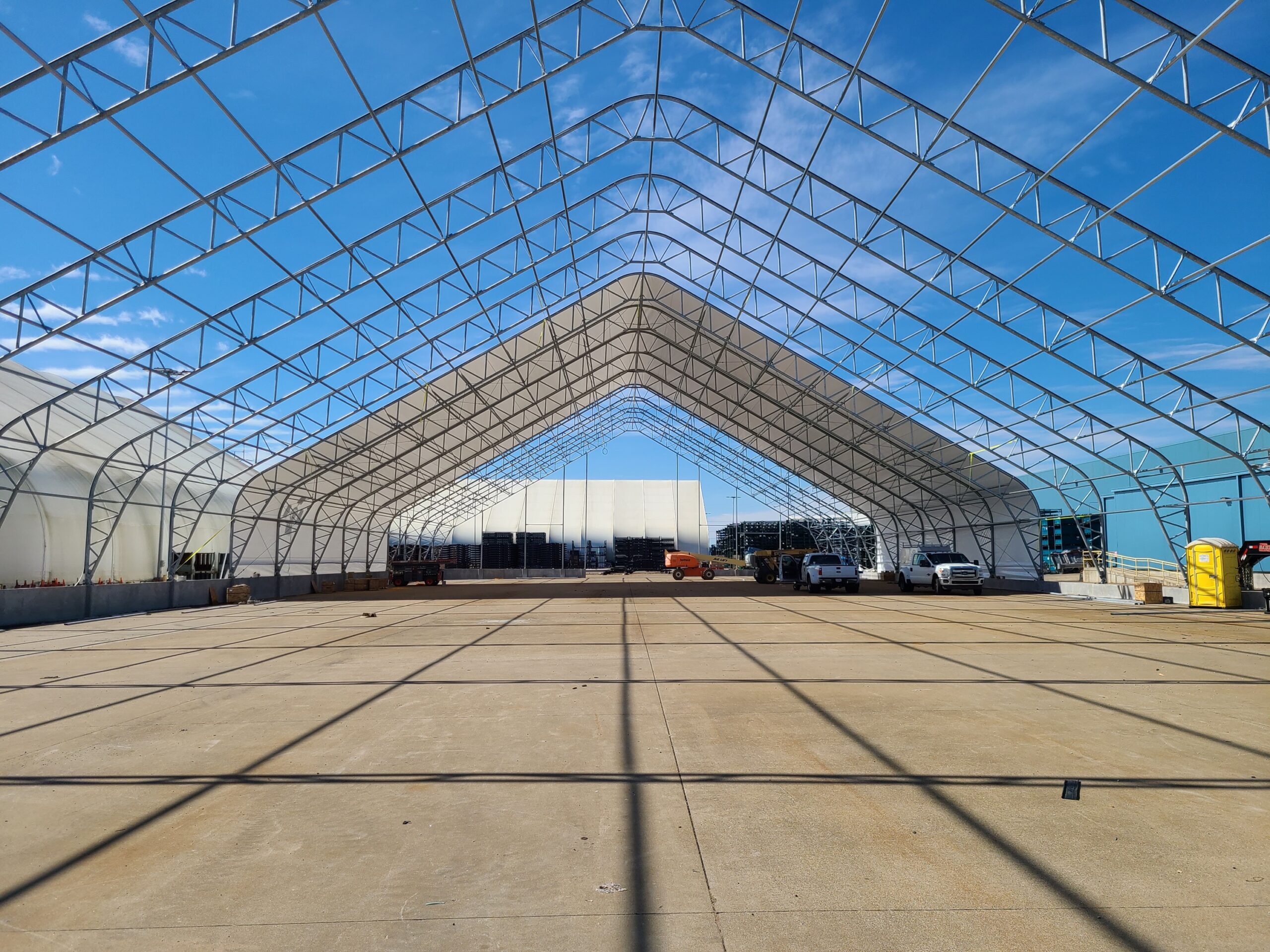
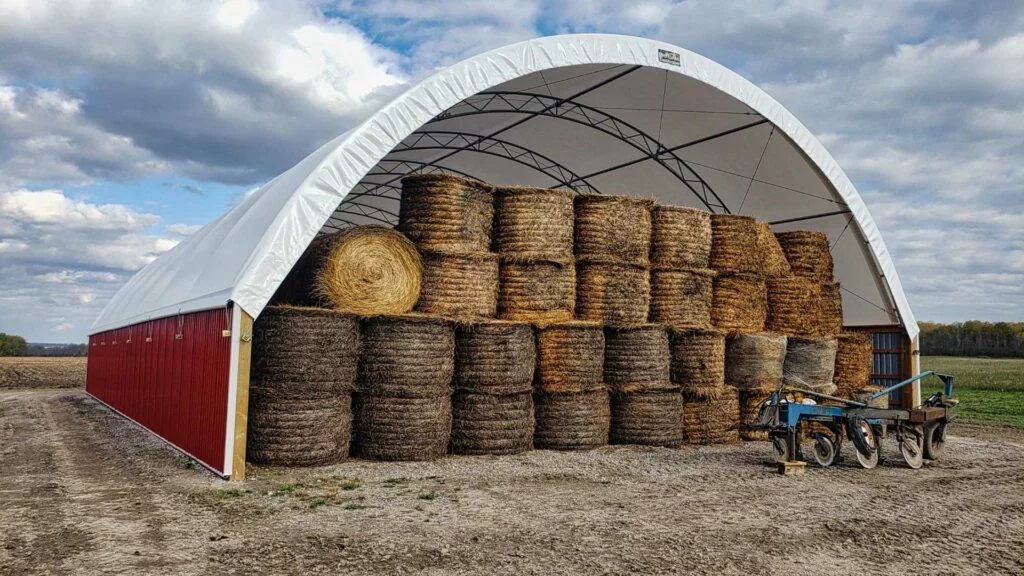
Clear span hay storage eliminates interior columns entirely, which matters as much for hay storage as for any other agricultural application. Loaders, telehandlers, and tractors with bale forks need to move freely across the full floor width without navigating around structural posts. Stacking height and efficiency both improve when the interior layout is unrestricted.
Door placement, aisle width, and eave height should all be planned around the largest piece of equipment that will operate inside the building. For most hay storage operations, that means sizing eave height to the loader at full lift with a bale attached, and positioning doors to support efficient entry and exit without tight reversing.
The Atlas Series and Apex Series are both well suited to hay storage applications, with clear span interiors and configurable sidewall options that accommodate a range of equipment sizes and ventilation needs.
To see how this works in a real operation, take a tour of Helmsview Farm, featuring four Britespan buildings including a 60′ x 120′ Easy Access Hay Storage Building and a 70′ x 230′ Apex Hay and Equipment Storage Structure.
What Ventilation Strategies Actually Help Dry Matter Retention
Hay storage ventilation is not about moving large volumes of air — it is about managing humidity consistently. Passive ventilation through ridge vents, endwall openings, and adjustable sidewall configurations maintains the steady air exchange that keeps interior humidity from rising to levels that accelerate spoilage.
Hay moisture management starts before baling and continues through the storage season. What a well-ventilated building controls is the post-storage environment — limiting the condensation, humidity cycling, and stagnant air conditions that cause bales to heat and deteriorate after they are already in good condition going in.
What Does UV Protection for Hay Mean in Practice
UV protection for hay refers to the fabric cover’s role in limiting direct sun exposure on stored bales. Direct sunlight bleaches hay and strips nutritional value over time, even from dry bales. A fabric cover that diffuses rather than blocks light reduces bleaching without creating the dark, humid conditions that promote mold growth.
Britespan UV-stabilizes the woven polyethylene fabric across its building series to protect both the cover material and the hay stored beneath it, maintaining light transmission while limiting the direct UV exposure that degrades feed quality.
How Do You Estimate Total Cost of a Hay Storage Building Over Time
Cost of hay storage building calculations should account for more than the initial purchase price. Foundation type, installation, and long-term maintenance all factor into the total cost of ownership over a 10 to 20 year horizon.
Britespan engineers each agricultural fabric building to site-specific load requirements, which means the structure is sized correctly for the location rather than over or underbuilt. That precision affects both upfront cost and long-term performance. The steel frame is backed by Britespan’s warranty program, and when the fabric cover reaches the end of its service life, the re-cover program extends the building’s operational lifespan without replacing the frame — a meaningful lifecycle cost advantage over structures that require full replacement.
For producers evaluating rapid installation hay barn options, Britespan prefabricates fabric buildings off-site and assembles them on location, which significantly shortens the construction timeline compared to conventional building methods.
If you are planning a hay storage building for your operation, connect with a local Britespan dealer to discuss sizing, building style, and site requirements.
Common Questions About Fabric Hay Storage Buildings
What is the best fabric building for hay storage?
A clear span fabric building with configurable ventilation, UV-stabilized cover material, and eave height sized for your handling equipment provides the most reliable protection for hay quality. Britespan’s Atlas and Apex Series are both commonly used for hay storage applications.
How do fabric hay barns prevent spoilage?
They keep precipitation off bales, reduce condensation through the thermal properties of the fabric cover, and support passive ventilation that manages interior humidity — the primary environmental drivers of dry matter loss and mold development.
Can a fabric building store both round and square bales?
Yes. A building sized with adequate floor area and ceiling height can accommodate both bale types, often in designated zones that match the equipment and stacking requirements of each.
When should you plan a re-cover?
Monitor cover tension, light transmission, and surface condition annually. When the cover shows consistent UV degradation, reduced tension retention, or visible wear, plan a re-cover before performance deteriorates further. Britespan’s re-cover program supports this process with minimal disruption to the building frame.
Updated: July 15, 2026