
Fabric Buildings for Hay Storage: Protecting Feed Quality
Across North America, stored feed is one of the most valuable assets on a beef operation. Hay storage buildings are what stand between a good crop and a costly one. When hay goes into storage in good condition and comes out weeks later moldy, heat-damaged, or stripped of nutritional value, that loss hits the feed budget and herd performance at the same time.
In reality, the building itself is often the deciding factor. Purpose-built hay storage buildings control the conditions that cause feed to degrade. That means moisture infiltration, poor airflow, and UV exposure. For operations depending on consistent feed quality through a long winter, that protection is worth building around.
Why Hay Storage Conditions Directly Affect Feed Quality
Hay quality deteriorates fastest when moisture and heat combine. Whether bales are round or square, field-cured or wrapped, they continue to respire after baling. That biological activity generates heat, and when moisture cannot escape or when precipitation and condensation add to it, the result is dry matter loss, mold development, and reduced protein and energy content.
In fact, research consistently shows that outdoor storage produces significantly higher dry matter losses than enclosed building storage. That holds even when producers cover bales, because most of the loss comes from ground contact rather than from rain above. Across a six-month winter, those losses add up quickly for beef operations carrying thousands of bales. The result is real feed costs and real nutritional gaps.
As a result, a well-designed fabric hay barn changes that equation by keeping precipitation out, supporting controlled airflow, and protecting bales from ground moisture and direct sun.
What Makes Hay Storage Buildings Effective
A fabric storage building designed for hay and forage is not simply a shelter. It is a controlled environment that manages the variables feed spoilage depends on.
The fabric cover diffuses natural light without the heat buildup associated with metal roofing. This matters in late summer and early fall when fresh crop hay goes into storage and temperature differentials drive condensation. The translucent cover also means crews skip artificial lighting during the day for inventory checks and loading.
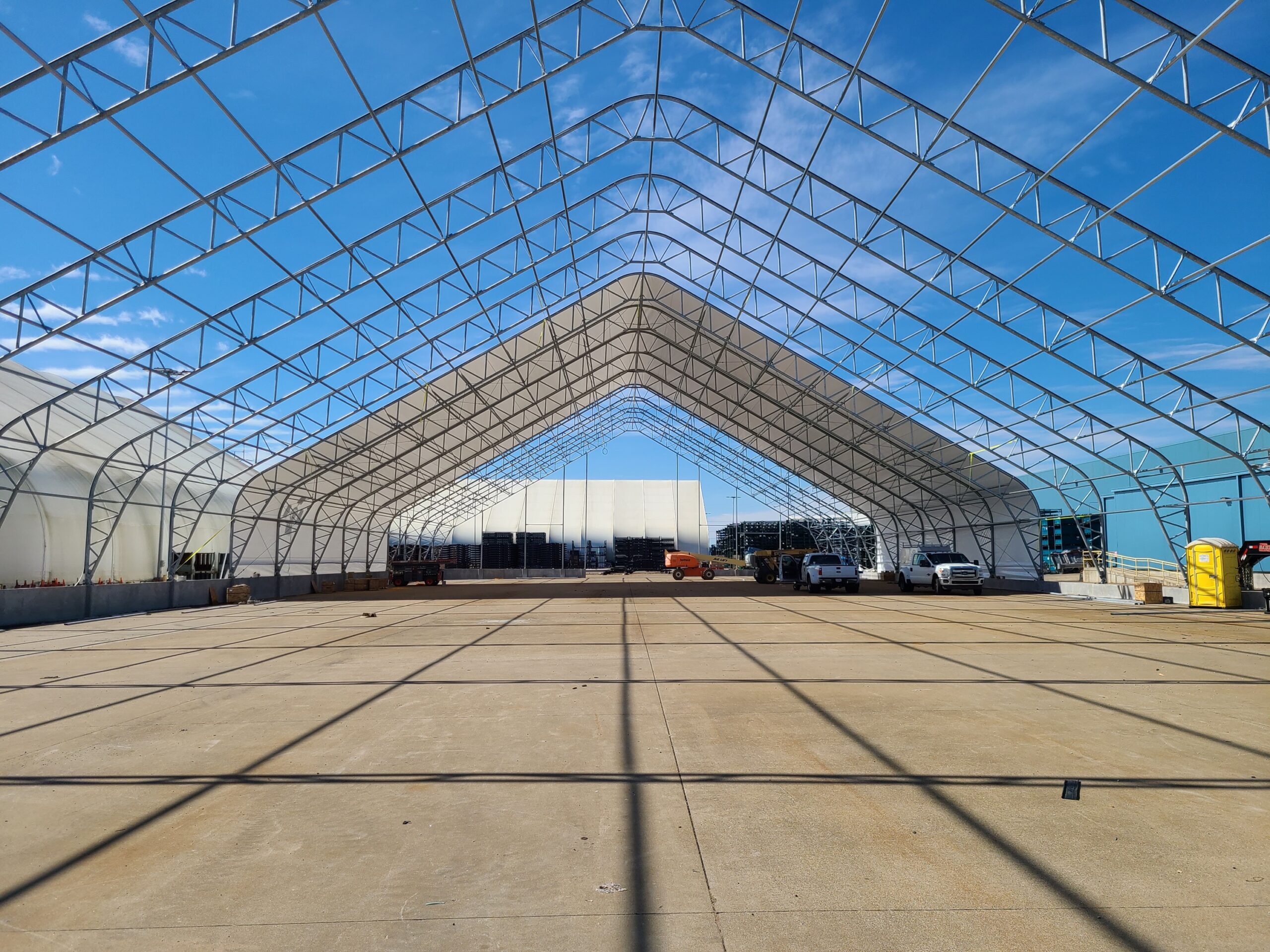
Clear span framing eliminates interior columns entirely. For hay storage, this is a practical necessity. A clear span hay storage building allows loaders, telehandlers, and tractors with bale forks to move freely across the full floor width without navigating around structural posts. Stacking goes higher and more efficiently when the layout is not interrupted.
Additionally, ventilation options including ridge vents and open sidewall configurations support passive airflow that manages interior humidity without mechanical systems.
Round Bale Storage and Square Bale Storage: Matching the Building to the Bale
Round and square bales have different storage requirements. It is worth thinking through both before sizing a building.
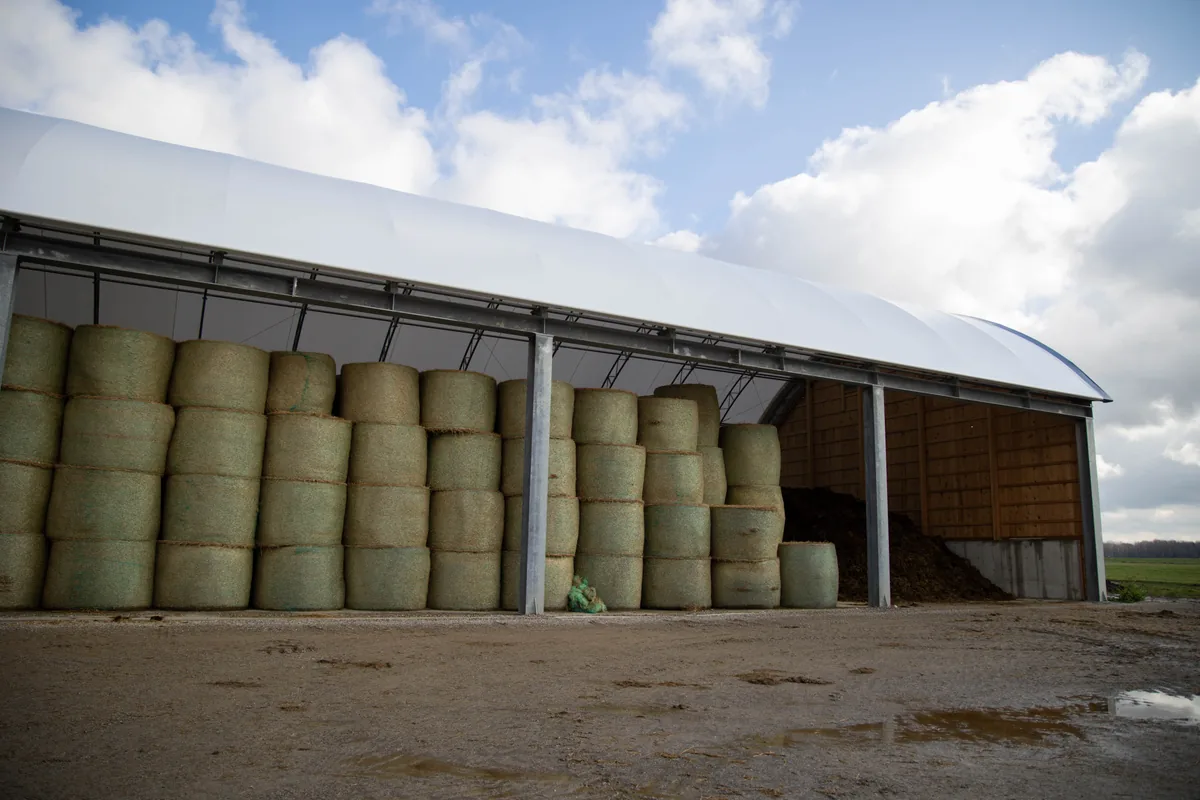
Round bales are heavier and typically stored in single or double rows across the floor. They require more floor area per ton of stored feed but generate less stacking complexity. Round bale operations benefit from wide building spans that allow equipment to travel alongside rows without constant repositioning.
Square bales stack more densely and can reach higher storage heights when stacked by hand or with a bale elevator. Square bale operations typically prioritize vertical clearance and a dry, stable floor surface to prevent bottom-row moisture absorption.
For mixed operations storing both bale types, a longer building with clearly zoned areas often works better than trying to compromise on a single span width.

Hay Moisture Management and Long-Term Feed Value
Hay moisture management starts before baling and continues through the full storage season. Bales stored above safe moisture thresholds are already at risk before they reach the building. What the storage structure controls is what happens after that point.
Condensation is one of the most underestimated causes of spoilage in enclosed storage. When warm air contacts a cold metal surface, water forms and drips onto bales below. Fabric covers moderate temperature swings more gradually than steel roofing, which reduces condensation risk and helps prevent hay spoilage caused by environmental cycling.
Ground moisture is the other common entry point. Concrete floors or well-compacted gravel with proper drainage slope are worth the investment alongside any permanent agricultural storage building. Bales sitting on wet ground will draw moisture upward regardless of what the roof does above them.
Britespan Fabric Building Options for Hay and Forage Storage
Britespan offers engineered fabric buildings suited to a range of farm storage needs. Beef operations commonly use both the Atlas and Epic Series for hay and forage storage.
The Atlas Series is a practical fit for farm operations storing moderate volumes of round or square bales. Its clear span design and scalable widths accommodate standard loader equipment, and the building can be configured with open or enclosed sidewalls depending on site conditions and ventilation needs. Producers looking for a durable fabric building for agriculture that handles seasonal hay volumes without overbuilding find it to be a reliable, straightforward solution.
The Epic Series suits larger beef operations managing significant forage inventories and storing multiple crop volumes annually. Wider spans and higher eave heights give the Epic the interior volume that high-tonnage livestock feed storage demands, while the same clear span design keeps the floor fully accessible for large equipment throughout the season.
Britespan engineers both series to site-specific structural requirements, including regional snow and wind load codes across Canada and the United States.
Planning Hay Storage Buildings for Your Operation
Sizing a hay storage building starts with annual feed volume and peak inventory. For most producers, that peak comes immediately after harvest, before any feed has been fed out, and that number should drive the square footage calculation rather than average inventory across the season.
From there, consider the following:
- Bale type and stacking method, since round bales need more floor area and square bales need more vertical clearance
- Equipment size, because the turning radius and lift height of your loader determines minimum aisle width and eave height
- Site drainage, as building on a well-drained pad matters as much as the building itself
- Future herd growth, since crews can extend fabric buildings in length as operations expand
When planning starts early enough, an engineered fabric building supplier can typically quote, permit, and install a prefabricated storage building within a single season. For producers exploring agriculture fabric building options, connecting with a local Britespan dealer is a practical first step toward sizing and planning a building that fits the operation.
For a look at how this comes together on a working operation, this tour of Helmsview Farms shows a hay storage building and a combined hay and equipment structure on the same site.
If you are ready to start planning, connect with a Britespan building expert to discuss layout, sizing, and engineering for your specific location.

Common Questions About Fabric Hay Storage Buildings
What is the best building for storing hay on a farm?
An enclosed, clear span fabric building with good ventilation and a dry floor surface provides the most reliable protection for hay quality. It keeps precipitation and condensation away from bales while supporting the airflow that manages interior humidity.
How do fabric hay storage buildings prevent spoilage?
They block rain and snow from direct contact with bales, reduce condensation through the thermal properties of the fabric cover, and support passive ventilation that manages interior humidity. Together, these factors address the primary environmental drivers of dry matter loss and mold development.
Can a fabric building store both round and square bales?
Yes. A building sized with adequate floor area and ceiling height can accommodate both bale types, often in designated zones that match the equipment and stacking requirements of each.
How big should a hay storage building be for a beef operation?
Start with peak bale inventory immediately after harvest, calculate the floor footprint required for your bale type, and add buffer space for equipment access lanes. A Britespan dealer can work through those specifics based on your actual feed volume and equipment.
Are fabric hay storage buildings considered prefabricated storage buildings?
Yes. Engineered fabric buildings are designed off-site, fabricated to specification, and assembled on location. They meet the definition of a prefabricated building while also being engineered to local building code and site-specific load requirements.
Written By: Lindsay Kenny | Technical Review By: George Lawless