
Fabric vs. Traditional Dairy Barns: Build Better, Save More
When it’s time to build or expand, choosing between fabric vs. traditional dairy barns isn’t as simple as it seems. A wood pole barn may look like the easy option, but it leaves gaps in efficiency, maintenance, and animal health.
Choosing the right structure for your dairy barn affects more than your upfront costs. It also shapes your long-term savings, productivity, and animal welfare. In this guide, we compare fabric vs. traditional dairy barns to help you decide which offers the best return on investment.
Consider the Fabric Covered Building ROI
The first consideration for fabric vs. traditional dairy barns is the cost. Not only do you need to consider the cost to purchase and install, but you also need to maintain the building over time. Dairy barn projects come in all shapes and sizes, but there are several key advantages to choosing a fabric dairy barn. A fabric roof building:
- Typically requires about 1/3 of the lighting capital costs of a wood or steel building, and the lights generally stay off during the day
- Offers faster installation, with lower labour and setup costs than traditional structures
- Needs less maintenance over time than traditional structures
- Lasts for decades when professionally installed, with options for 25-year warranties on our elite fabrics
Overall, a fabric dairy barn saves on installation, lighting, and maintenance. Plus, those savings continue for the life of the structure.
Fabric vs. Traditional Dairy Barns: Is Fabric Safe and Effective for Your Dairy Farm?
While cost-effective dairy barn solutions are an essential consideration, they are not worthwhile unless you have a quality setup that facilitates a healthy living space for your animals and ensures employee safety.
A traditional dairy barn structure seems to be the simple solution, but the reality is that a fabric building could offer several core benefits beyond just a focus on cost savings. When you choose an agriculture fabric building, you’ll notice several improvements to your dairy barn.
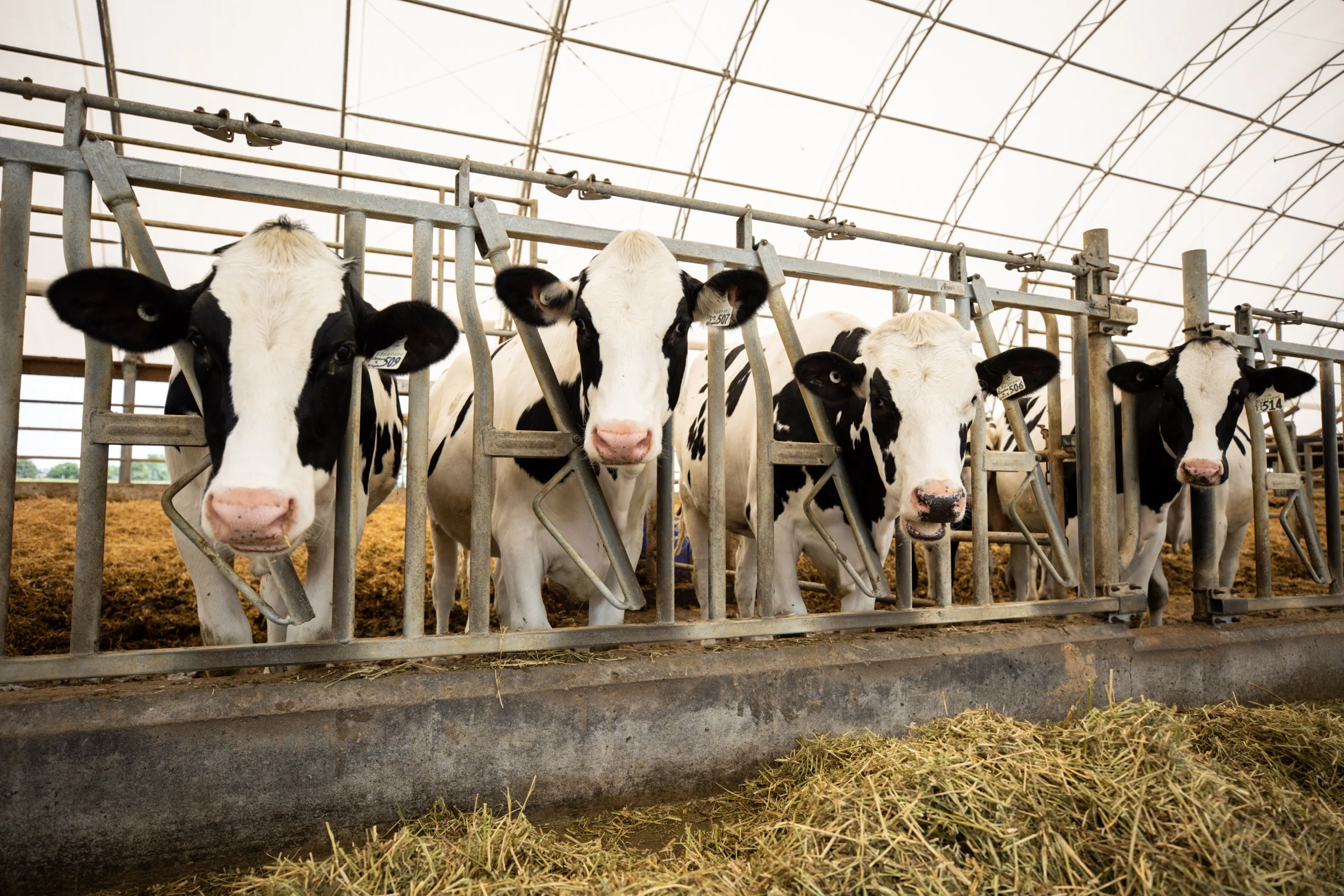
Beyond cost, one of the core advantages of a fabric building is what it does for your cattle. Specifically, the translucent cover and open design bring the barn closer to the natural outdoor environment. For example, at Doral Farms in Ontario, natural lighting improved the mood and health of the herd. When you consider fabric vs. traditional dairy barns from that perspective, you’ll notice:
- The natural lighting in dairy barns contributes to the health of your cattle
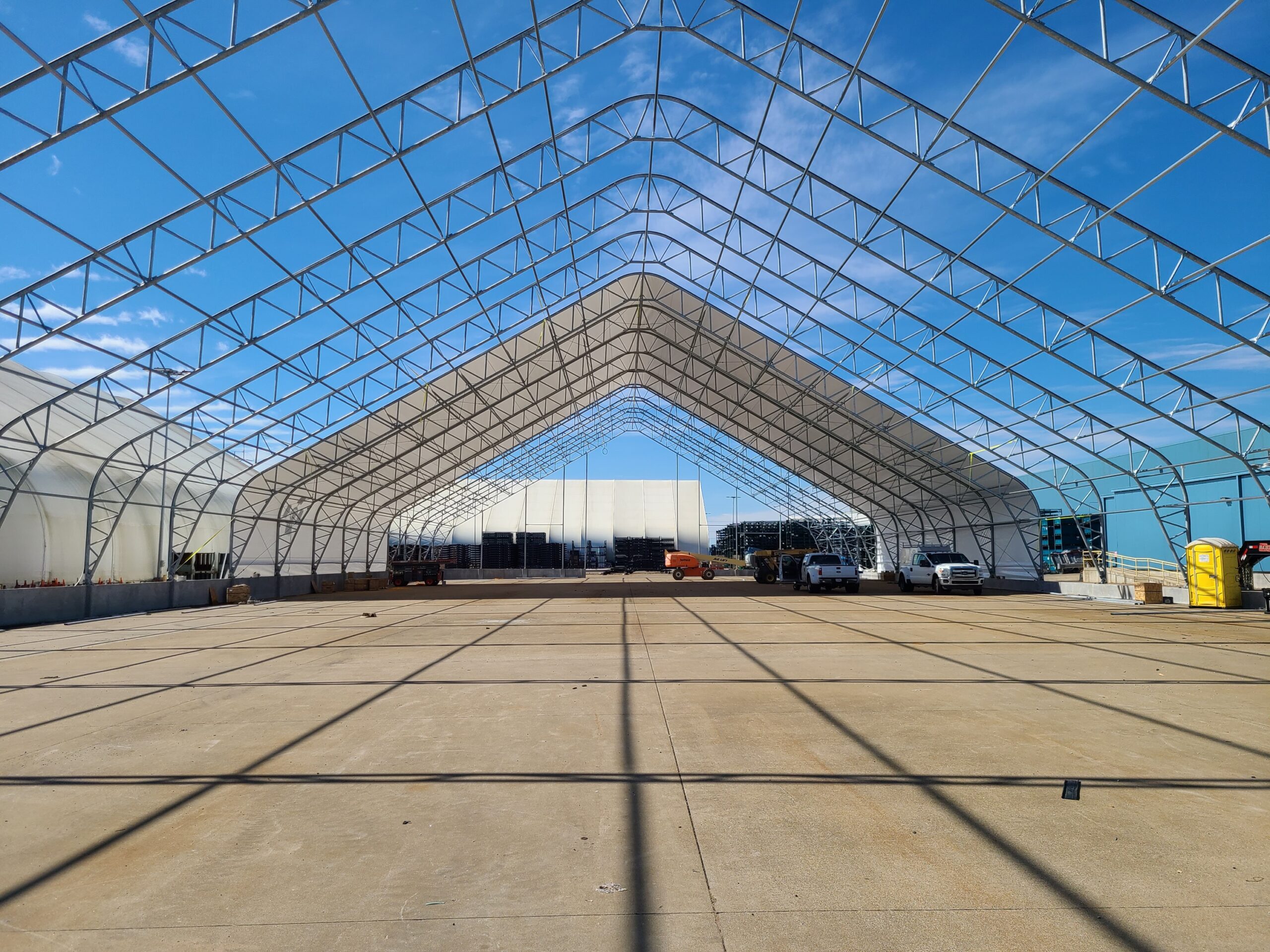
- The column-free interior allows you to maximize space, producing a better space for your cattle
- A thoughtful fabric dairy barn design also improves ventilation, with airflow that keeps animals healthy
- The low-shadow environment can also make a safer workspace for your team, reducing costs and risks
Fabric vs. Steel vs. Wood Dairy Barns
Today, most traditional dairy barns still use a steel or wood frame. When you compare dairy barn building materials, here’s how a steel dairy barn or wood pole barn stacks up against fabric on the points that affect your costs and your herd.
| Fabric Dairy Barn | Steel or Wood Dairy Barn | |
|---|---|---|
| Roof | Fewer punctures, so more airtight with less air and heat loss | Crews often puncture the outer covering thousands of times for roofing and cladding |
| Roof Life | Lasts longer than conventional steel or shingle roofs | Conventional steel or shingle roofs don’t last as long |
| Lighting | About 1/3 of the lighting capital costs; lights generally off during the day | Needs enough lights for the work area, day and night |
| Construction | Weeks instead of months | Labour-intensive, and steel can be time-consuming to build |
Real-Life Example: A Nova Scotia Dairy Farm
David Bent runs a family dairy farm in Middleton, Nova Scotia, milking about 110 cows. His newest building, a 100′ × 120′ Britespan dairy barn, added room for 36 more cows. Since the move, he reports that “cow comfort has improved dramatically with the extra space.” Beyond that, it’s one of seven or eight Britespan buildings on his farm, and in his words: “They go up in a hurry. They’ve been price competitive. The service is good.”
What Makes the Cost and Value of a Fabric Barn So Much Better?
You’ve seen that the dairy barn construction costs are lower, maintenance is less, and cattle are healthy. When you need sustainable barn construction that actually enhances milk production, here’s why Britespan is the ideal solution:
- The column-free interior allows for a space of 24’ to 210’ wide to any length, providing maximum use of your space
- Hot-dip galvanized steel offers a higher level of protection to the structure, reducing ongoing costs, extending the lifespan, and ensuring reliability in the harshest of climates
- Choose the accessories you desire, including fire suppression, ridge vents, insulation, and doors, in the setup that works for how you need it to
As cost-effective building solutions, fabric dairy barns are a great option. They are no less durable than traditional pole barns and typically can provide you with more versatility over time. As you think about dairy barn construction costs, especially when you desire energy efficiency in dairy barns to promote environmentally friendly production, you need fabric.
Common Questions About Fabric vs. Traditional Dairy Barns
What is the best building material for a dairy barn?
It depends on your herd, your site, and your budget. Fabric, steel, and wood all work, but a fabric dairy barn adds natural light, a column-free interior, and faster construction. That’s why dairy farmers like David Bent and the Whytocks at Doral Farms chose fabric.
How does a steel dairy barn compare to a fabric dairy barn?
First, a steel dairy barn needs lighting day and night, and crews often puncture its outer covering thousands of times to attach the roofing and cladding. In contrast, a fabric dairy barn lets daylight in, typically needs about 1/3 of the lighting capital costs, and goes up in weeks instead of months.
Are fabric dairy barns as durable as pole barns?
Yes. Fabric dairy barns are no less durable than traditional pole barns. In addition, their hot-dip galvanized steel frames resist corrosion, and our elite fabrics come with options for 25-year warranties.
Fabric vs. Traditional Dairy Barns: Choose Britespan for the Solution You Need
At Britespan, we offer a comprehensive line of fabric building profiles ideal for your dairy barn. With a wide range of features and customized solutions, you will find that having a fabric building installed is not only more cost-effective but often better for your cattle. Contact Britespan to discuss the style, size, and features that are right for your needs.
Updated: November 6, 2026