
Choosing the Right Fabric Salt Storage Buildings: Cut Costs and Stay Compliant

Choosing fabric salt storage buildings is about more than keeping piles dry. Specifically, a well-engineered design reduces runoff risk and protects your inventory from the elements. Furthermore, these structures help your team follow a formal road salt management plan, which protects both your budget and local waterways.
Why Covered Storage Matters for Compliance
In Canada, federal guidelines recommend strict best practices for handling and runoff control. Consequently, using covered storage on an impermeable pad is central to these practices. If you operate in the United States, the EPA’s Multi-Sector General Permit also expects salt-sand piles to be enclosed.
Beyond legal requirements, the environmental “why” is simple. High chloride levels from road salt stress aquatic life and affect drinking water. Therefore, reducing precipitation exposure is the most effective way to manage this risk.
Why Fabric is a Strong Fit for Salt and Sand
Fabric salt storage buildings deliver fast installation and bright, safe interiors. Because the frames are hot-dip galvanized, they stand up to corrosive environments better than painted steel. This durability significantly reduces long-term maintenance costs.
The Secret Lever: Optimizing Your Salt Shed Foundation
Many buyers overlook how the salt shed foundation impacts the total cost per ton. Specifically, your choice of foundation and wall strategy can make or break your usable volume.
Pier-Mounted Frames with Independent Bunker Walls
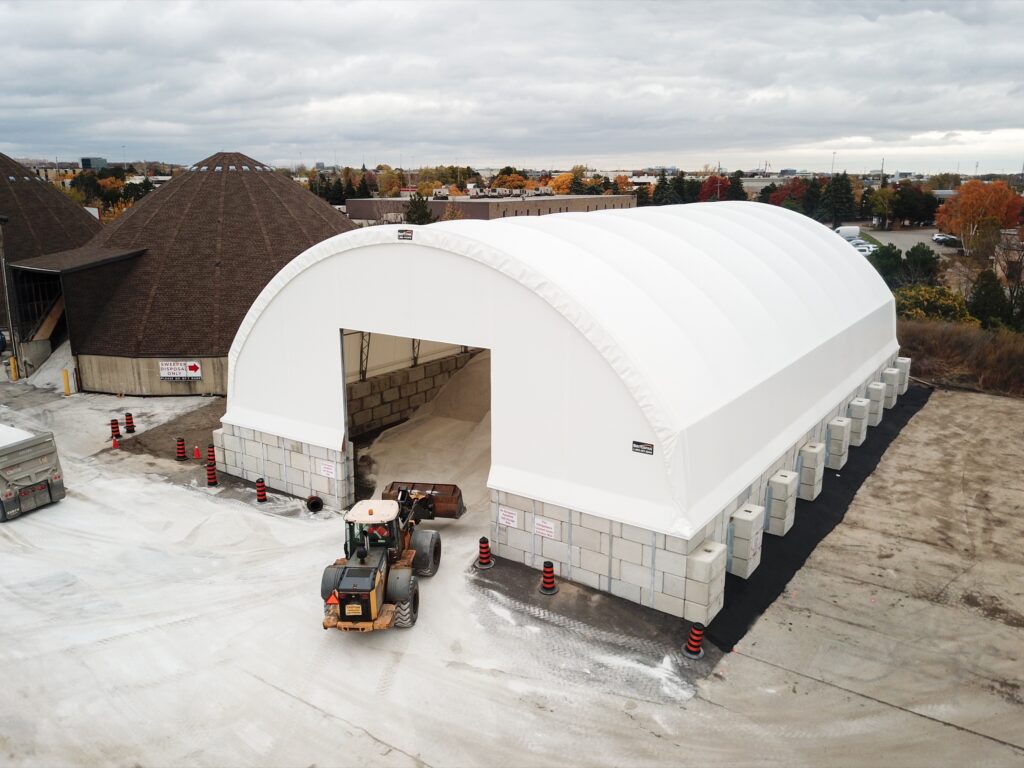
Instead of a continuous pour, the building columns sit on concrete piers. Meanwhile, precast or cast-in-place bunker panels remain independent of the frame.
Cost Efficiency: This method requires less concrete than a full stem-wall.
Speed: Installation is faster, allowing you to meet tight seasonal deadlines.
Volume: This layout creates a clearer path to higher storage walls.
In our project cost analyses, a pier-mounted salt shed foundation often cuts concrete costs by up to 50 percent. Consequently, you get more storage for a much lower initial investment.
More Volume, Same Footprint
Increasing your leg and pier heights allows you to store more salt without pouring more floor. For example, if your bunker wall height increases from 12 feet to 16 feet, your usable volume can rise by 30 to 50 percent. Because the clear span allows the pile to build higher, you maximize every square inch of the facility. Ultimately, more salt in the same footprint equals a lower cost per ton.
Spec Checklist for Engineered Salt Storage
Use this punch-list to ensure you are investing in high-quality bulk salt storage solutions:
Footprint and Clear Span: Confirm loader turning paths and conveyor clearance.
Leg and Pier Height: Set these to match your maximum pile height.
Bunker Walls: Use 16-foot panels to maximize capacity.
Corrosion Protection: Always specify hot-dip galvanized frames.
Ventilation: Use ridge vents to exhaust humid air and protect the structure.
Drainage: Ensure positive drainage away from piles per your road salt management plan.

Case Study: Large-Scale Efficiency at TJ Allen
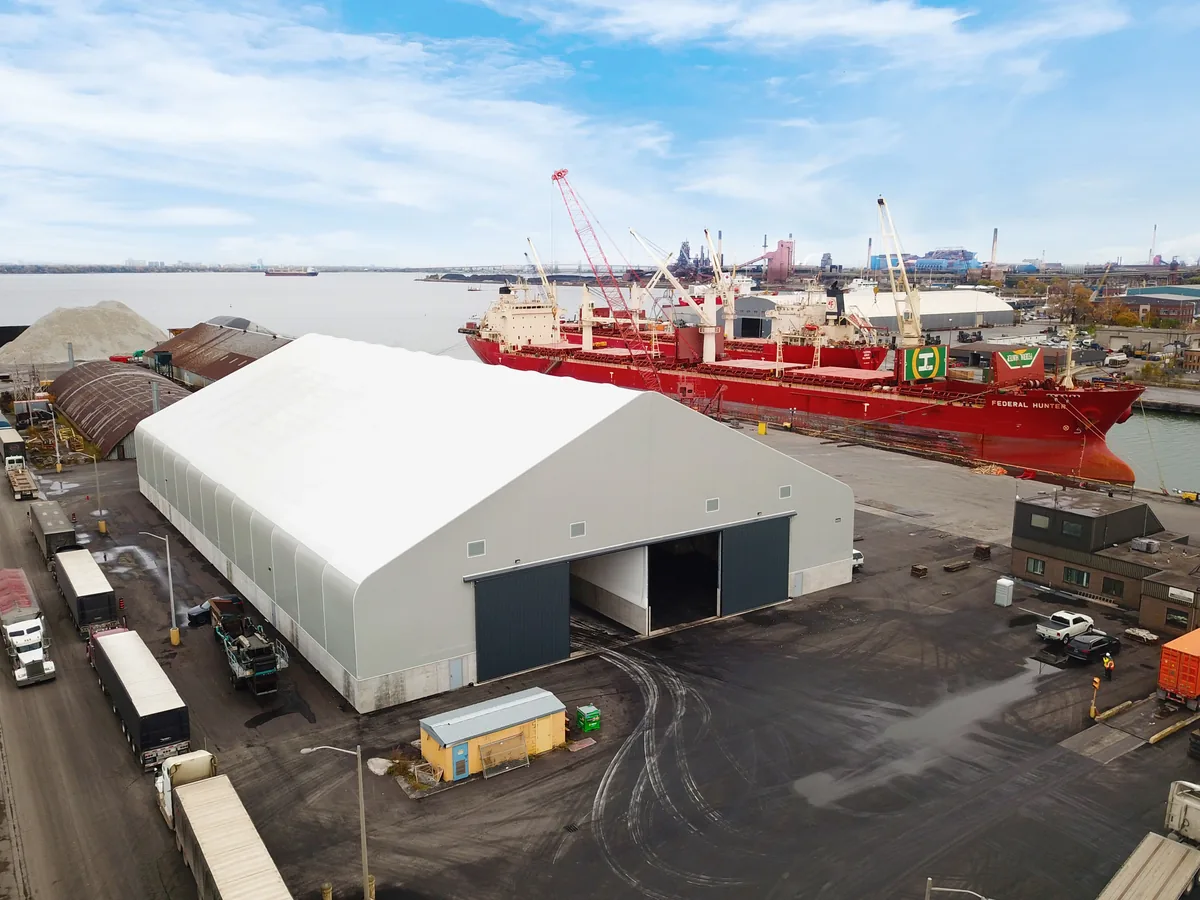
Real-world performance is the best way to evaluate engineered salt storage. For example, the TJ Allen project features a Britespan Genesis series building designed for high-volume operations. Because the Genesis profile offers massive clear-span widths, it provides the necessary clearance for large loaders to maneuver and build tall piles efficiently.
Specifically, this project demonstrates how a fabric salt storage building can handle the heavy-cycle demands of a regional distribution site. By combining a durable galvanized steel frame with a high-capacity footprint, the facility ensures long-term reliability even in corrosive environments.
Final Thoughts on Bulk Salt Storage Solutions
A smart investment in engineered salt storage protects both your budget and the environment. Focus on a covered fabric structure with galvanized framing to ensure durability. Additionally, prioritize a pier-mounted salt shed foundation to cut construction costs.
If you need help sizing your building or running a cost-per-ton comparison, the Britespan team is ready to help. We can suggest a configuration that fits your specific site and budget.
Ready to plan your build? Reach out to the Britespan team today for a design and budget estimate. We are happy to provide a capacity model for 12 and 16-foot bunker walls to help you choose the best fit.
Written by Lindsay Kenny | Technical Review by George Lawless
Last Updated: March 20, 2026