
Benefits of Fabric Buildings: 6 Proven Advantages
Fabric structures have quickly become the preferred building style for a wide range of industries and operations. The benefits of fabric buildings start with the structure itself: an airtight roof, year-round comfort, lower lighting costs, and construction measured in weeks. Together, they make fabric an economical, long-lasting building solution with a strong return on investment.
Here’s a closer look at the advantages of fabric buildings, followed by what owners say about theirs.
6 Key Benefits of Fabric Buildings
1. An Airtight Roof That Lasts
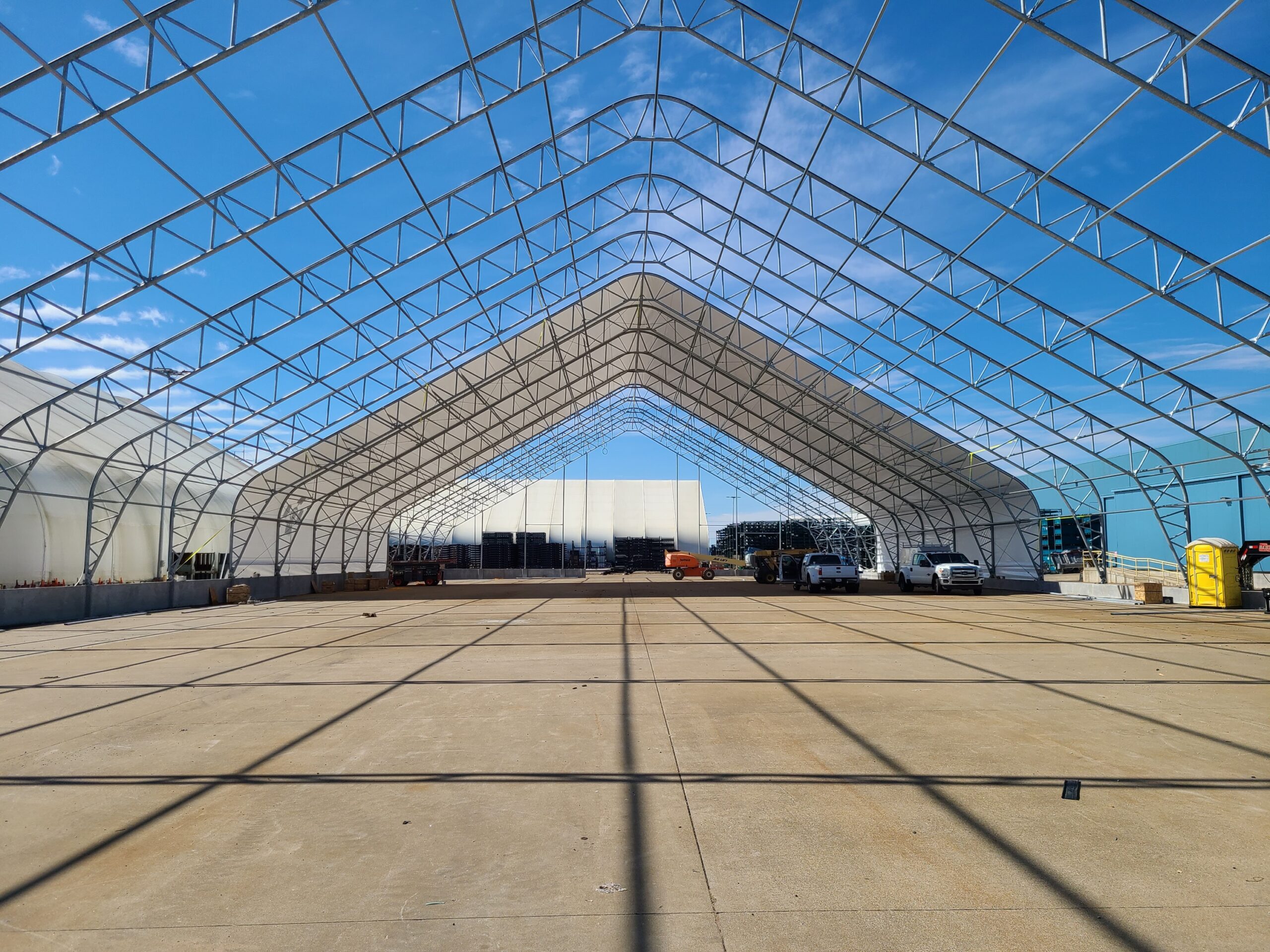
On a conventional building, crews often puncture the outer covering thousands of times to attach the roofing and wall cladding. As a result, each puncture becomes a place where air and heat can escape. In contrast, steel framed fabric tension buildings are much more airtight, which reduces air and heat loss.
Beyond that, the roof holds up over time. In fact, fabric roof systems last longer than conventional steel or shingle roofs.
2. Comfort Year-Round
The fabric cover has non-conductive properties that reduce the transmission of heat and cold. As a result, the building feels warmer in the winter and cooler in the summer.
3. Lower Lighting Costs
When you build with wood or steel, you need to add enough lumens to light the working area properly, day and night. As a result, those lights consume electricity every minute they’re on.
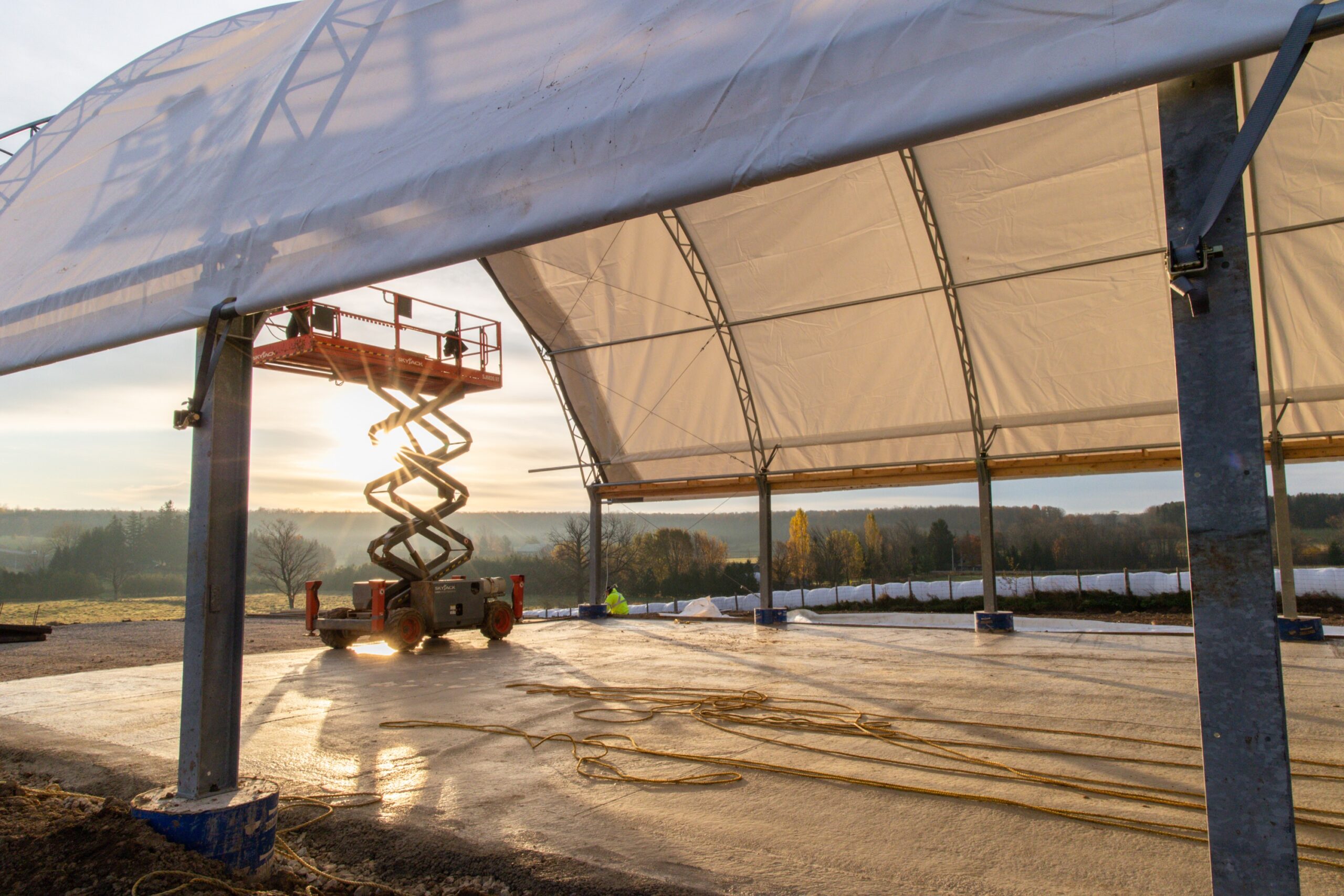
In contrast, a fabric building typically requires 1/3 of the lighting capital costs. Because the bright white underside of the fabric roof reflects and spreads artificial light broadly and evenly, it reduces shadows and reaches all areas of the building. Meanwhile, the translucent cover lets daylight in, so the lights generally stay off during the day.
4. Better Ventilation and Air Volume
Because fabric buildings feature a high roof design, they hold a large volume of interior air space. For example, in agricultural uses, this draws warm, moist air up and away from equipment, machinery, commodities, and livestock.
Plus, with side, end wall, and roof ventilation options, you can easily vent warm, moist air and odours from the building. Meanwhile, in commercial and municipal uses, the non-permeable fabric cover allows for more control over air management. Ventilation and heating or cooling systems are also easy to install and manage.

5. Faster Construction, Even in Remote Areas
Since pre-engineered fabric buildings ship ready to build unless the design is custom, crews can erect a fabric structure in weeks instead of months. That means customers move in quickly, with minimal interruption to daily operations, and the shorter build also reduces construction costs. For example, Scott Woods Transport went from floor pour to operation in one month with their 70′ × 120′ Apex Series building.
Wood and steel buildings, however, tend to have a labour-intensive construction process. Steel buildings can be costly, difficult to ship to remote areas, and time-consuming to construct. In contrast, we engineer fabric structures as permanent buildings, and their design also makes them easy to erect in remote areas.
6. Portable, With a Lighter Footprint
Because fabric buildings are versatile, they’re a strong fit for temporary warehouses or portable storage buildings. Specifically, flexible foundation options let you take down your building and move it to a new job site, or store it until you need it again.
That flexibility also protects your land. If you move the building, the site it stood on can return to its original state.
More Advantages of Fabric Structure Buildings
Beyond those six, the advantages of fabric buildings include:
- Engineered for your site. We engineer each building for local snow, wind, and seismic loads. Read about fabric buildings that hold up to snow and wind and why engineered vs. non-engineered structures matter.
- Clear span interiors. With no interior columns, you can use the full floor for equipment and storage. See how one grain handler put that space to work in our commodity building post.
- Corrosion protection. Hot-dip galvanized steel resists rust and corrosion. Learn why hot-dip galvanized fabric buildings last.
- Long life and low maintenance. Options for 25-year warranties on our elite fabrics back that up. Find out how long fabric buildings last.
- Replaceable covers. When a cover reaches the end of its life, you can replace it and keep the frame. Read our re-cover replacement guide.
- Insulation options. You can insulate fabric buildings for climate control. See practical insulation options.
- Flexible ownership. Lease-to-own and seasonal payment options can help you build sooner. Explore fabric building financing.
Where Fabric Buildings Work
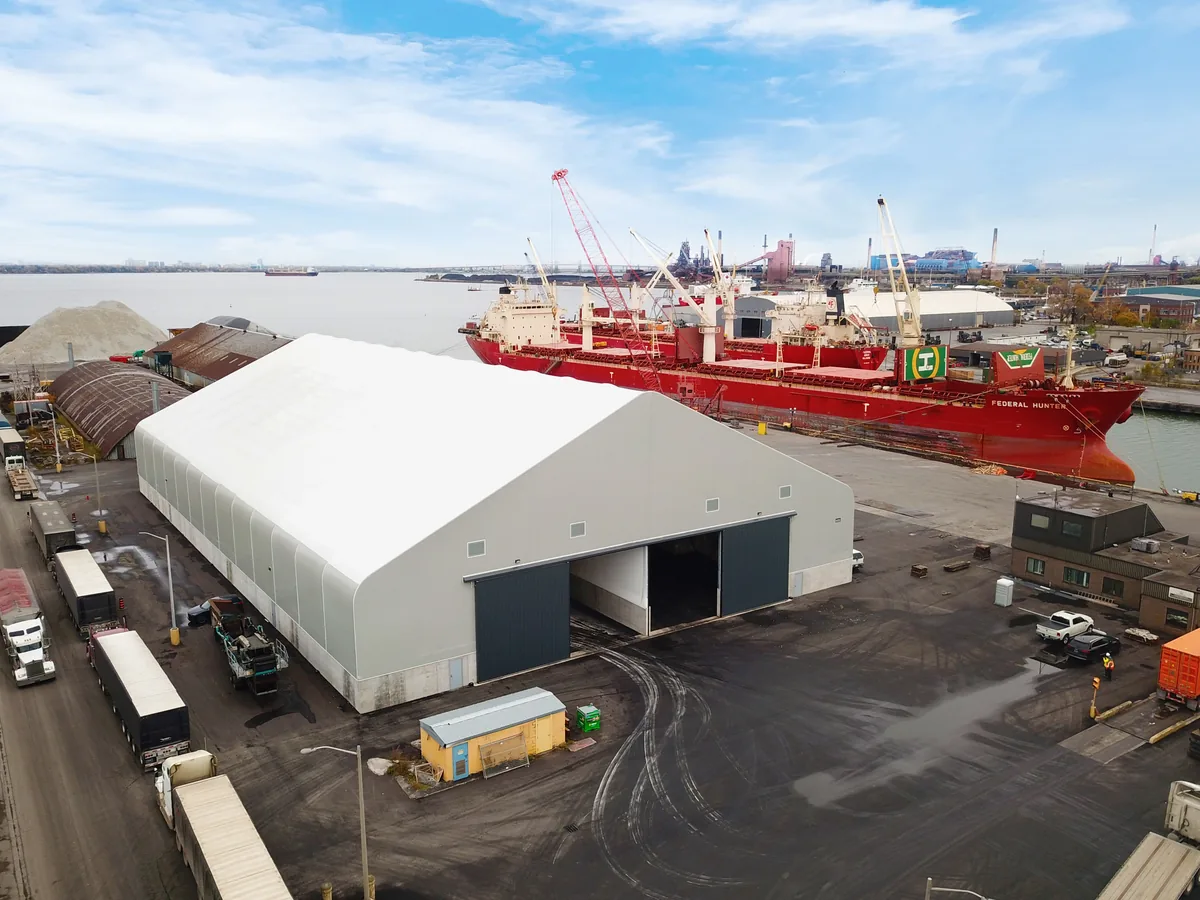
Because they adapt to so many uses, fabric buildings serve operations of every kind. Examples include fabric buildings for dairy barns, beef barns, hay storage, salt and sand storage, equipment storage, and riding arenas.
What Owners Say About Britespan Fabric Buildings
| Owner | Region | Building Details | In Their Words |
|---|---|---|---|
| Jeff Little, Public Works Director, Township of Lucan-Biddulph | Ontario | 60' × 84' Apex Series, sand storage | “To describe [Britespan] in one word, reliable, that’s an easy one.” |
| Gord Braun, Manager of Capital Assets, Parrish & Heimbecker Ltd. | Gladstone, Manitoba | 160' × 455' Genesis Series, grain storage | “The most important feature is that it provides protection of our products from the elements, at a reasonable cost.” |
| David Bent, Dairy Farmer | Middleton, Nova Scotia | 100' × 120' dairy barn, one of seven or eight Britespan buildings on his farm | “I think we have seven or eight of the buildings. They go up in a hurry. They’ve been price competitive. The service is good.” |
| Mark Alden, President, Scott Woods Transport | Sutton, Ontario | 70' × 120' Apex Series, maintenance facility | “For industrial jobs where time is everything, I would make the same decision again.” |

Common Questions About the Benefits of Fabric Buildings
What is a fabric structure?
A fabric structure is a building with a fabric cover stretched tight over a steel frame. Britespan’s fabric tension buildings pair galvanized steel frames with high-tension fabric covers, and we engineer them as permanent buildings for each site. To see how the main designs differ, read our guide to tension membrane vs. tensile fabric structures.
What are the benefits of fabric buildings?
Fabric buildings offer an airtight roof that lasts, year-round comfort, lower lighting costs, strong ventilation, fast construction, and portability. In addition, they come engineered for local loads, with clear span interiors and corrosion-resistant steel.
Are fabric structure buildings permanent?
Yes. We engineer fabric structures as permanent buildings. Depending on the foundation, you can also take them down and relocate them.
Do fabric buildings need lights during the day?
Generally, no. The translucent cover lets daylight in, so lights usually stay off during the day. Then, at night, the white underside of the roof spreads artificial light evenly.
Are fabric buildings warmer in winter?
Because the fabric cover has non-conductive properties, it reduces heat and cold transfer. As a result, the building feels warmer in the winter and cooler in the summer.
Talk to an Expert
The benefits of fabric buildings are proven in dairy barns, grain facilities, and salt and sand storage across North America. Your operation could be next. Tell us what you need to store, house, or protect, and we’ll engineer a building for your site and your loads. Contact Britespan to start your project.
Updated: November 6, 2026