
Farm Equipment Storage That Keeps Modern Machinery Moving
Bigger headers, wider implements, and year-round schedules have changed how farms think about space across the United States. As a result, from Midwest row-crop operations to Plains-based livestock producers, smart farm equipment storage protects assets, speeds daily work, and keeps maintenance simple. In turn, a Britespan fabric building delivers clear spans, bright interiors, and flexible layouts that fit today’s machinery and tomorrow’s upgrades.
Why Farm Equipment Storage Needs to Change for Modern Machinery
Modern fleets are taller, wider, and more connected than ever. Because of this, a well planned equipment storage building keeps machines out of the weather, reduces corrosion, and shortens start-up time. In states like Iowa and Illinois, where equipment often moves straight from planting to harvest with little downtime, efficient storage helps crews stay ahead of tight seasonal windows.
Clear lanes and clean sightlines also cut the risk of bumping fenders or catching hoses in tight quarters.
As a result, here are immediate wins you will notice:
- Faster park and pull-out with straight, unobstructed lanes
- Better inspections in bright, diffuse light
- Fewer weather delays for service and setup
- Easier winter starts and higher resale value over the life of the machine
How Does Clear Span Equipment Storage Fit Modern Farm Machinery?
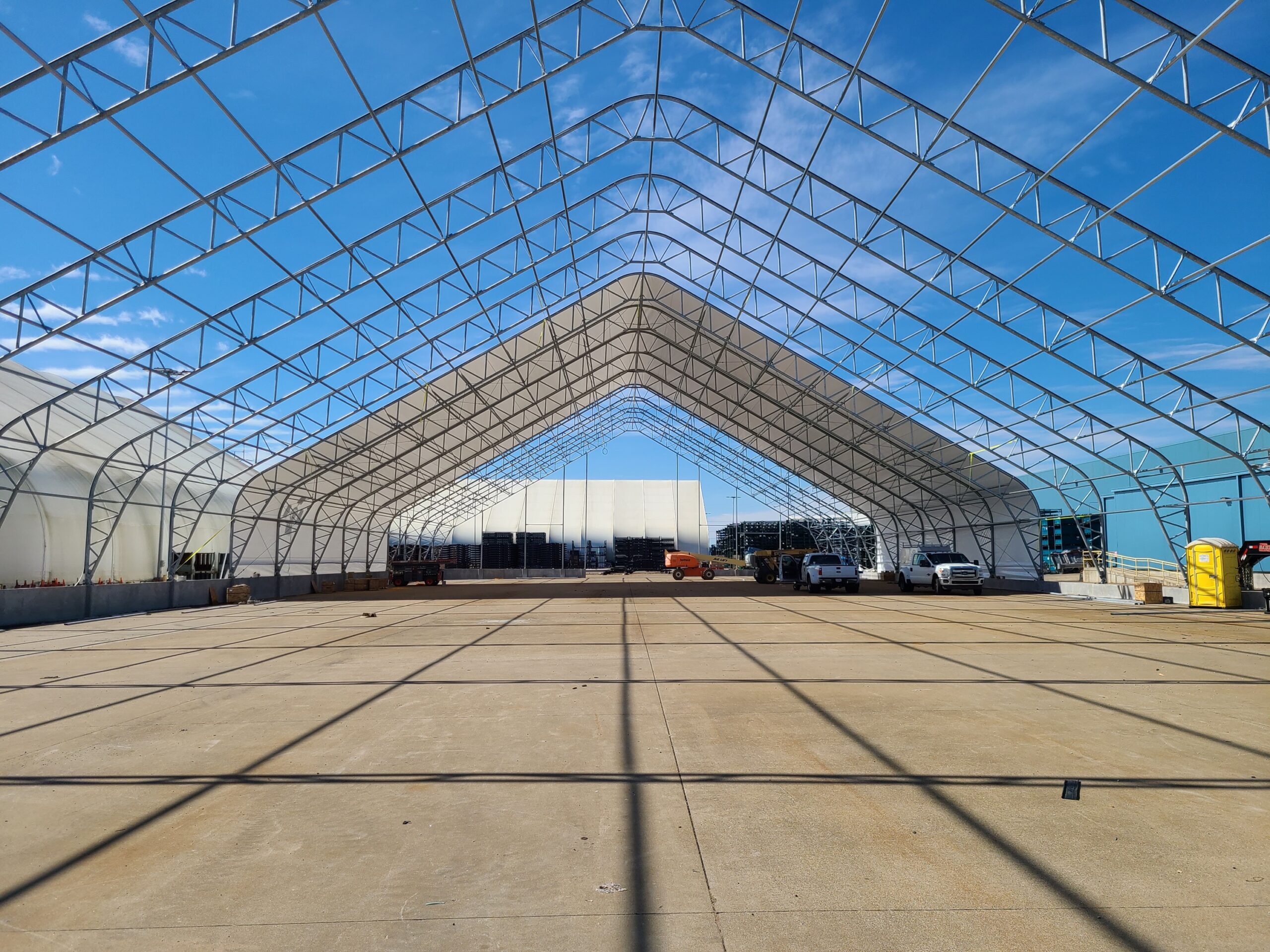
A clear span profile removes interior posts from your machinery shed, which matters when parking wide planters, high clearance sprayers, and dualed tractors. In northern regions where winter conditions limit indoor maneuvering, uninterrupted space makes parking and repositioning safer and more efficient.
For example, Britespan’s Atlas and Apex building series are designed around these real equipment challenges. The Atlas offers straight sidewalls that maximize usable width along the floor line, making it easier, for instance, to park attachments, header carts, and smaller support equipment close to the walls. Meanwhile, the Apex supports wider spans and taller clear heights, which suits mixed fleets with combines, large tractors, and sprayers that need extra headroom and open travel lanes.
Choose building width (up to 210’) to minimize tight turns and set eave height to your tallest machine with attachments installed.
Sizing tips that work in the field:
- Map your largest piece, including headers and mirrors, then add buffer space
- Plan drive-through bays for long implements to reduce reversing
- Keep aisle widths consistent so muscle memory helps prevent scrapes

Real-World Example of Farm Equipment Storage in Action
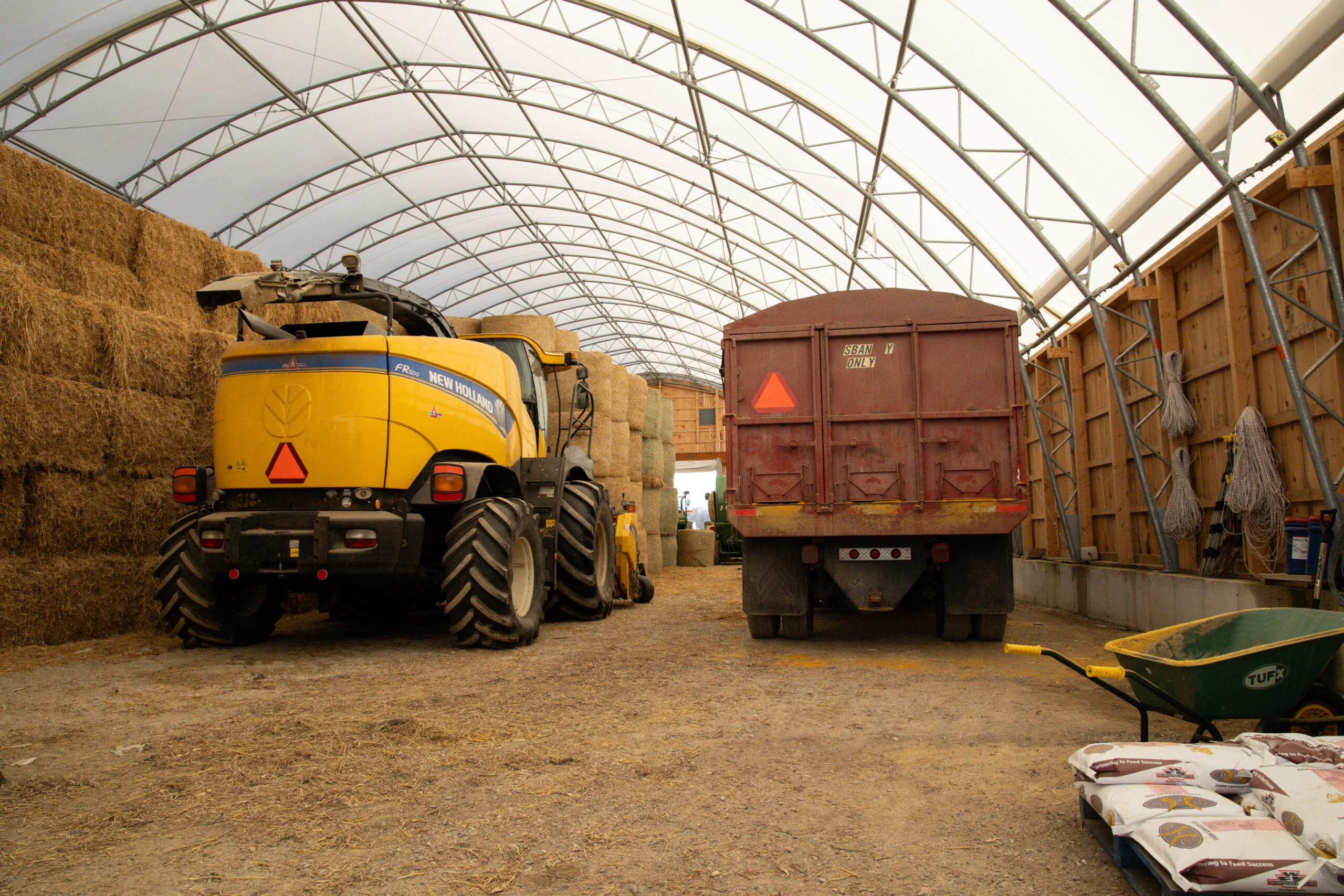
At Helmsview Farm, equipment storage was planned alongside livestock and feed needs to keep daily workflows efficient and predictable. For instance, one of the key structures on site is a 70 ft x 230′ ft Apex fabric building used for hay and equipment storage. The clear span interior allows large machinery to move in and out without tight turns, while the height and door access support modern tractors, loaders, and implements with attachments installed.
As a result, by pairing dedicated equipment space with nearby feed and livestock buildings, the farm reduced congestion around yards and barns. This layout shows how a purpose-built fabric equipment storage building supports safer maneuvering, protects high-value machinery, and adapts as equipment fleets grow over time.
How Equipment Shed Design Impacts Daily Farm Efficiency
Layout is where equipment shed design pays back. Organize parking to match seasonal flow so you are not jockeying machines when the weather turns. In fact, many U.S. operations overlap winter maintenance with spring prep, making predictable layouts essential.
Design moves that work:
- Group by season or task so priority machines sit near doors
- Mark lanes and stop points for repeatable park positions
- Place a small service bay with air, power, and parts storage near the main door
- At the same time, keep washdown outside the traffic loop with positive drainage away from thresholds
A fabric equipment storage building spreads daylight evenly across the floor, which reduces harsh shadow bands during inspections. Additionally, add task lighting above work areas for early mornings and late nights.

How Do Ventilation and Moisture Control Protect Farm Equipment?
Condensation is the enemy of harnesses, bearings, and electrical components. This is especially true in regions with freeze-thaw cycles or humid summers. Therefore, a simple ventilation plan maintains steady air exchange without drafts.
Key considerations:
- Height to support natural stack effect
- Ridge outlets or chimneys to exhaust warm, moist air
- Roll-up sidewall openings for controlled makeup air
In areas where winter temperature swings are common, consistent airflow helps protect sensitive components. Britespan’s galvanized frames and sealed hardware support long service life inside agricultural equipment storage environments.
Doors, Access, and Traffic Flow in Agricultural Equipment Storage
Right-sized doors keep workflows smooth. Use tall, wide openings at the ends for combines and sprayers. Add side access for utility vehicles and pickups to keep traffic out of main lanes.
If winter access matters, consider opposing end doors to reduce snow blow-in while preserving one-way loops. Thoughtful door placement improves safety, shortens movement time, and reduces wear on both equipment and operators.
Temporary vs Permanent Equipment Storage Buildings
If you need cover quickly, a temporary installation can be set fast and relocated later. This works well for short-term fleet expansion or seasonal storage needs.
A permanent solution supports tailored door packages, integrated utilities, and taller eaves, which many producers prefer for long-term planning. Both options can be engineered for local wind and snow conditions, whether you’re managing open exposure in Kansas or heavier snow loads farther north.
Both paths support long service life with routine checks and a planned re-cover. Review re-cover options and confirm long-term support through the warranty.
Quick Answers for Busy Seasons
What size do I need for farm equipment storage?
Start with your largest machine, add safe clearance for mirrors and ladders, then set eave height to attachments. Choose a width that removes posts from turning paths.
How does a fabric building help with maintenance?
Britespan’s bright interiors improve visibility for leak checks and harness inspections. Clean air movement reduces condensation that leads to corrosion.
Can I expand later?
Yes. Britespan clear span agricultural equipment storage can often extend in length as your fleet grows, with minimal disruption.
How do I plan doors for mixed fleets?
End doors for large machines, side doors for daily pickups and UTVs. Place doors to support one-way loops and fewer reverse moves.

Next Steps for Smarter Farm Equipment Storage
In short, smart farm equipment storage is about building space that matches how your operation runs. A well-designed equipment storage building protects machinery from weather, reduces wear, and keeps daily movement efficient in every season.
It comes down to three essentials:
- Clear span layouts that support modern equipment
- Durable, corrosion-resistant materials built for long-term use
- Practical design that fits your fleet today and adapts as it grows
With those elements in place, a fabric equipment storage building becomes a lasting asset. Britespan farm structures deliver bright interiors, flexible layouts, and reliable protection that help equipment start cleaner, service faster, and hold value over time.
If you are planning updates to your agricultural equipment storage or looking ahead to future growth, our team can help you design a solution that fits your operation. Connect with a Britespan building expert to start planning storage that works as hard as your equipment does.
Written by: Lindsay Kenny | Technical Review by: George Lawless
Updated: July 24, 2026