
Why Dairy Farmers Are Choosing Fabric Covered Equipment Storage for Year Round Protection
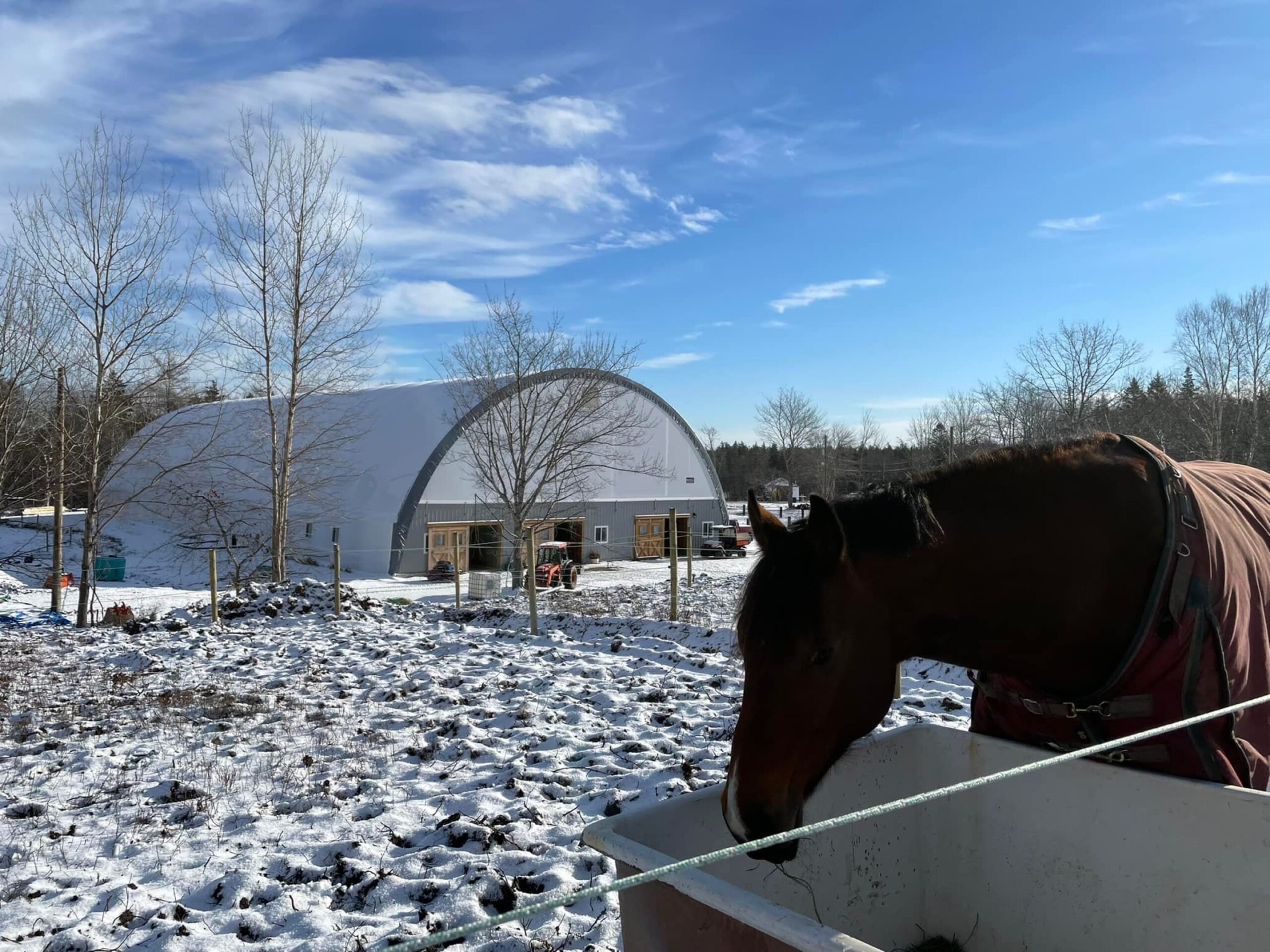
Protecting equipment has always been a priority for dairy operations, but the way farms store their machines is changing. More producers are shifting to fabric covered equipment storage because it solves several year round problems at once. It keeps tractors, mixers, loaders, and feed equipment dry, reduces corrosion from winter moisture, and frees up working space inside barns where every square foot matters.
What Problems Does Fabric Covered Equipment Storage Solve for Dairy Farms
Most questions from producers start with simple concerns.
“How do I keep my machinery dry in winter?”
“What is the best way to free up barn space?”
“How do I prevent rust and avoid early repairs?”
A dedicated farm equipment storage building answers all three. Moisture is one of the biggest drivers of repair costs. Snow melt around parked equipment leads to freeze thaw cycles, rusted components, corroded harnesses, and electrical issues. A dry, open storage space cuts these risks immediately.
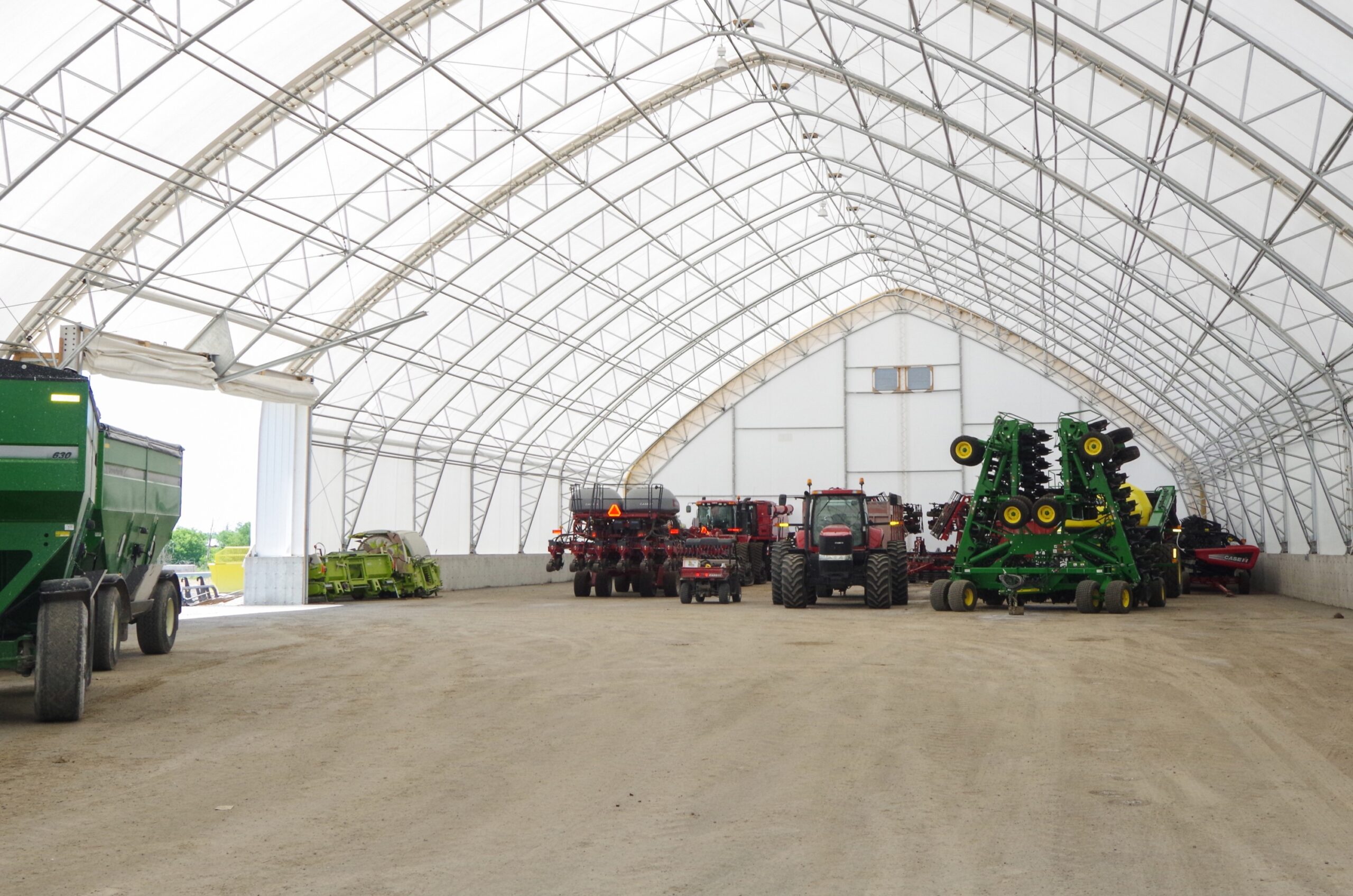
Fabric structures also replace the need to park machines in feed alleys, heifer barns, or bedded pens. That helps maintain cleaner traffic routes and reduces crowding during winter chores. For farms dealing with limited yard space, a clear span design creates usable room without posts or partitions, which is one of the biggest reasons dairy producers are exploring this building style.
Why Fabric Buildings Fit Dairy Workflows Better Than Traditional Structures
Modern agriculture fabric buildings are engineered with daily dairy use in mind. The biggest advantage is the clear span interior. Without posts or beams interrupting the floorplan, operators can park equipment in straight passes, stage machines for morning feeding, and pull loads without tight turns.
The Atlas Series is a strong option for this type of layout. Its smooth arch geometry provides generous overhead clearance down the centerline, which helps when storing tall loaders, mixers, or bale handling attachments. The Epic Series offers a peaked roof with straighter sidewalls that line up easily with racks, shelving, or tool zones.
Natural light is another advantage. The translucent membrane reduces harsh shadows and creates full daylight coverage across the entire space. This matters for safety during early morning starts, and reduces the need for daytime lighting. You can learn more about how this works in The Advantages of Natural Lighting in Fabric Structures.
Ventilation plays a role too. Even stored equipment produces moisture as snow melts from wheel wells and buckets. A breathable fabric envelope allows warm, moist air to rise and escape, which helps maintain a stable environment inside the building.
How Fabric Structures Reduce Equipment Wear Over Time
Farmers often ask if fabric structures actually extend equipment lifespan. The short answer is yes. The longer explanation comes down to how the building membrane works.
A well tensioned membrane keeps snow, rain, and condensation away from machinery. This protects paint, wiring, hydraulic lines, and electronics. It also reduces corrosion caused by salt exposure during winter yard work.
Britespan uses hot-dip galvanized steel frames designed to resist rust and deliver long service life. When paired with a non-corrosive membrane, the system creates a protective environment that lowers long term costs. Check out more details in our blog, The Value of Custom Engineered Fabric Structures for Your Unique Project.
Bonus! These same advantages apply to attachments, tires, and smaller equipment pieces that often get left outside during peak seasons.
Real Example: A Practical Addition That Freed Up Dairy Barn Space
Many producers expand their equipment needs long before they expand their barns.
Tenhove Farms experienced this firsthand. Their operation needed additional room to manage daily machinery and improve workflow during feeding and bedding. A Britespan Atlas addition created the extra space they needed without shutting down daily routines. The building delivered bright, open storage where tractors and mixers could be staged away from cattle areas.
This type of addition is common for farms that want to move equipment out of barns and into a dedicated structure. It keeps the main barn cleaner, improves biosecurity, and shortens daily tasks because traffic routes stay clear.
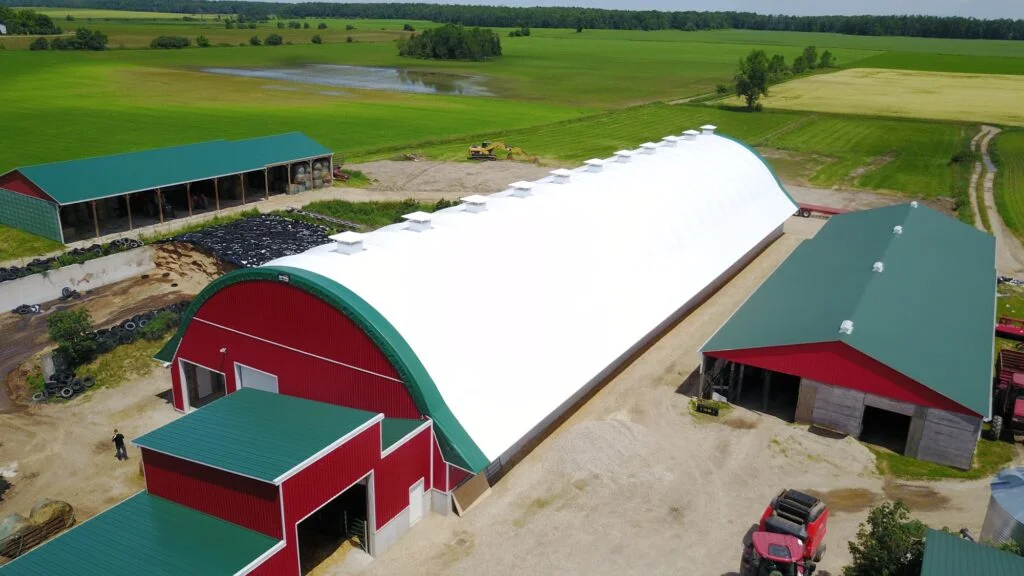
Tenhove farms 62×220 Atlas Farm Storage
What Features Matter Most When Choosing Fabric Covered Equipment Storage
Every dairy farm is different, but several design choices consistently make a difference.
- Clear Span Space: It keeps floorplans flexible and allows you to reposition machines as equipment needs change.
- Correct Width and Bay Spacing: Wider buildings like Atlas and Epic profiles allow multiple parking lanes and straight in access for loaders and feed equipment.
- Ventilation: Sidewall openings or ridge vents help control humidity during winter storage.
- Durable Materials: Galvanized steel frames and tensioned polyethylene membranes resist corrosion and offer dependable performance.
- Easy Access: Large end doors, high openings, and simple equipment paths reduce delays and keep workflows predictable during morning feeding or winter storms.
How Fabric Storage Improves Year Round Planning
If you operate in areas with heavy snow, spring mud, or fluctuating humidity, a covered storage building reduces daily wear on your equipment. It also helps keep winter workflows steady because machines start easier, stay cleaner, and remain accessible.
Agriculture fabric buildings fit well into seasonal planning because they go up quickly. A structure can often be installed in weeks rather than months, which supports mid-season expansions or pre-harvest planning.
So, Why Fabric?
Dairy farmers are choosing fabric-covered equipment storage because it protects machinery, simplifies daily work, and offers clear span space that adapts as operations grow. With dependable ventilation, natural light, and durable materials, these buildings support long term equipment health and year-round workflows.
Profiles like the Atlas and Epic Series offer strong, flexible options for farms that want a safe, bright, and practical storage solution that keeps equipment ready for every season.
If you are planning your next building, contact us to see how a Britespan fabric structure can support your dairy operation with strength, coverage, and confidence.