
Horse Barns and Indoor Arena Designs That Works for U.S. Equine Operations
Across the U.S., equine operations are evolving. Owners and facility managers are balancing animal welfare, rider safety, and year-round usability while navigating regional climate challenges and local permitting requirements. Specifically, whether the goal is daily training, boarding, or professional riding programs, the design of modern horse barns and arenas plays a direct role in performance and long-term success.
Fabric equine structures have become a trusted solution for operations that need durability without sacrificing flexibility. By combining Britespan’s engineered steel frames with high-performance fabric enclosures, these buildings support consistent training, healthier horses, and safer working environments across a wide range of U.S. climates.
Why Do Horse Barns and Indoor Arena Designs Matter in the U.S.?
Owners no longer treat equine facilities as seasonal spaces. In many regions, barns and arenas must perform year round while protecting animals and riders from changing weather conditions. For example, in northern and mountain regions require snow load engineering. Meanwhile, wind exposure influences structural design in open rural areas. Furthermore, heat and humidity management directly affect horse comfort in warmer southern climates.
Well-designed equine facilities account for these factors from the start. A properly planned indoor arena allows training and riding to continue through winter months, while a thoughtfully designed barn supports daily care, feeding, and movement without unnecessary stress on horses or staff.
Fabric Horse Barns and Indoor Arenas vs Traditional Equine Buildings
Builders often construct traditional equine buildings using familiar construction methods, but modern equine operations increasingly look for spaces that improve airflow, visibility, and long-term usability. Consequently, fabric buildings address these needs by combining engineered structure and enclosure into a single, efficient system.
Additionally, Britespan designs fabric horse barns to support daily routines such as feeding, cleaning, and equipment movement while maintaining a bright, well-ventilated interior. Plus, the clear, open layout allows stall configurations and service areas to adapt as operations evolve. For training and riding, fabric-covered arenas provide wide, unobstructed interiors that enhance safety, sightlines, and flexibility for different disciplines.
By focusing on usable space, natural light, and practical layouts, fabric buildings offer equine facilities a reliable and adaptable solution without the constraints often associated with more rigid construction approaches.

Case Study: High-Performance Indoor Riding Arena
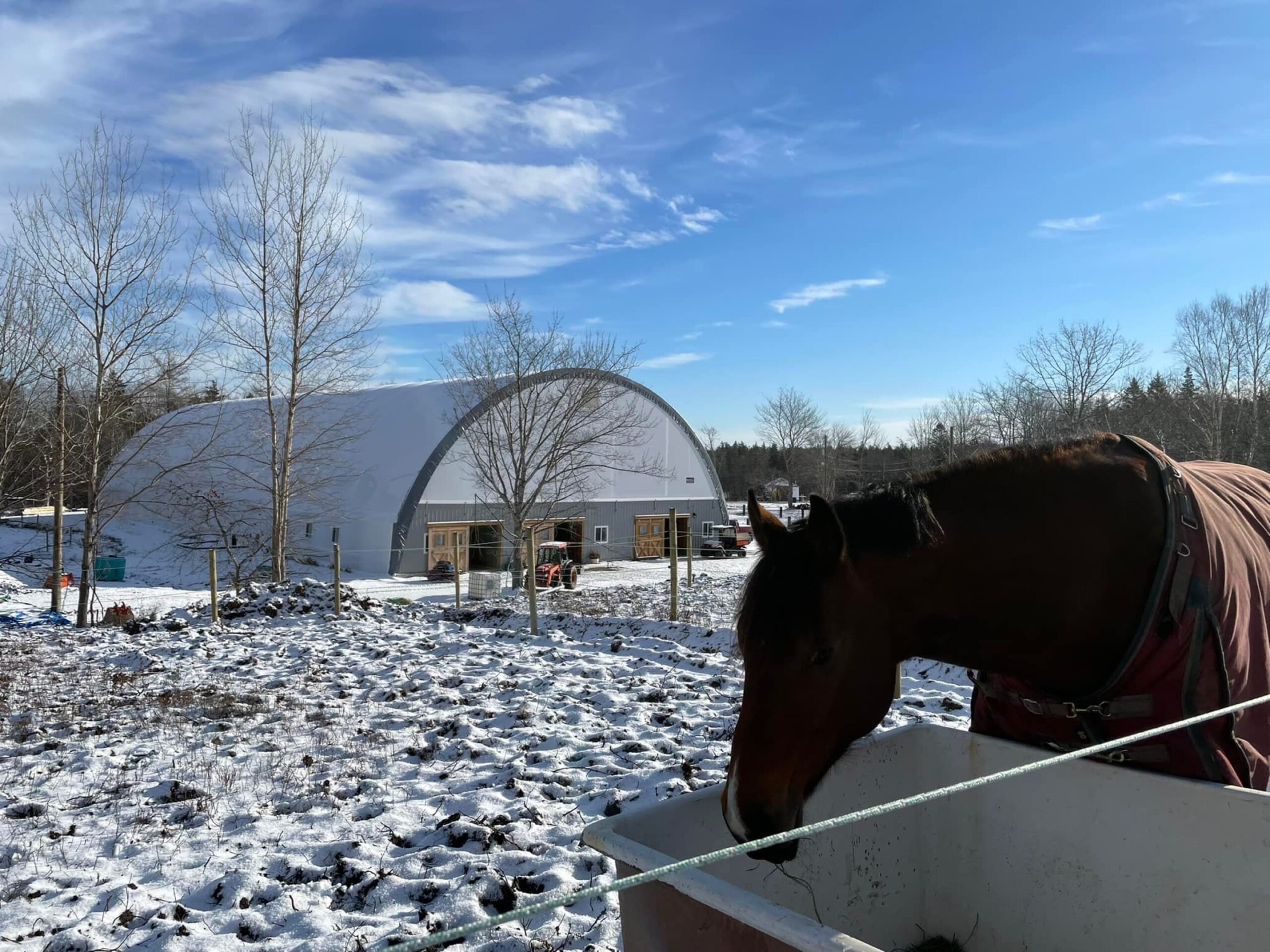
Specifically, Britespan customer Susan Georgas recently shared a tour of her custom indoor riding arena. This facility features steel end and sidewalls, Dutch doors, an overhead door, and windows. Inside, the layout supports a full tack shop and 10 stalls. Consequently, this project demonstrates how fabric horse barns deliver the durability and aesthetic appeal of traditional builds while providing a bright, clear-span interior.
How Does Clear Span Indoor Arena Design Improve Riding Safety?
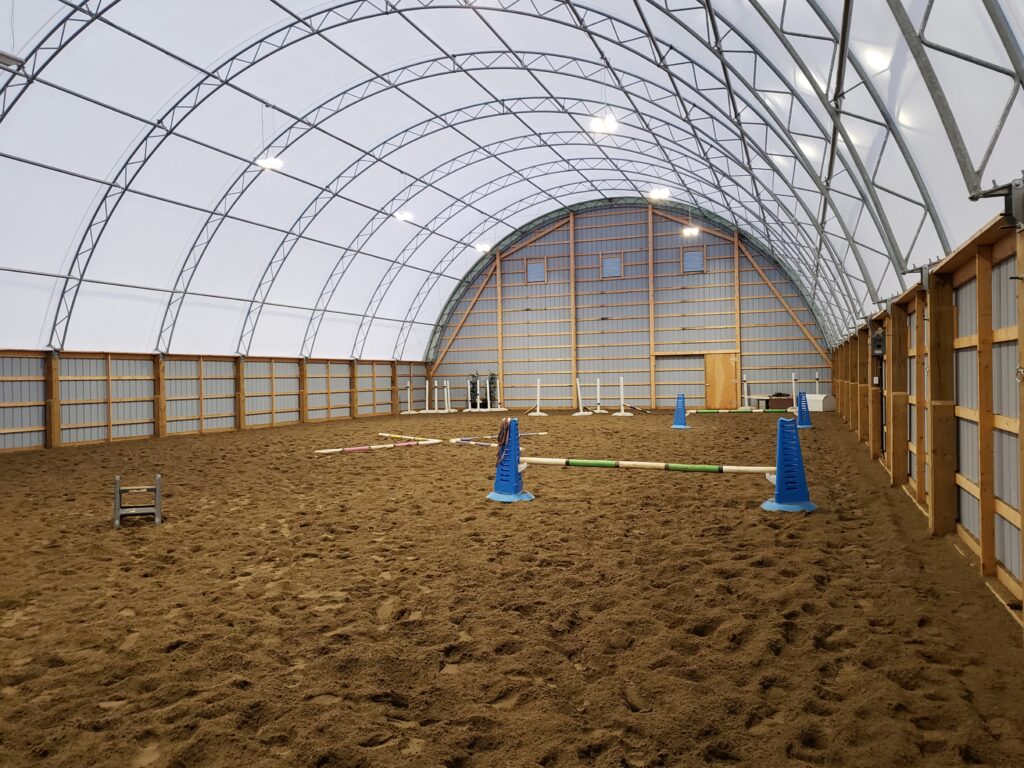
Safety and visibility are essential in any equine riding space. Clear span design eliminates interior columns, creating uninterrupted sightlines for riders, trainers, and horses. As a result, in a clear span indoor arena, there are fewer obstacles, reducing collision risk and improving overall flow.
This open interior also allows for flexible footing layouts and accommodates different riding disciplines. For equine operations that host lessons, events, or multiple training programs, clear span design supports adaptability without compromising safety.
How Do Fabric Buildings Support Ventilation, Light, and Horse Comfort?
Air quality and light levels directly affect horse health. Fabric enclosures naturally allow daylight to enter the space, creating brighter interiors that support better visibility and more comfortable working conditions. Consequently, reduced reliance on artificial lighting can also improve energy efficiency.
Furthermore, ventilation plays a critical role in maintaining stable interior environments. In warmer southern regions, airflow helps reduce heat stress and humidity buildup. On the other hand, for the colder climates, controlled ventilation supports fresh air exchange without exposing horses to drafts.
In short, these characteristics make Britespan fabric buildings well suited for equine facilities focused on comfort, consistency, and animal welfare.
Durability and Corrosion Resistance in U.S. Equine Environments
Equine buildings are exposed to moisture, bedding materials, and regular wash downs. Over time, these conditions can damage structural components unless you protect them properly.
Britespan equine structures rely on hot dip galvanized steel trusses, which are galvanized after fabrication to protect every weld and connection point. As a result, this process improves resistance to corrosion and supports long-term durability, even in demanding environments.
For equine facilities planning for decades of use, corrosion resistance reduces maintenance demands and protects the integrity of the structure.

Planning Horse Barns and Riding Arenas for Long-Term Growth
Equine operations often evolve over time. Boarding numbers change, training programs expand, and additional riding space may become necessary. Luckily, fabric structures support this growth by allowing future expansion or modification without starting from scratch.
Ultimately, for facilities considering both a barn and a horse riding arena, planning with scalability in mind helps align current needs with future goals. Fabric structures provide the flexibility to adapt layouts and square footage as operations grow.
Frequently Asked Questions About Horse Barns and Indoor Arenas
Are fabric buildings suitable for permanent equine facilities in the U.S.?
Yes. When properly engineered and permitted, authorities classify fabric buildings as permanent structures. They are designed to meet local building codes and zoning requirements, just like traditional equine facilities.
How do fabric horse barns perform in heavy snow or high wind areas?
Our team engineers these barns to match local conditions across the U.S. In snow-heavy states like Minnesota, designs account for higher ground snow loads, while in wind-exposed regions such as Kansas, framing and foundations are engineered to handle sustained wind pressures for reliable, year-round performance.
Do fabric horse barns provide enough ventilation for horses?
They do. These specialized enclosures support natural airflow and can be paired with ventilation systems designed to manage humidity, heat, and air quality, which is especially important during summer riding and training.
Are clear span indoor arenas safer for horses and riders?
Specifically, clear span design removes interior columns, improving visibility and reducing collision risks. This creates a more open, predictable riding environment that supports safer training and daily use.
Can a fabric equine facility be expanded in the future?
In many cases, yes. Fabric structures are often designed with future growth in mind, allowing length extensions or layout changes as equine programs and boarding needs evolve.
Final Thoughts
Modern equine operations across the U.S. require buildings that balance performance, comfort, and long-term value. Thoughtfully designed fabric horse barns and arenas provide a practical solution for year-round riding, animal care, and facility growth.
Fortunately, with bright interiors, clear span spaces, and reliable performance across diverse climates, fabric buildings support the evolving needs of equine facilities. If you are planning a new build or upgrading an existing space, connect with the Britespan team to explore layouts, timelines, and options designed around your operation.
Written by Lindsay Kenny | Technical Review by George Lawless
Published: March 20, 2026