
Fabric Building Tension Systems Explained: Mono vs. Keder Panels
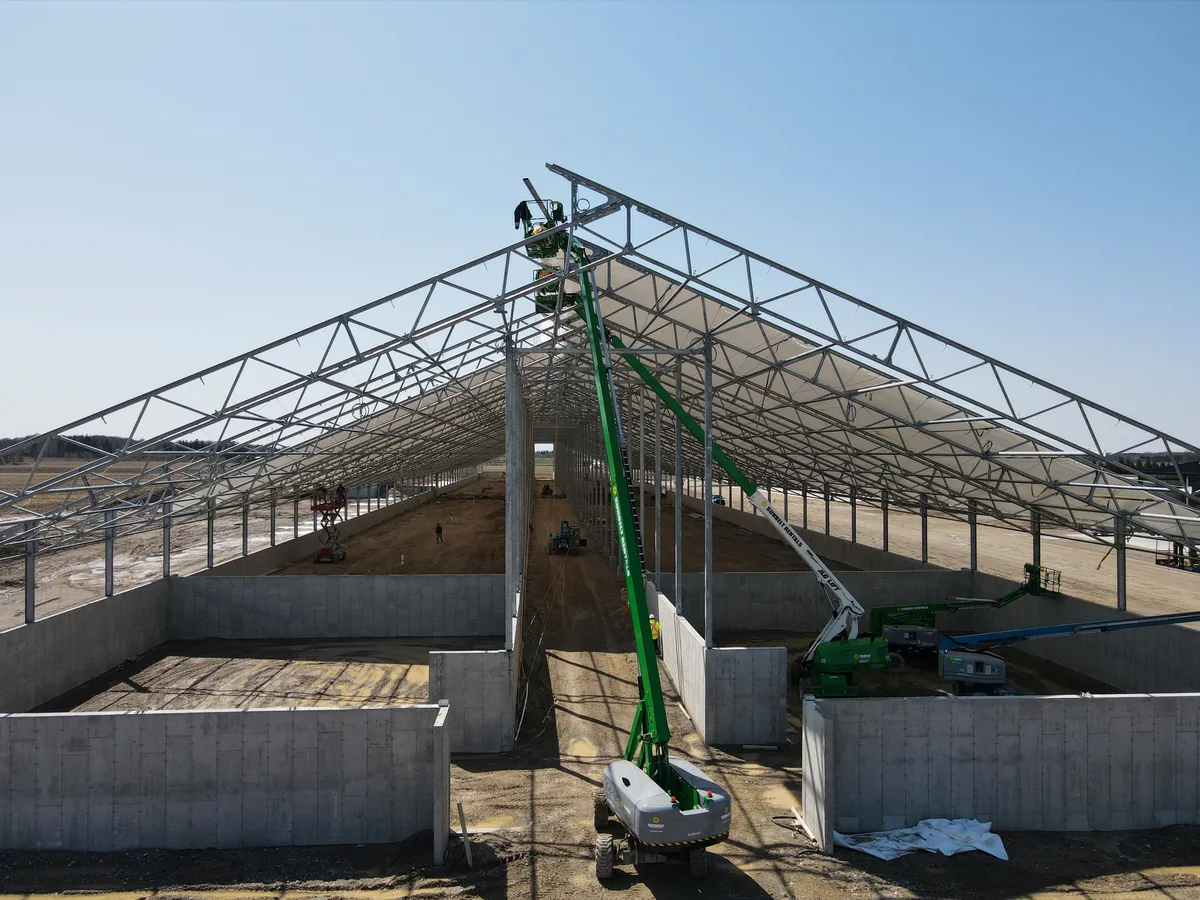
Manufacturers do not simply drape the fabric cover on an engineered fabric building over a steel frame and leave it to sit. Instead, it is a tensioned membrane. The fabric building tension system that holds it determines cover performance, lifespan, and maintenance over the building’s service life.
Understanding the fabric building tension system is as important as understanding the frame. The industry uses two primary cover attachment systems: mono cover and keder panel. They differ in how they apply tension, how the cover responds over time, and how crews manage replacement. Knowing the difference helps buyers match the right system to their application before the building goes up.
Why the Tension System Is the Foundation of Cover Performance
A fabric cover performs as an engineered membrane only at the correct tension. Specifically, proper tension keeps the cover taut and prevents pooling and flapping in wind. It also maintains the weatherproof seal at attachment points and distributes load evenly across the structure.
When tension is insufficient or uneven, the cover under performs. It can develop stress concentrations at attachment points and allow water infiltration at seams. It also wears prematurely through abrasion against the frame. In practice, the tension system is what separates a cover that performs as designed from one that requires early intervention.
As a result, the choice of tension system is a long-term operational decision, not just a specification detail.
What Is a Mono Cover Fabric Building?
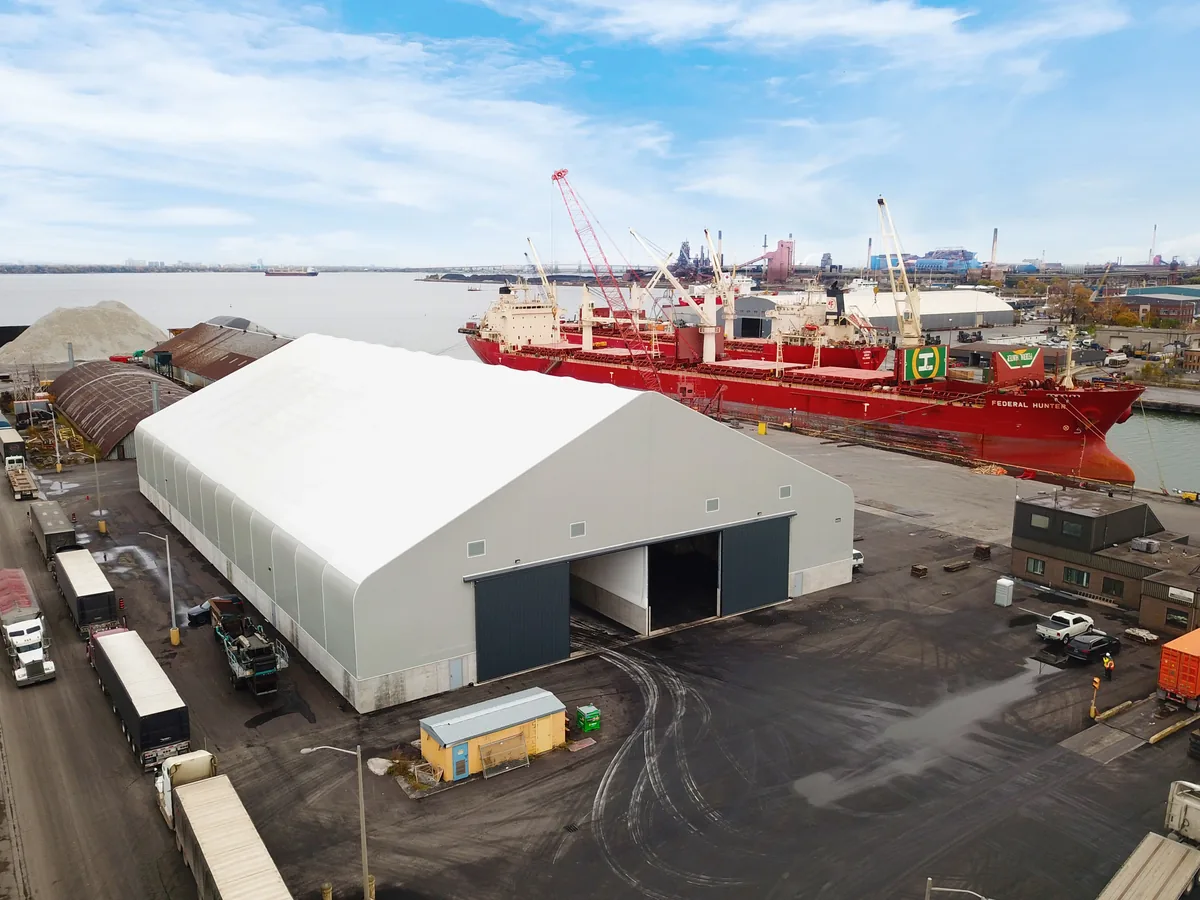
A mono cover fabric building uses a single continuous membrane tensioned over the full frame, end to end. The cover wraps the entire structure in one piece. Attachment points sit at the base of the sidewalls and at the end walls, which anchor and tension the fabric.
The mono cover system applies tension across the full cover simultaneously. When properly installed and tensioned, it behaves as a single unified membrane with no internal seams across the roof. This gives the mono cover a clean, consistent profile. It also eliminates the panel-to-panel seam failures that can develop in multi-panel systems over time.
As a result, a tensioned fabric building using a mono cover is straightforward to install and produces a predictable, uniform appearance. For operations where a clean exterior profile and minimal seam complexity are priorities, the mono cover system is a practical choice.
The practical consideration for mono cover buildings is straightforward: when the cover reaches the end of its service life, crews replace the entire membrane in a single operation. That replacement follows a planned schedule, a full fabric building re-cover, rather than targeted panel-by-panel maintenance.

What Is a Keder Panel System?
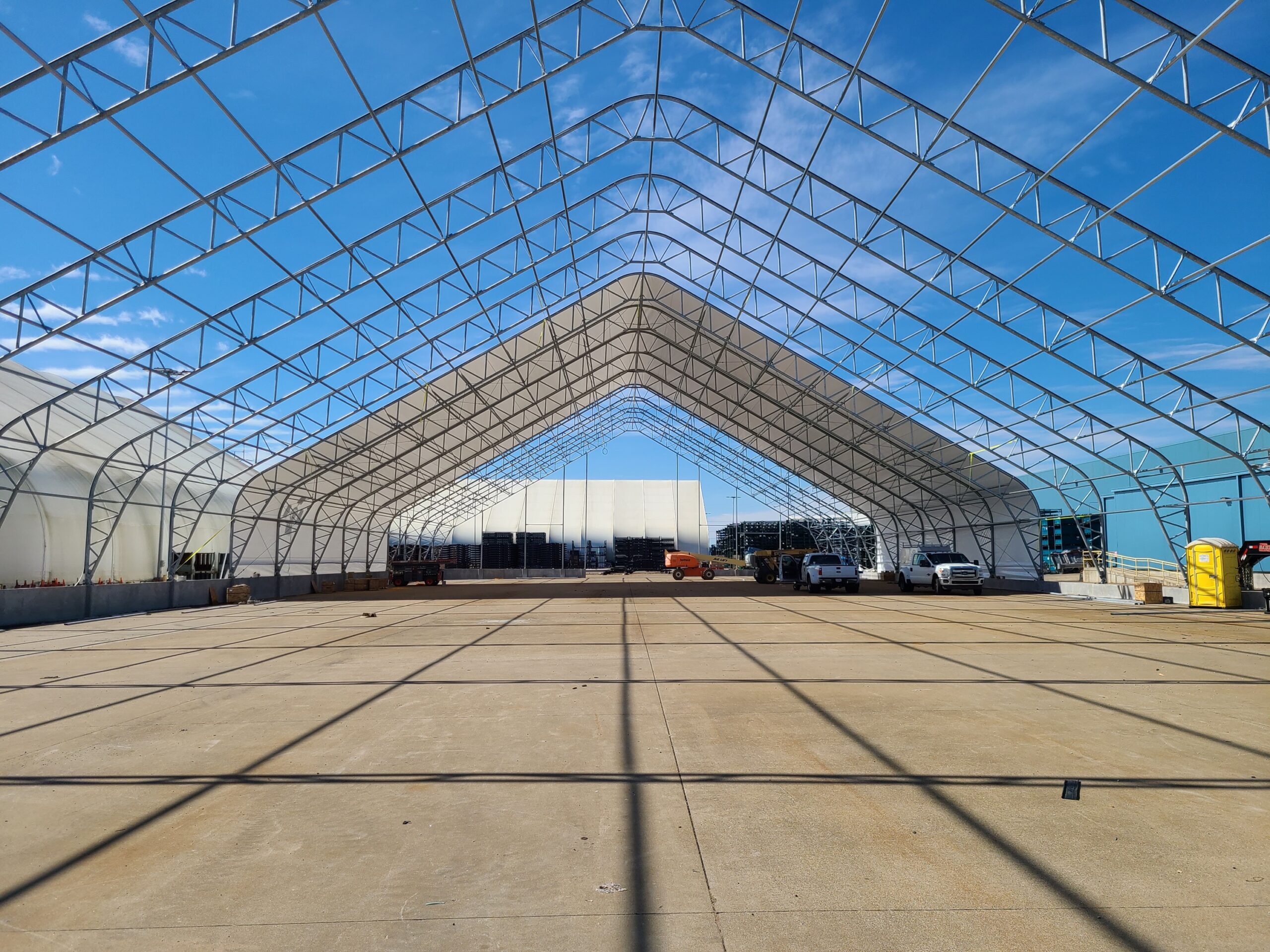
A keder panel system uses individual fabric panels rather than a single continuous cover. Each panel has a keder bead, a reinforced rope-like edge, sewn along its length. That bead slides into an aluminum extrusion track mounted on each structural truss, locking the panel in place under tension.
The keder track system runs along the top surface of each truss for the full length of the building. Panels span between adjacent trusses, so the number of panels in a building corresponds directly to the number of truss bays. Each panel tensions independently within its track, so the tension in one panel does not depend on the panels beside it.
A keder panel fabric building has more attachment points and more seams than a mono cover building, but the modular design provides a different kind of flexibility. Crews can remove and replace individual panels without disturbing adjacent panels or the structural frame. For operations that want targeted maintenance capability, replacing a single damaged or worn panel rather than scheduling a full re-cover, the keder panel system offers that option. To see how panels lock into the track under tension, watch this keder panel installation in action.
Why the Fabric Building Tension System Drives Cover Performance
All fabric covers relax to some degree after installation. The fabric stretches under load and UV exposure, which gradually reduces the tension. How each system handles that relaxation differs.
In a mono cover fabric building, crews re-tension at the base attachment points where the cover anchors to the sidewall. From there, they adjust tension across the full cover from those points. Because the cover is a single membrane, re-tensioning affects the full span at once. That keeps tension distribution consistent.
In a keder panel system, each panel tensions independently within its track. Crews re-tension panel by panel. This allows more targeted adjustment, but it also demands attention to every panel rather than the cover as a whole.
Climate, UV exposure, and consistent re-tensioning all shape long-term cover performance. In high-UV regions or areas with wide seasonal temperature swings, consistently tensioned covers outlast those left to relax and re-tension cyclically.
The fabric cover vs panel system decision in terms of long-term performance comes down to how the building will be maintained. A mono cover system rewards scheduled, full-cover maintenance. A keder panel system rewards ongoing, panel-level attention.
Fabric Building Tension System: Cover Replacement and Maintenance
Fabric building cover replacement planning differs meaningfully between the two systems.
For a mono cover building, replacement means scheduling a full re-cover, removing the existing membrane and installing a new one across the complete building. This is a planned event that requires a service window, and it is the moment to assess the steel frame condition, check hardware, and address any structural maintenance before the new cover goes on. Britespan’s re-cover program supports mono cover buildings through this process, extending the service life of the steel frame while refreshing the enclosure.
A keder panel building manages fabric building cover lifespan differently. Crews can replace individual panels as they wear or sustain damage, which spreads maintenance over time rather than concentrating it in a single re-cover event. A panel damaged by a falling branch or showing early UV degradation can be replaced without taking the full building out of service.
In practice, both systems reach a point where full cover replacement makes sense, when the majority of panels in a keder system are nearing end of life simultaneously, a full re-cover becomes more efficient than panel-by-panel replacement. Owners should assess fabric building membrane condition regularly regardless of system type, and establish a replacement plan well before the cover reaches the point of failure.
Which Fabric Building Tension System Fits Your Operation?
The right fabric building tension system depends on how the building will be used, how it will be maintained, and what the operational priorities are.
A mono cover system fits operations that prefer scheduled maintenance cycles and want the simplest cover profile, with the fewest seams and attachment points. It is a straightforward system that performs consistently when maintained on schedule.
Meanwhile, a keder panel system suits operations that want flexibility for targeted panel replacement, or where the building footprint and bay spacing make a modular cover approach practical. It is also well suited to applications where a single panel replacement can be handled quickly without scheduling a full service event.
Neither system is universally superior. Both are engineered cover solutions that perform well when properly installed and maintained. The decision comes down to matching the system to the operation.

What Buyers Should Understand Before Specifying a Cover System
Before specifying a cover system, buyers should confirm the following with their building supplier:
- Which tension system does the building use, and how do crews re-tension it?
- How long should the cover last under the conditions of the intended application?
- What does a re-cover or panel replacement involve, and what is the typical service window?
- Is the cover system backed by a warranty, and what does that warranty cover?
- What maintenance schedule does the supplier recommend to support full cover lifespan?
Understanding the tension and maintenance requirements of the cover system before purchase prevents surprises later and supports accurate long-term operational planning.
Britespan engineers cover systems for the full range of agricultural, commercial, and municipal applications across Canada and the United States. If you are evaluating cover system options for a new building or planning a re-cover on an existing structure, connect with the Britespan team to to discuss which fabric building tension system fits your application and your maintenance program.
Common Questions About Fabric Building Tension Systems
What is a keder panel system on a fabric building?
A keder panel system uses individual fabric panels with a reinforced keder bead along each edge. The bead slides into an aluminum extrusion track on each structural truss, tensioning the panel independently within the track. Panels can be replaced individually without disturbing adjacent panels or the structural frame.
How long does a fabric building cover last?
Cover lifespan depends on the cover material, UV exposure, climate, and how consistently the tension system is maintained. Most engineered fabric covers are designed for service lives measured in decades, with re-cover or panel replacement planned as part of a long-term maintenance program.
Can individual panels be replaced on a keder panel fabric building?
Yes. The modular design of the keder panel system allows individual panels to be removed and replaced without affecting adjacent panels or the structural frame. This allows targeted maintenance without scheduling a full re-cover event.
What is the difference between a mono cover and a keder panel system?
A mono cover is a single continuous fabric membrane tensioned over the full building frame. A keder panel system uses individual panels tensioned independently within aluminum tracks on each truss. Mono covers are replaced in a single full re-cover operation. Keder panel systems allow panel-by-panel replacement over time.
How often does a fabric building tension system need to be re-tensioned?
Re-tensioning schedules vary by system type, climate, and cover age. Most suppliers recommend a tension check as part of a regular seasonal maintenance program. A qualified technician can assess tension and make adjustments before the cover develops stress concentrations or begins to under perform.
Written by: Lindsay Kenny | Technical Review by: George Lawless