
A Better Commodity Building for Grain and Feed

When you store valuable inventory, a commodity building has one job: keep your product dry, safe, and easy to reach. Grain handlers, feedlots, and bulk material suppliers all rely on that protection. A fabric commodity building delivers it without the long timelines or high costs of traditional construction.
At Britespan, we’ve helped organizations across North America store grain, salt, feed, fertilizer, and more. Because every site differs, each building adapts to its location and its operation. Here’s what to know before you plan yours, and how one major grain handler put a fabric building to work.
What Is a Commodity Building?
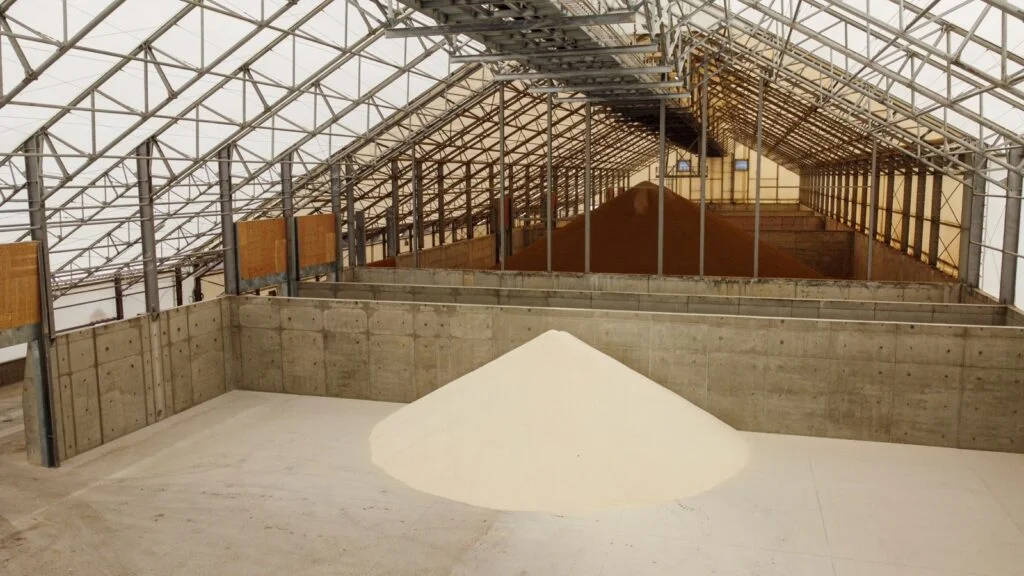
A commodity building is a storage structure for bulk goods such as grain, feed ingredients, and other dry materials. For example, on farms, people often call it a commodity shed or commodity barn. In that setting, it usually holds feed ingredients in separate bays so each one stays clean and easy to load.
Meanwhile, commercial operations use larger commodity buildings for high-volume storage. In those buildings, loaders, conveyors, and trucks need open space to move product in and out every day.
Real-Life Example: Parrish & Heimbecker’s 160′ × 455′ Storage Solution
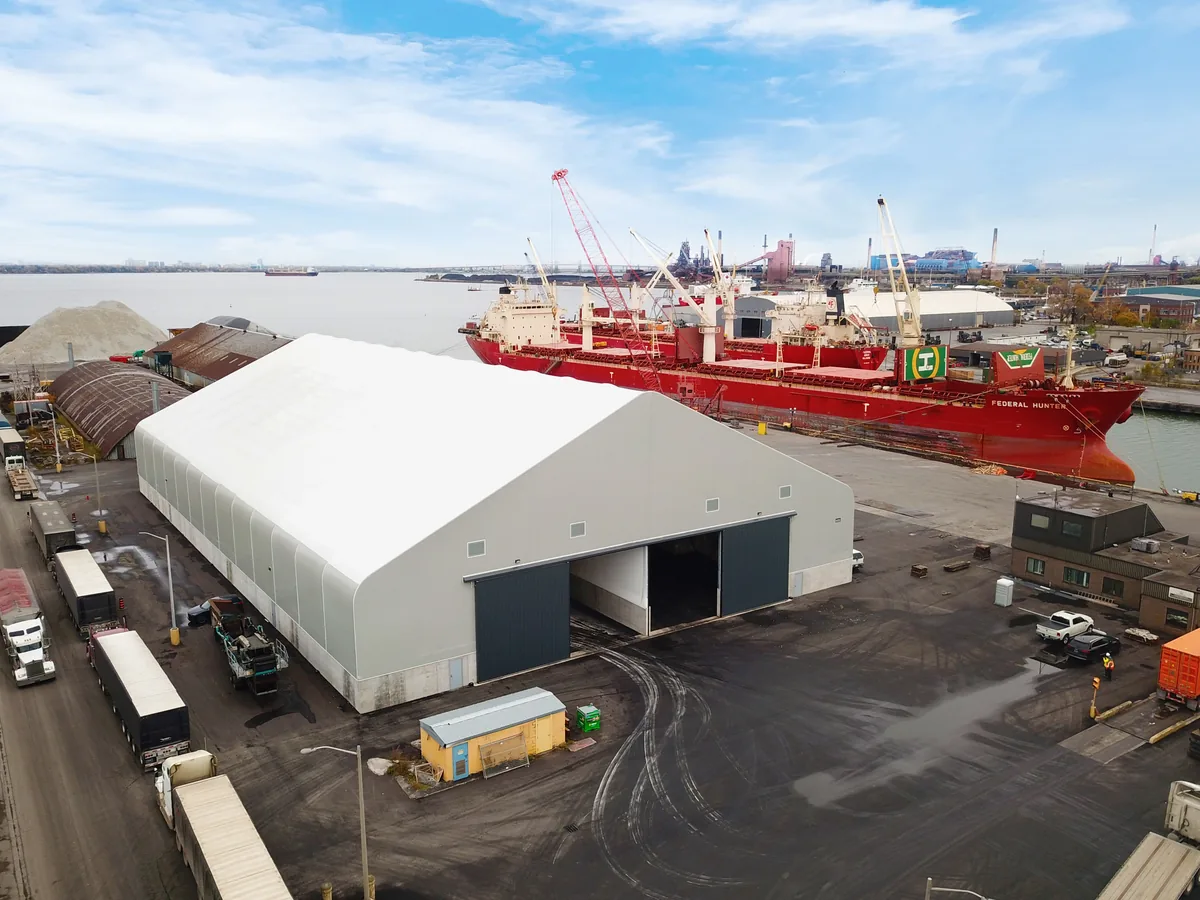
Gord Braun is the Manager of Capital Assets at Parrish & Heimbecker Ltd. (P&H), a major grain handler in Canada. At the company’s Gladstone site in Manitoba, his team needed to store large volumes of grain safely while controlling costs. So they chose a 160′ × 455′ Britespan Genesis Series fabric building.
“The most important feature is that it provides protection of our products from the elements, at a reasonable cost,” Gord explained. “The building allows us to easily and efficiently access the large amount of storage inside.”
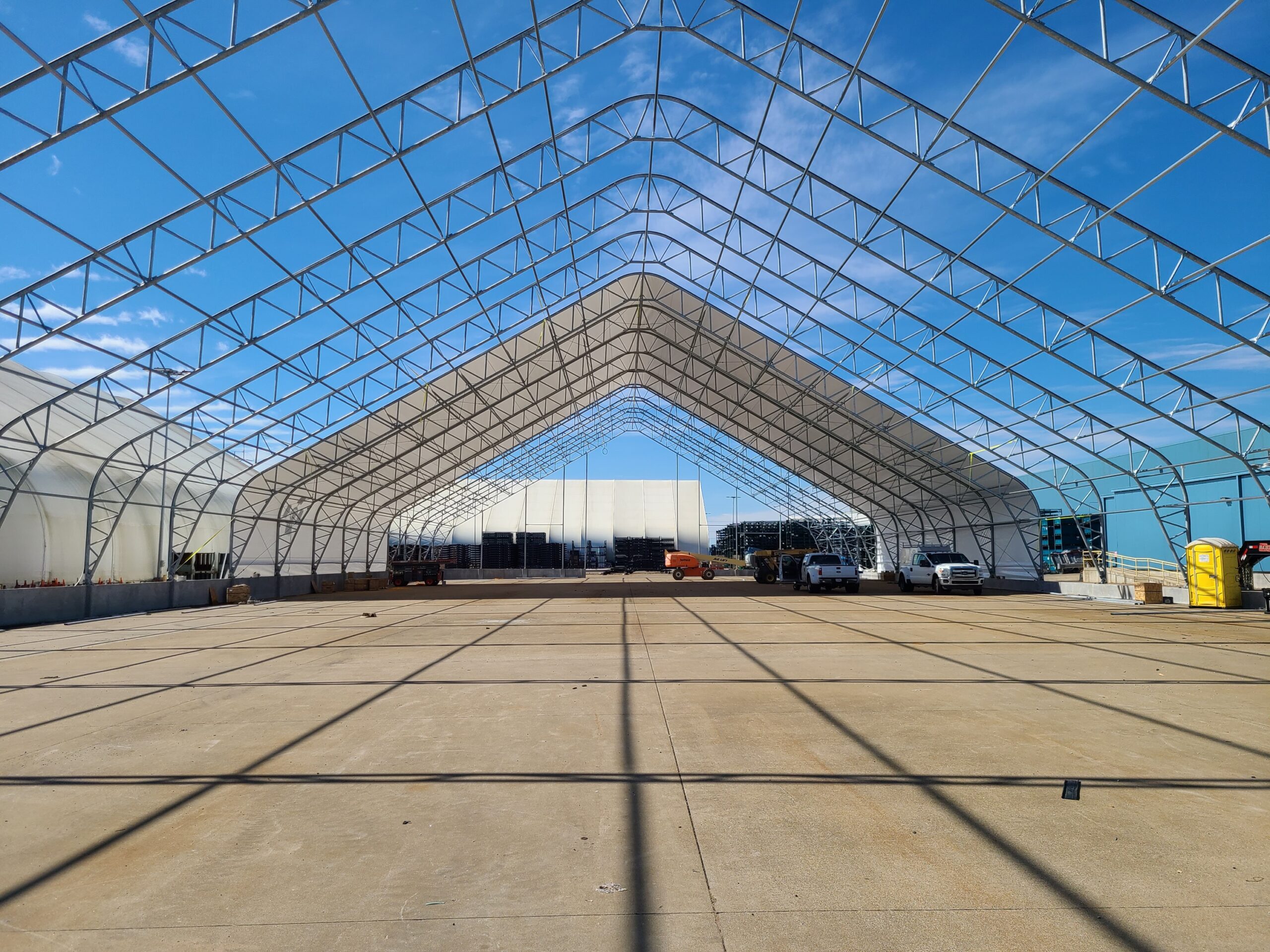
Price mattered, and so did function. Specifically, the facility needed to support high-throughput grain handling with plenty of room for equipment. Because the clear span interior has no columns, the team can run conveyors, elevators, and front-end loaders without obstruction.
“I would absolutely recommend Britespan to others,” Gord added. “They were willing to work with us to design the right building for our intended use. It makes economical storage a reality.”
Commodity Sheds and Barns for Feed Storage
On a livestock operation, a commodity shed keeps feed ingredients protected and close to where you mix rations. Instead of separate structures, you can design partitioned storage bays within one larger building. That way, each ingredient has its own space, and your loader reaches all of them under one roof.
If you store different commodities on the same property, you also have a second option. Specifically, you can install multiple structures, each sized for the product it holds.
Why Fabric Makes Sense for a Commodity Building
Compared with a steel or wood structure, fabric offers flexibility, performance, and long-term value. Beyond that, we engineer Britespan buildings to protect against wind, rain, snow, and UV exposure, all key threats to commodities like grain, feed, or fertilizer.
The benefits include:
Maximum use of space. With no interior columns, you can use the full floor area for stacking, equipment movement, and bulk material storage.
Bright, natural lighting. Translucent covers reduce the need for artificial lighting during the day, which cuts energy costs and improves visibility for workers.
Fast installation. Projects move from design to completion faster than conventional builds.
Foundation flexibility. Whether your site has concrete, asphalt, or engineered fill, we can match the building to it.
Scalability. You can design these buildings for temporary or permanent use, and even relocate them if your needs change.
Engineered for Performance
Britespan structures meet or exceed local building codes. In the United States, those codes typically reference ASCE 7 for snow and wind loads, and requirements vary by jurisdiction. Together, our galvanized steel frames and high-tension fabric covers perform in demanding climates.
Our elite fabrics also come with options for 25-year warranties. As a result, you’re investing in a structure built to last. For more detail, explore the advantages of a fabric structure.
Designed Around Your Operation
Every commodity storage need is different. That’s why our team works directly with you to understand your product type, volume, handling methods, and environmental challenges. Before you request a quote, think through these questions:
- What will you store, and how much? Grain, feed ingredients, salt, and sand each bring different needs.
- How will you move product? Loaders, conveyors, and trucks need clearance and door access.
- Do you need extra height? Loading equipment often needs more clearance at the eave.
- Where should the doors go? Side access can make bulk delivery easier.
- Will you store more than one commodity? If so, plan for bays or multiple buildings.
Whether you need extra height for loading equipment or side access for bulk delivery, we can design a commodity building that matches your workflow. From grain and feed to salt and sand, a fabric commodity building keeps product quality high and spoilage low, without overbuilding or overspending.
Common Questions About Commodity Buildings
What is a commodity building used for?
A commodity building stores bulk goods such as grain, feed ingredients, salt, sand, and fertilizer. Because it’s enclosed, it protects them from wind, rain, snow, and UV exposure while keeping them easy to load and move.
What’s the difference between a commodity shed and a commodity building?
People often use the terms interchangeably. However, on farms, “commodity shed” or “commodity barn” usually means feed storage with separate bays. Meanwhile, “commodity building” also covers larger commercial storage, like the P&H facility in Manitoba.
Can one commodity building store different commodities?
Yes. You can design partitioned storage bays within one larger building, or install multiple structures on the same property.
What foundation does a fabric commodity building need?
It depends on your site and your building. Fabric buildings can go on concrete, asphalt, or engineered fill, and your engineer confirms the right option for your loads.
Talk to an Expert
At Britespan, we make it easy to get started. Our team handles everything from engineering to delivery, and our certified dealers complete the installation on your timeline. When you’re ready, speak with your local dealer to plan the right commodity building for your operation.
Updated: November 2, 2026
Written by: Lindsay Kenny | Technical Review by: George Lawless