
Designing a Fabric Salt Storage Dome for Municipal Compliance
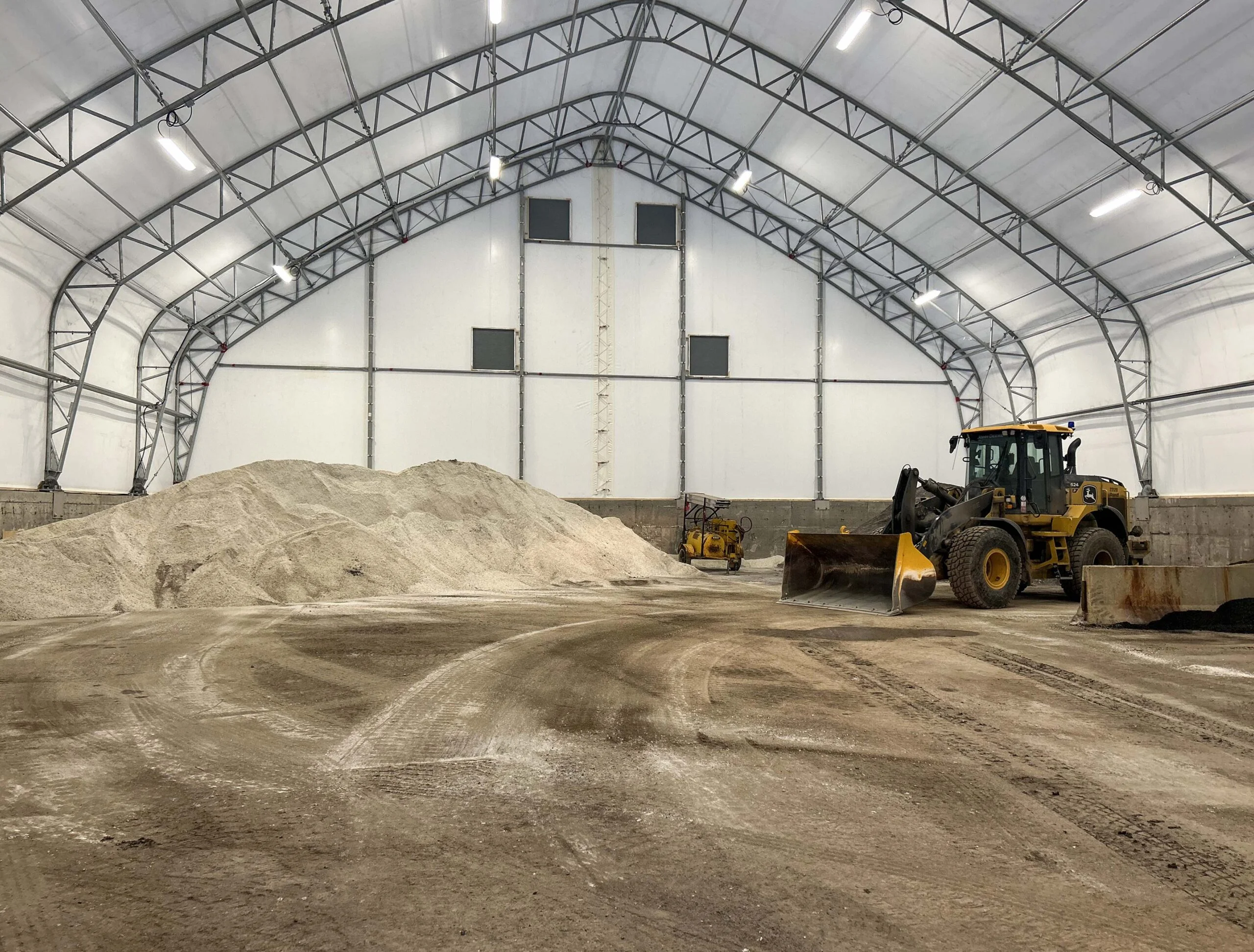
Some winters never give you a break. Trucks need to load fast, operators need clear sightlines, and material needs to stay dry so application rates stay consistent. A well designed fabric salt storage dome gives municipal teams a bright, roomy, and compliant space that keeps winter operations moving. This guide walks through sizing, safety, durability, and the compliance details that matter, using plain language and practical steps you can act on.
Why Municipalities Choose Fabric for Bulk Salt
Fabric buildings shine in public works because they arrive quickly, install cleanly, and create wide open interiors with even daylight. A municipal salt storage building built with a clear span frame removes interior columns, so loaders turn smoothly and trucks queue without conflicts. Translucent fabric brings in diffused light that reduces shadows and helps crews spot hazards. That visibility translates to safer movement and fewer delays during storm response.
A fabric covered salt storage solution also scales. When tonnage grows, many systems extend in length without a major rebuild. If you need a phased approach, temporary and permanent fabric buildings can be deployed on the same site as needs change.
How Big Should a Fabric Salt Storage Dome Be for My Tonnage?
Start with the target capacity for a full season or for your peak resupply window. Pile geometry matters, so use the typical angle of repose for road salt and plan wall heights that let you stack without overfilling. As a quick rule of thumb, confirm three things before you lock the size:
- Loader turning radius inside the pile area
- Door width and height for tandems and tri axles
- Clear span width that matches both your pile plan and traffic flow
These checks ensure the clear span fabric salt storage layout supports true throughout, not just parked tonnage on paper.
What Supports Salt Storage Building Compliance and Stewardship?
Compliance is real work but it follows a clear set of principles. A compliant salt storage building contains material, sheds water, and routes any runoff to where it can be managed.
- Containment and push walls: Curbs and push walls define the storage zone and prevent spillover during loading.
- Salt runoff containment: Grade the slab or base so water moves away from doors and into designated collection points. Add trench drains where appropriate.
- Apron design: A crowned or positively sloped apron keeps meltwater out and improves traction.
- Housekeeping lanes: Simple, visible lanes near doors and walls make it easy to spot and clean stray granules.
These details reduce environmental risk, keep inspectors satisfied, and help you protect your assets over the long term.
How Do We Reduce Corrosion Inside a Salt Building with Fabric?
Salt is hard on steel and hardware. A corrosion resistant fabric building uses a few proven strategies:
- Hot dip galvanized steel trusses: Full immersion zinc coverage protects inside and out, including edges and welds.
- Sealed connections and coated fasteners: Keep brine out of contact points.
- Localized liners and splash shields: Add protection in high impact zones near doors, corners, and loader paths.
- Ventilation plan: Gentle, steady air exchange helps manage moisture so surfaces dry between shifts.
Pair these choices with simple rinse routines and seasonal inspections. The goal is predictable upkeep, not ongoing repair work.
What Features Improve Safety and Efficiency on Storm Days?
Think of the building as a system that keeps loaders moving and truck cycles short.
- Loader friendly building design: Column free interiors, high straight walls, and ample door clearances make it easy to place and reclaim material.
- High cycle door systems: Doors sized to your largest truck improve flow and reduce idling. Controls should be simple, durable, and fast.
- Lighting to match winter hours: Translucent fabric goes a long way, but task lighting at doors, scales, and traffic intersections keeps visibility crisp after dark.
- Traffic plans with fewer crossovers: One way routes cut near misses and keep salt dry by reducing unintended spray patterns.
These small decisions compound into smoother shifts and fewer slowdowns.
What Foundation and Site Prep Do We Really Need?

Good foundations are not a luxury item. They keep frames true, doors moving, and fabric tensioned correctly.
- Curbs and edges: Raise fabric edges above splash zones and define the pile boundary.
- Anchorage and wind: Engineer anchors for your exposure category, especially on open yards or waterfront sites.
- Drainage and frost: Keep water moving off the perimeter and below the slab. Proper frost protection prevents heave that can twist door frames.
If you expect to extend length later, plan foundation modules that can grow with you.
Are Temporary and Permanent Fabric Buildings Both Viable for Salt?
Yes. Temporary and permanent fabric buildings can both be sealed, anchored, and engineered for local wind and snow. Use temporary structures for surge capacity, pilot yards, or when approvals require a smaller initial footprint. Use permanent structures for high cycle, long term salt programs with integrated containment, lighting, and doors. Many municipalities deploy both on the same site.
What Does a Realistic Project Timeline Look Like?
Every site is different, but fabric structures often shorten the path to service. While the building is being fabricated, you can prepare foundations, curbs, and aprons. Once components arrive, installation is measured in days or weeks, not months. That speed helps you hit a winter in service date without tying up the yard all season.
Spec Checklist You Can Use for RFQs
Use this list to align your team, then send it to your vendor with site photos and a simple sketch.
- Target capacity in tons and desired safety stock
- Interior clear span width and wall height
- Door type, width, and height for your largest truck and loader
- Salt runoff containment plan, drains, and apron slopes
- Corrosion package, including galvanizing, sealed hardware, and liners
- Ventilation approach and lighting levels for dark hours
- Foundation type, anchorage, and wind exposure details
- Delivery window and milestone dates for winter readiness
- Future length extension or second bay from day one

Final Thoughts
A well planned fabric salt storage dome is more than a roof over a pile. It is a bright, efficient workspace that protects people, equipment, and material while meeting compliance requirements. The combination of clear span interiors, corrosion conscious detailing, and fast installation gives public works teams a reliable tool for storm response. When the design supports visibility, safe traffic, and drainage, the building stays cleaner, the salt stays dry, and operations stay on time.
If you are starting from a blank page, check out our video about TJ Allen Trucking! After that, gather your tonnage targets, truck and loader dimensions, and a few site photos. With that, we can help you find a municipal salt storage building that fits your capacity, your yard, and your calendar, with room to grow when the next season demands more.