
The Trusted, Proven Choice for Farm Equipment Storage
Modern farm equipment is bigger, more expensive, and more sensitive than it has ever been. Harvesting equipment with folded headers stretches past 40 feet. High-clearance sprayers need full vertical clearance to park safely. Planters dwarf the machinery sheds they were meant to fit inside. Crop producers managing these fleets now treat the storage building as a planning decision as important as the equipment itself.
In reality, builders never designed conventional pole barns and older machinery sheds for what producers are parking today. A clear span farm equipment storage building built from engineered fabric addresses that gap directly. In operations running modern large equipment, the difference shows up every time a machine pulls in or out.
Why Modern Farm Equipment Has Outgrown Conventional Storage
Equipment has grown steadily in every dimension over the past two decades. Harvesting equipment’s taller. Headers are wider. High-clearance sprayers need more vertical room than most older farm buildings were designed to provide. Planters fold but still require significant width and length to park without tight maneuvering.
As a result, producers with older pole barns or conventional equipment sheds often park expensive machinery outside because it simply does not fit. In cold climates, that means freeze-thaw cycles working on hydraulic seals and electronics. In humid regions, it means moisture and UV exposure on painted surfaces and rubber components. When equipment represents hundreds of thousands of dollars per unit, that exposure carries real long-term cost.
In fact, the storage building is one of the few places on a modern farm where a modest infrastructure investment pays off. It directly protects a disproportionately large asset base.
What Clear Span Equipment Storage Actually Means
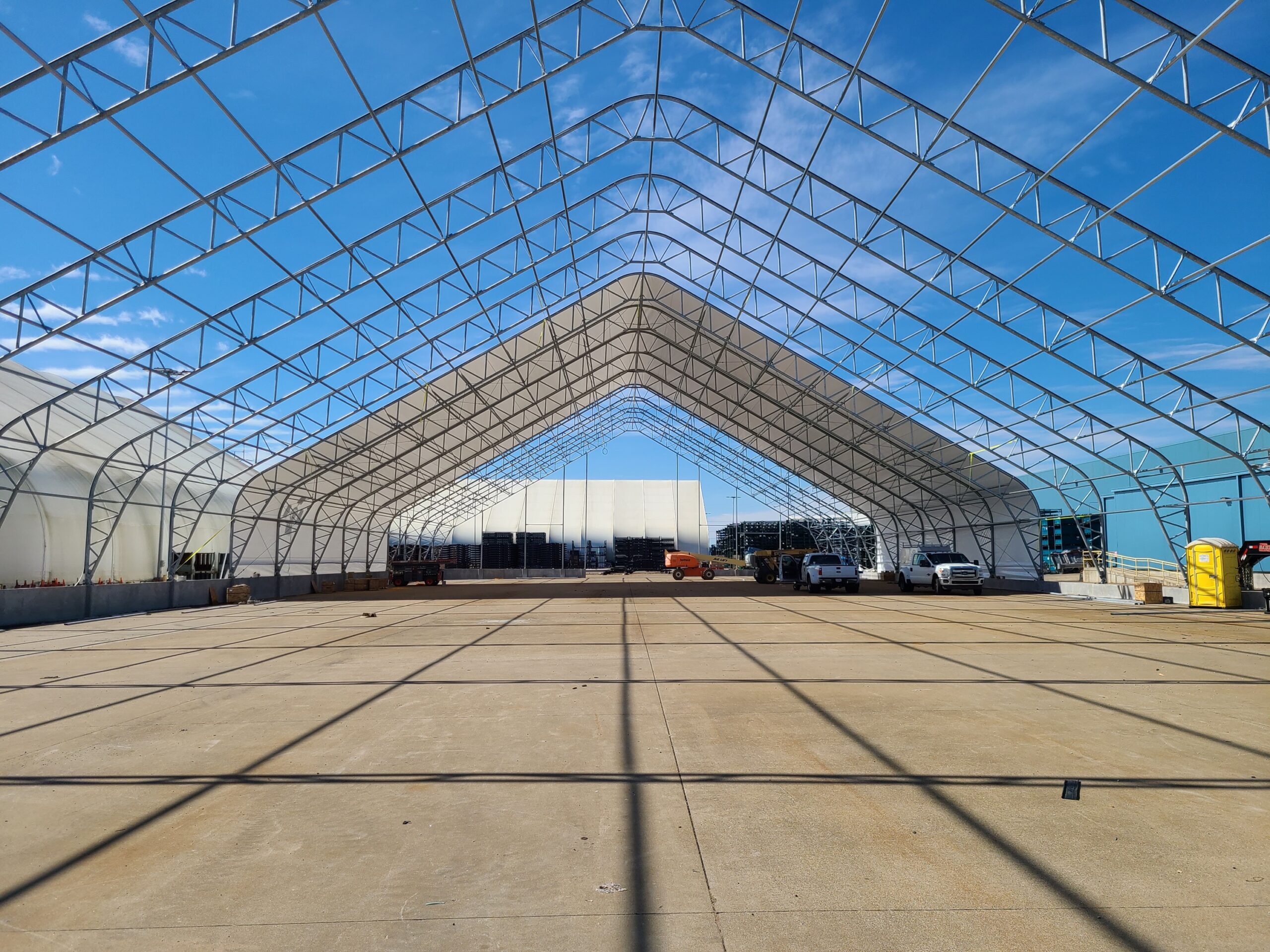
Clear span design means no interior columns anywhere in the building. The full floor width, from sidewall to sidewall, stays open and usable.
With large equipment, this is a functional requirement rather than a minor convenience. A harvester with a header cart attached, a sprayer with a folded but still-extending boom, or a planter on a cart all need unobstructed travel lanes. They have to park and exit without catching a post or clipping a structural member. In a conventional building with interior columns, those posts dictate where equipment can and cannot go. In a clear span fabric building, the operator decides.
Additionally, clear span design supports flexible layouts that change as equipment fleets evolve. As a result, producers are not locked into a fixed aisle configuration that made sense for last decade’s equipment but not today’s.

How Fabric Equipment Storage Handles Harvesters and Sprayers
A combine storage building has specific requirements that go beyond basic square footage. Eave height needs to accommodate the combine cab and rooftop components with clearance to spare. Door width needs to handle the machinery’s body plus header if headers are stored attached, or at minimum allow a wide header cart to pass through cleanly. A drive-through configuration, where equipment enters one end and exits the other, eliminates reversing entirely.
With high-clearance sprayers, vertical clearance at the door and along the travel lane is the primary concern. Many sprayers exceed 14 feet in height, and folded boom sections can extend well above the main frame during parking. A fabric equipment storage building sized and configured for sprayer dimensions protects that equipment from the moment it enters.
Beyond dimensions, fabric building properties add another layer of equipment protection. The translucent cover diffuses natural daylight evenly across the floor. This improves visibility for inspections and pre-season service work without harsh shadow bands. Hot-dip galvanized steel trusses resist corrosion from the dust, humidity, and crop residue typical of agricultural equipment storage.
Equipment Shed Design: Layout, Doors, and Daily Workflow
Equipment shed design shapes daily workflow in ways that compound across a full crop season. A well-planned layout reduces the time and risk involved in getting equipment in and out, which matters most when weather windows are tight and every hour counts.
In farm equipment storage buildings, drive-through bays work best for the largest machines. Combines and sprayers that pull straight through without reversing move faster and with less risk of contact damage. Side access doors for utility vehicles, pickups, and smaller support equipment keep daily traffic out of the main equipment lanes.
Aisle width between parked machines should account for the widest folded component on each piece. It also needs safe walking clearance for operators doing walk-around inspections. In practice, most operations underestimate aisle requirements. They end up with lanes that are tight the moment the fleet grows by one machine. A wide span storage building with a clear span interior lets you set aisle width generously from the start, with room to adjust as equipment changes.
Ventilation and Moisture Control for Long-Term Equipment Protection
Condensation is one of the most damaging and least visible threats to stored farm equipment. In a farm machinery shed with poor ventilation, warm air from outside contacts cooler metal surfaces and deposits moisture on electrical connectors, hydraulic fittings, bearings, and painted surfaces. Over a winter storage season, that cycling accumulates.
Fabric buildings manage this through a combination of passive ventilation and the thermal properties of the cover material. Ridge vents and adjustable sidewall openings allow steady air exchange that prevents humid air from stagnating around stored equipment. The fabric cover itself moderates temperature swings more gradually than bare steel roofing, which reduces the frequency and severity of condensation events.
In machinery storage buildings housing electronics-heavy harvesting machinery and GPS-equipped sprayers, that moisture control is worth factoring into the building selection alongside span width and door sizing.
Britespan Building Options for Farm Equipment Storage
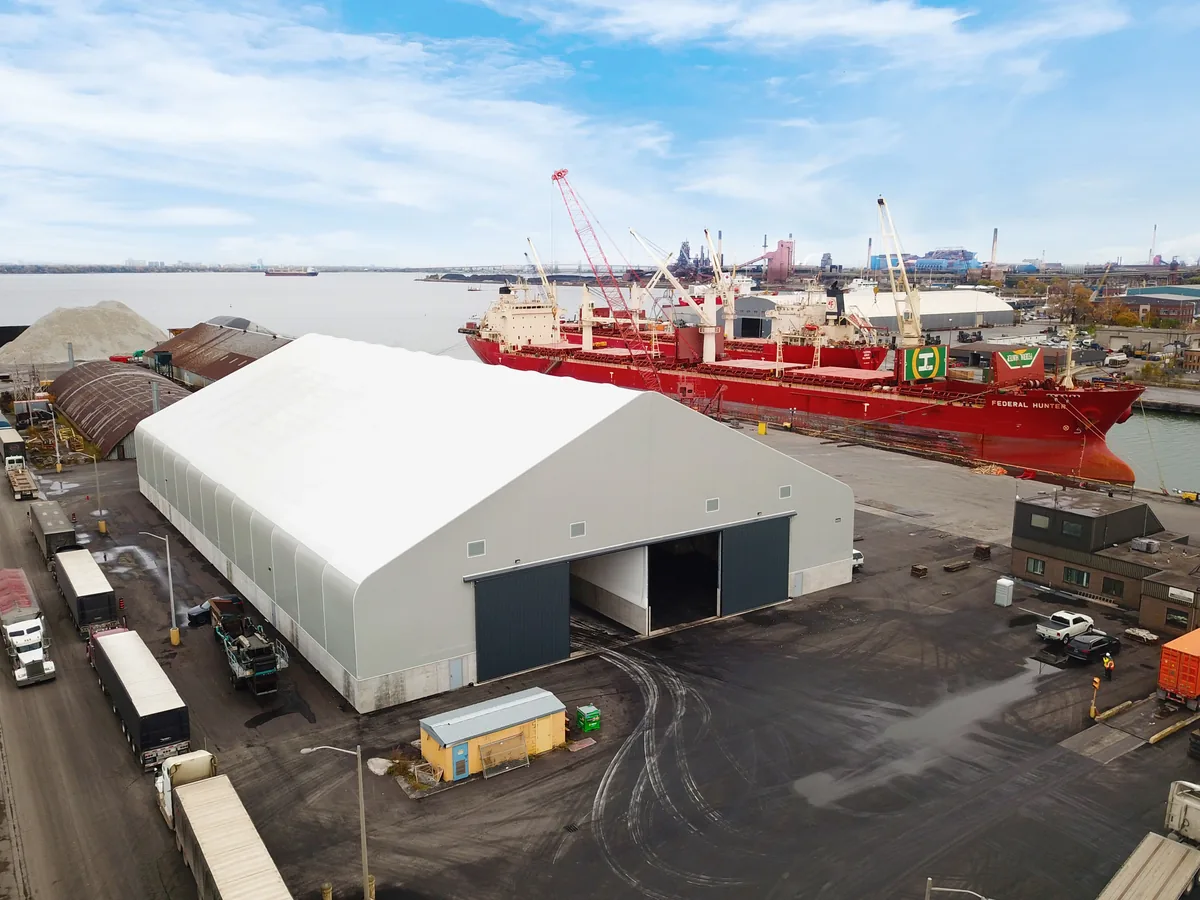
Britespan engineers fabric buildings for equipment storage applications across Canada and the United States, with two series particularly well suited to crop production operations.
The Atlas Series
The Atlas Series is a practical choice for operations storing mid-size equipment fleets or mixed machinery including tractors, grain carts, and smaller implements. Its straight sidewall design maximizes usable floor width along the full building length, and scalable widths accommodate a range of prefab equipment storage configurations without overbuilding for current fleet size.
The Apex Series
The Apex Series suits operations that need greater span width and taller clear heights for harvesters, large tractors, and high-clearance sprayers. Wider spans mean fewer compromises on aisle width, and the Apex eave heights accommodate the vertical clearance that modern large equipment demands. Both series are engineered to regional snow and wind load requirements and carry the structural integrity of a permanent agricultural building.
Britespan’s agriculture fabric buildings page covers available configurations across both series for crop and equipment storage.

A Working Example: Helmsview Farms
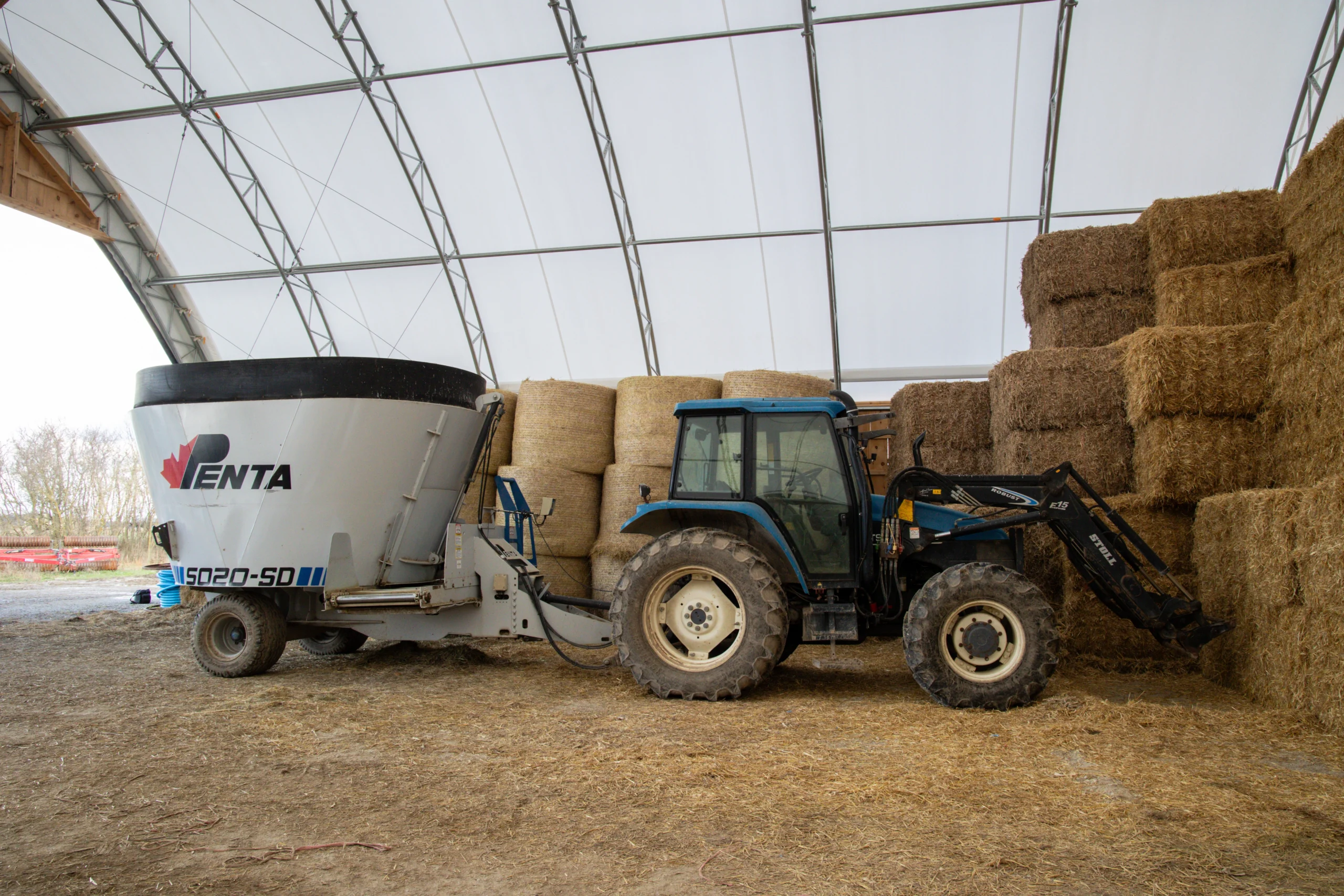
Helmsview Farms shows this kind of building in real-world use. The operation runs four Britespan structures across its site, including a 70 by 230 foot Apex Series building configured for combined hay and equipment storage.
That combined use reflects how many crop operations actually work. The same clear span structure that shelters large machinery through the off-season also handles hay and seasonal storage, which lets a single building earn its place across the full calendar rather than sitting idle between harvests. The Apex profile provides the span width and clearance that large equipment needs, while the open interior adapts as the operation’s storage mix shifts through the year. A tour of the Helmsview operation shows the Apex structure alongside the farm’s other Britespan buildings.
Planning a Farm Equipment Storage Building for Your Operation
Sizing a clear span farm building for equipment storage starts with the largest machine in the fleet and works outward. Measure the harvest equipment or sprayer at its widest and tallest point with attachments in the stored position, then set minimum door dimensions and eave height from those numbers before considering anything else.
From there, consider the following:
- Number of machines to be stored simultaneously and the aisle width required between them
- Drive-through versus single-entry door configuration based on site layout and daily workflow
- Side access doors for utility vehicles and daily-use equipment
- Site drainage and pad preparation, particularly for buildings storing equipment with hydraulic fluid and fuel
- Future fleet growth that might require additional span width or building length
A fabric building for equipment storage from an engineered supplier can typically be quoted, permitted, and installed within a single season when planning starts early. If you are evaluating equipment storage options for your operation, connecting with a local Britespan dealer is a straightforward first step. They can work through sizing, door placement, and engineering requirements based on your specific fleet and site. Connect with a Britespan building expert to start the conversation.
Common Questions About Farm Equipment Storage Buildings
How wide does an equipment storage building need to be for a harvester?
It depends on the harvester model and whether headers are stored attached or separately. As a starting point, measure the combine body width plus safe clearance on each side, then add aisle space for adjacent machines. Most modern harvesting equipment requires building widths of 60 feet or more for comfortable single-unit storage with room to work around the machine.
Are fabric equipment storage buildings considered permanent structures?
Yes. Engineered fabric buildings are permitted as permanent agricultural structures and require engineered foundations consistent with conventional construction.
How do you prevent condensation damage in an equipment storage barn?
Passive ventilation through ridge vents and adjustable sidewall openings maintains air exchange that reduces moisture buildup. Fabric covers also moderate temperature swings more gradually than steel roofing, which reduces condensation frequency on stored equipment surfaces.
Can a fabric building store both combines and smaller farm equipment?
Yes. A clear span building sized for the largest machine in the fleet can accommodate smaller equipment in the remaining floor space, often with room for a dedicated service area or parts storage zone.
What door size do I need for a harvesting machine storage building?
Door width should exceed the combine body width with header attached if applicable, and door height should clear the rooftop with several feet of margin. Many harvester storage applications use doors 24 feet wide or wider and 16 to 20 feet tall depending on the equipment involved.
Written by: Lindsay Kenny | Technical Review by: Brandon Rybicki