
More Than Salt Storage: How Municipalities Get Greater Value from Fabric Buildings
Most conversations about municipal fabric buildings start and end with road salt. Salt storage is the most visible application. It is also one of the most demanding environments a public works department manages. But effective public works storage covers far more than salt. It spans a long list of materials, equipment, and operational assets that municipalities need to protect and access year-round.
Public works departments manage growing inventories across shrinking budgets. In that reality, a storage building that serves multiple functions is not a convenience. In fact, it is a capital investment that pays back across every department that uses it. Here is a practical look at what municipalities are storing in fabric buildings beyond salt, and how engineered fabric structures are meeting those needs.
Why Public Works Storage Means More Than a Salt Shed
A dedicated salt shed solves one problem. A purpose-built municipal storage building solves several at once.
Modern public works operations manage a wide and growing inventory. Winter maintenance materials, road construction aggregates, fleet vehicles, seasonal equipment, and emergency supplies all require covered storage. In many municipalities, these materials end up scattered across open yards, temporary structures, or repurposed buildings that were not designed for the job. As a result, material quality degrades, equipment deteriorates faster, and operational efficiency suffers.
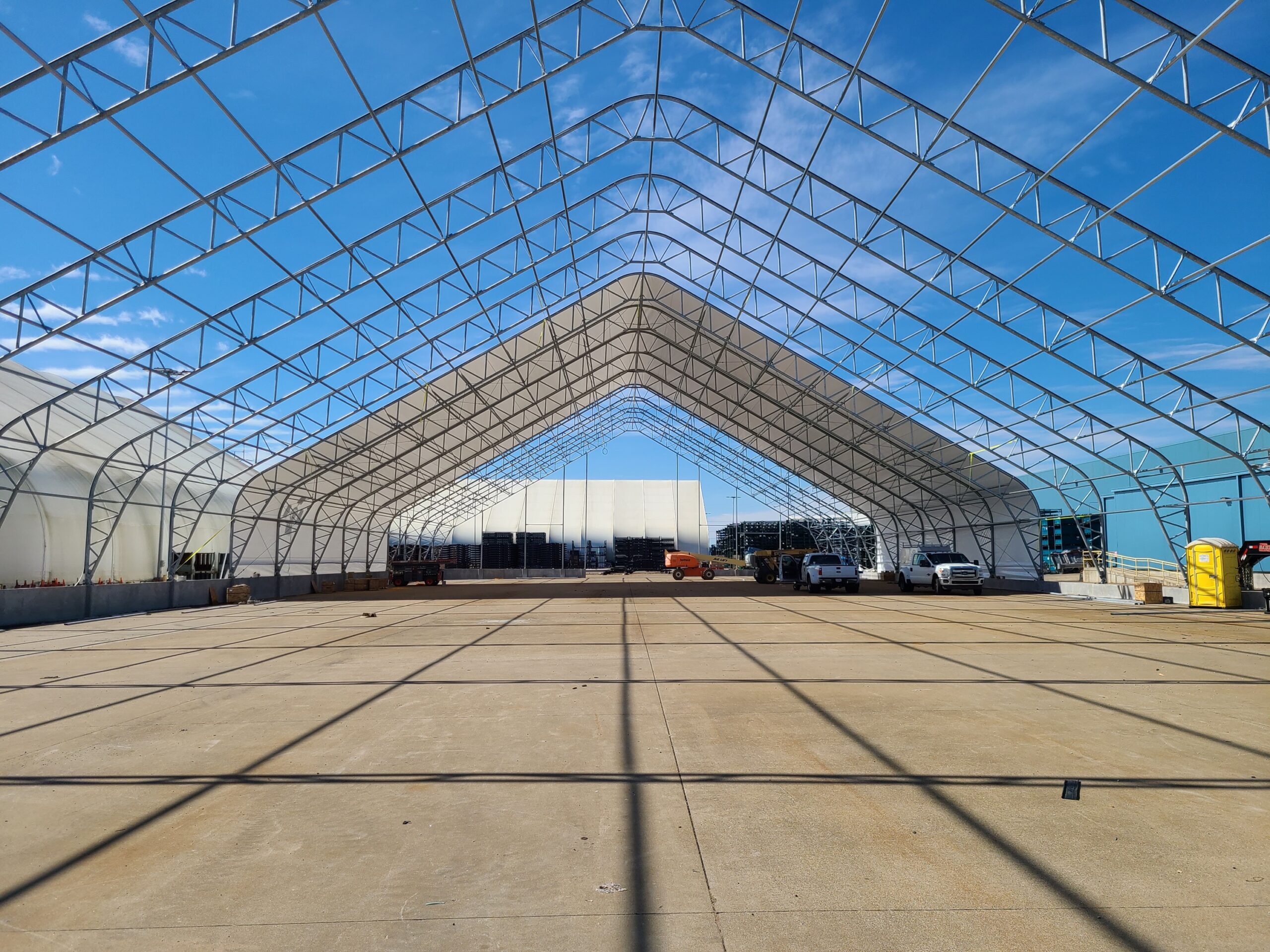
Instead, a clear span storage building designed for municipal use consolidates that inventory. The result is a controlled, accessible environment that supports daily operations across every season. In practice, the municipalities getting the most value from fabric buildings treat them as multi-purpose infrastructure. They are not single-commodity shelters.
Salt, Sand, and Brine: The Foundation of Winter Maintenance Storage
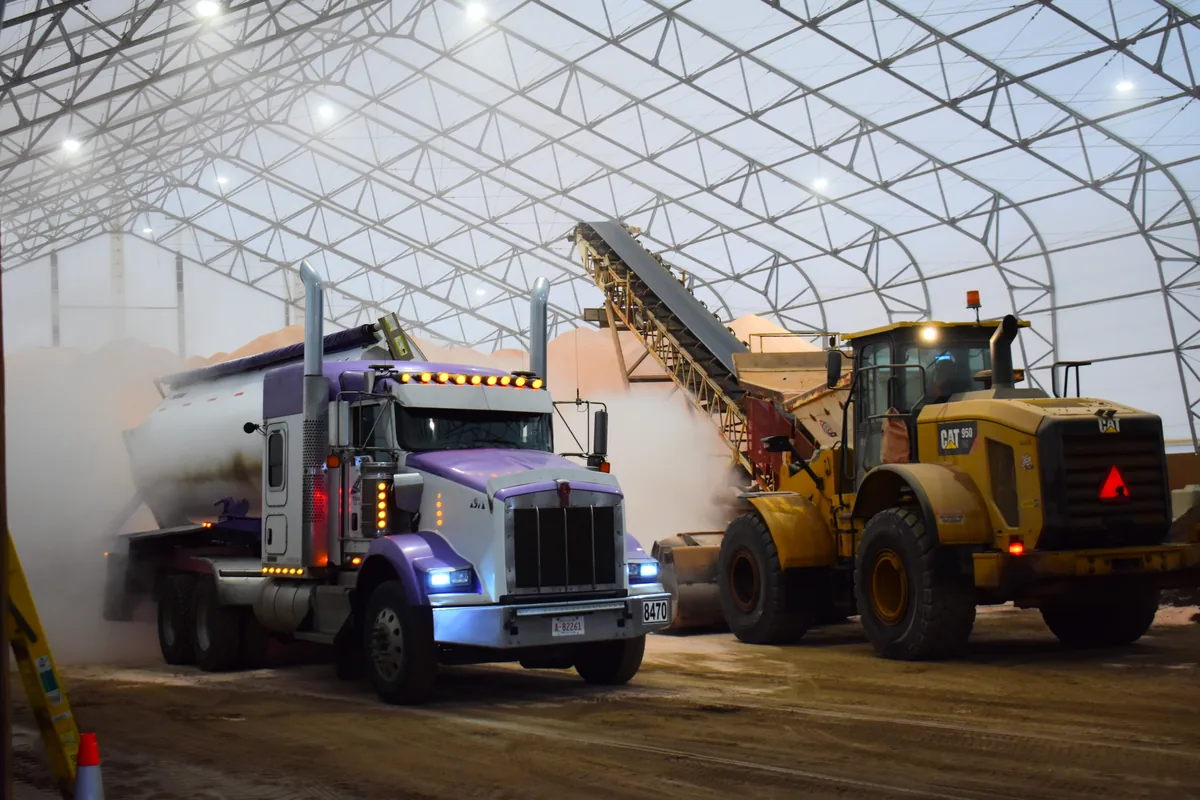
Salt and sand storage remains the most common entry point for municipal fabric buildings. A sand storage building that keeps material dry and accessible directly supports application consistency and reduces seasonal waste.
Liquid brine storage is increasingly important as municipalities shift toward anti-icing programs. These programs apply brine before a storm event rather than reacting after. Specifically, brine requires contained, covered storage with spill protection and operator safety measures built into the facility design. The same fabric building principles that work for dry salt and sand translate directly to liquid brine. The right containment detailing makes the difference.
Finally, road maintenance storage for de-icing chemicals, liquid additives, and pre-wetted salt programs rounds out the winter maintenance picture. Overall, these materials benefit from the same covered, corrosion-resistant environment that salt and sand require.
Project Spotlight: County of Brant Brine Storage Facility
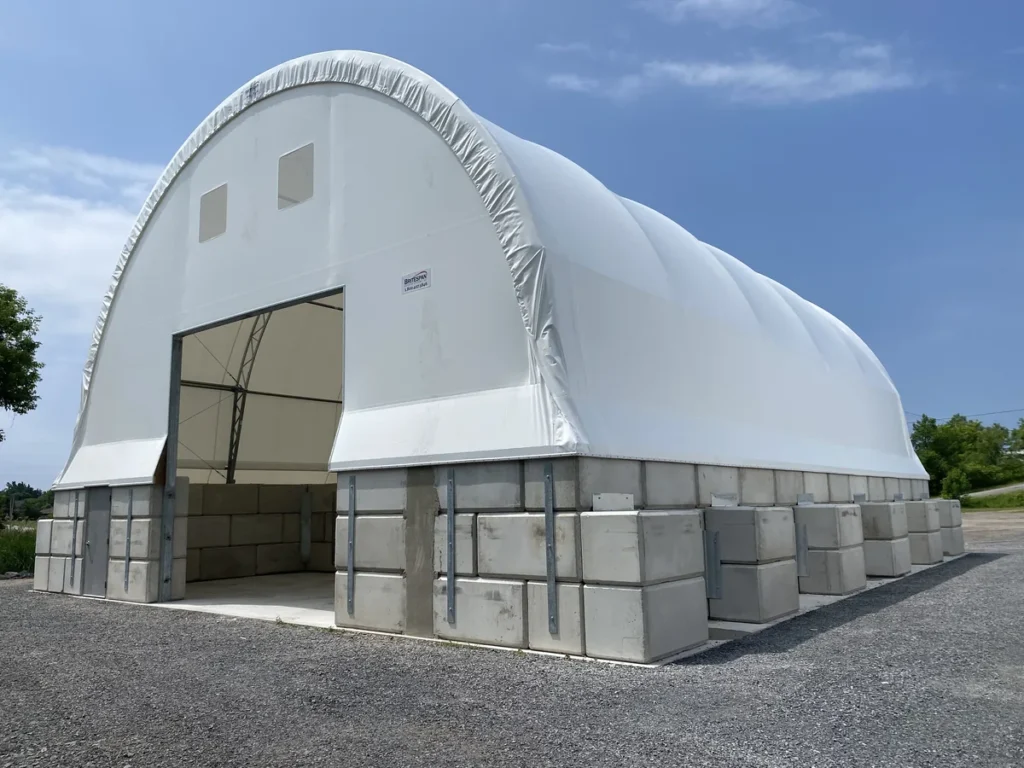
When the County of Brant needed a centralized, self-contained brine storage solution, they worked directly with Britespan’s engineering and building division to design a facility that fit their operational requirements and budget.
The result was a fabric building completed on time, under budget, and rated 10 out of 10 by the county. The building features 4-foot containment walls for spill protection, a bright and clean interior that supports safe operator access, and a design that allowed the county to leverage in-house staff during construction to reduce costs without compromising structural quality. Since completing the build, Brant County’s brine storage program has expanded significantly.
As the county put it: “They know what they’re doing. They’re professional and they have a great product. They are definitely leaders in this industry.” – Greg Demers, Director of Roads | Brant County
Watch the full County of Brant project testimonial here.
Aggregate, Gravel, RAP, and Road Construction Materials
Commodity storage buildings protect crushed stone, gravel, screening material, and recycled asphalt pavement from precipitation and contamination that degrade material quality and complicate application. As a result, covered aggregate storage reduces material loss, keeps gradations consistent, and eliminates the freeze and refreeze cycles that make stockpiled aggregate difficult to load for municipalities managing road maintenance programs.
Similarly, recycled asphalt pavement requires dry covered storage to remain workable for pothole patching and resurfacing programs. Cold mix asphalt has similar requirements. Both are valuable bulk material storage applications that lose effectiveness quickly when exposed to moisture and temperature extremes.
In addition, a clear span interior supports loader access across the full floor width without posts creating routing constraints. For operations running loaders and trucks simultaneously, that unobstructed space directly improves cycle times during peak demand periods.
Fleet, Equipment, and Seasonal Asset Storage
Municipal commodity storage in fabric buildings regularly extends beyond bulk materials to include the fleet and equipment that moves those materials. A clear span interior wide enough for a loader and a tandem truck to operate simultaneously is also wide enough to shelter that equipment when it is not in active use.
Municipalities commonly store the following alongside bulk commodities: plow trucks and heavy equipment during off-season maintenance, line painters and mowers between seasonal programs, trailers and utility vehicles that would otherwise sit exposed in open yards, and traffic signs, barriers, and road infrastructure supplies requiring dry organized storage.
A municipal warehouse building configured for mixed use reduces the number of separate structures a municipality needs to maintain, simplifying both daily operations and long-term capital planning.
Emergency Preparedness and Additional Applications
Public works storage buildings also serve municipal emergency preparedness programs. Flood barriers, sandbags, and emergency response equipment require dry, accessible storage that does not compete with daily operations. Furthermore, additional applications across municipal departments include compost and organic waste staging, recycling material sorting, utility infrastructure inventory, and parks and recreation seasonal equipment. Regardless, the requirements are consistent: covered, accessible, dry storage with clear span interiors that support the equipment used to manage the materials inside.
Durability and Compliance for Municipal Commodity Storage
Public works storage in municipal environments places specific demands on building materials and structural systems. Salt, brine, de-icing chemicals, and aggregate all create corrosive or abrasive conditions that conventional materials struggle to manage over time.
In addition, Britespan fabric buildings use hot-dip galvanized steel trusses that coat every weld and connection point after fabrication. Unlike pre-galvanized steel, post-fabrication galvanizing protects the full frame including edges, cuts, and connection points most vulnerable to corrosion in salt and chemical storage environments.
When the fabric cover reaches the end of its service life, a re-cover extends the building’s operational lifespan without replacing the structural frame. For municipal asset managers planning long-term capital replacement schedules, that separation of structure and enclosure provides meaningful lifecycle value. To address this, Britespan buildings are also available through Sourcewell cooperative purchasing, which simplifies procurement for municipalities operating within public tendering frameworks.

Britespan Building Options for Public Works Storage
Britespan engineers fabric covered storage for municipal applications across Canada and the United States, with building series suited to the full range of public works needs.
The Magnum Series suits contained storage applications like brine facilities, chemical storage, and smaller municipal commodity programs. It fits operations where a compact, purpose-built footprint is the priority. As the County of Brant project demonstrates, the Magnum delivers a controlled, compliant storage environment. It supports operational programs from day one.
The Apex Series suits mid-size municipal operations handling mixed storage needs. That includes aggregate, fleet equipment, seasonal assets, and road maintenance materials within a single clear span footprint. Its building profile supports efficient snow shedding in northern climates and accommodates the equipment access that mixed-use municipal storage requires.
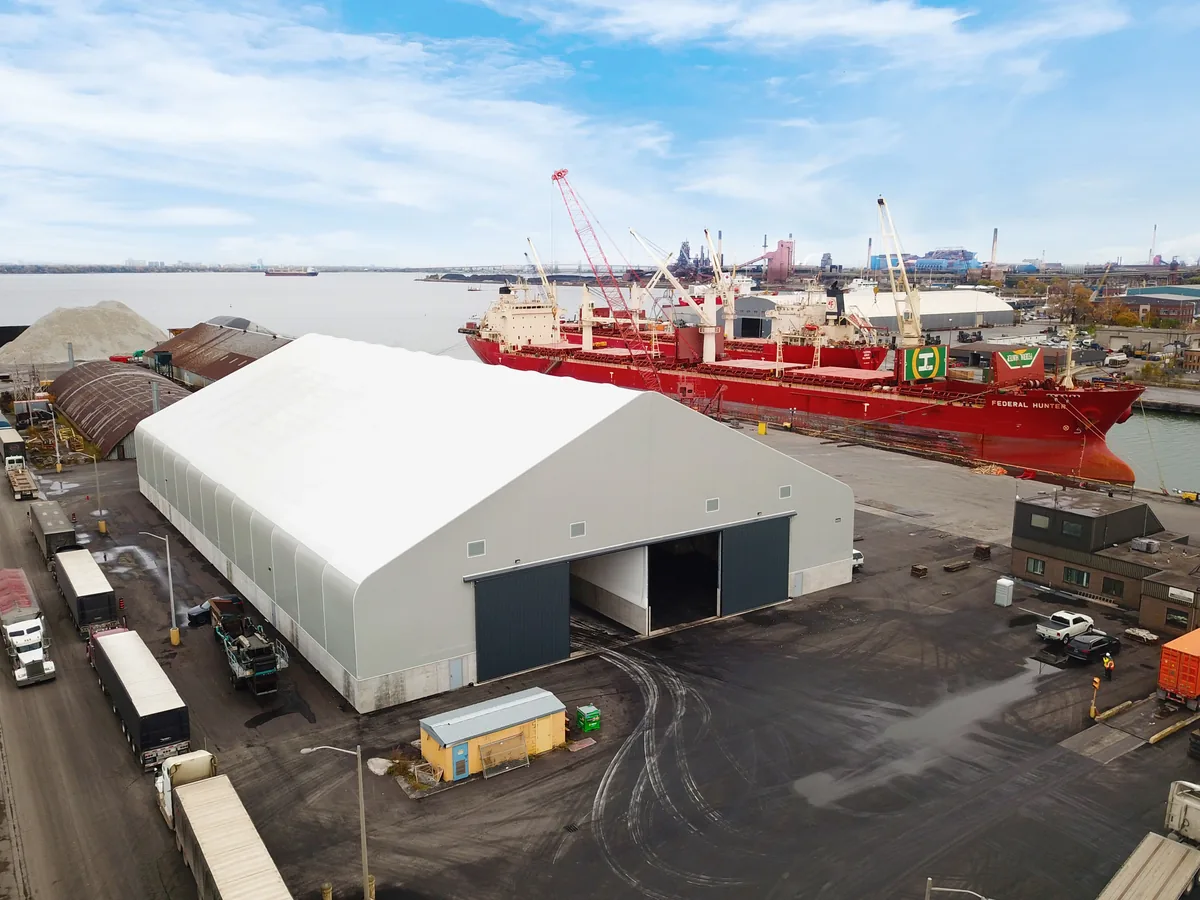
Additionally, the Genesis Series handles large-scale municipal fabric building applications where span width and interior volume are the primary requirements. For municipalities managing high-tonnage aggregate programs, large fleet inventories, or multi-commodity storage under a single roof, the Genesis delivers the interior scale that full-service public works operations demand.
All three series are engineered to regional load requirements and carry the structural documentation that municipal permitting requires. In addition, the municipal industry page covers all the available configurations and use cases across all series.
Planning a Public Works Storage Building
Sizing a public works storage building starts with a full inventory of what needs to be stored and how it gets moved. The largest piece of equipment or the biggest material pile determines the minimum clear span width and eave height. Commodity mix shapes the floor layout, containment requirements, and access point configuration from there.
Key planning considerations include whether liquid or corrosive materials require containment walls, the dimensions of the largest loader or vehicle operating inside, seasonal use patterns across the year, site traffic flow, and whether Sourcewell cooperative purchasing fits the project timeline.
As a result, a well-planned public works storage facility serves the operation for decades with routine maintenance and a planned re-cover. If your department is evaluating fabric building options for a new or expanded storage program, connect with the Britespan team to start the conversation.
Common Questions About Municipal Public Works Storage Buildings
What materials can municipalities store in a fabric building?
Fabric buildings store a wide range of municipal materials. These include road salt, sand, liquid brine, aggregate, recycled asphalt pavement, cold mix asphalt, fleet vehicles, seasonal equipment, emergency supplies, and utility inventory.
Are fabric storage buildings compliant for municipal use?
Yes. Engineered fabric buildings are permitted as permanent structures and meet local building code requirements including structural load ratings and environmental compliance standards applicable to bulk material storage.
Can a fabric building store both equipment and bulk materials?
Yes. Clear span interiors support mixed-use configurations that combine bulk commodity storage with fleet and equipment storage in a single building footprint, with floor layouts configured to match operational workflow.
How does a fabric building handle corrosive materials like brine and salt?
Hot-dip galvanized steel trusses protect every weld and connection point from corrosion caused by salt, brine, and de-icing chemicals. Containment walls, sealed connections, and coated fasteners add further protection in high-exposure zones.
Are public works storage buildings available through cooperative purchasing?
Yes. Britespan buildings are available through Sourcewell cooperative purchasing, providing municipalities with a compliant procurement pathway that reduces the administrative requirements of a full public tender process.
Written by: Lindsay Kenny | Technical Review by: George Lawless