
Fabric Roof Barn Buildings You Can Expand as Your Herd Grows
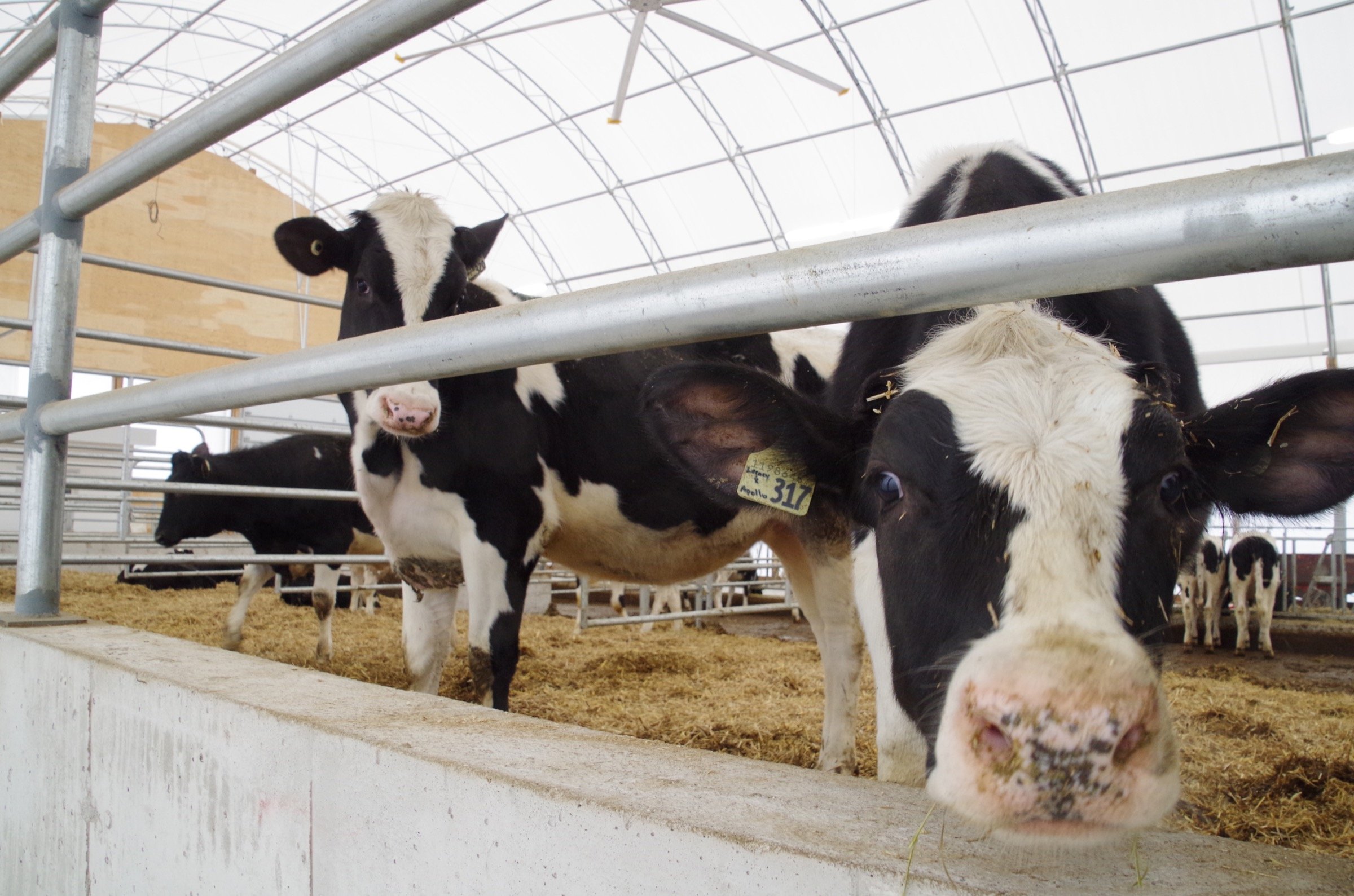
Modern dairies are asking more from every square foot. Fabric roof barn buildings answer with bright, open interiors. As a result, they move cows calmly, speed chores, and make daily work safer. If you are comparing options for a new freestall, a transition barn, or a re-cover, then this guide shows how a clear span fabric barn supports cow comfort and long-term value in a practical, dairy-first way.
Why Do Fabric Roof Barn Buildings Fit Dairy So Well?
Fabric barn buildings diffuse daylight across the entire footprint, which reduces shadow contrast and helps cows stay calm on the move. Additionally, the clear span interior removes posts from alleys and pen centers, so loaders, mixers, and scrapers travel in predictable paths without tight turns. In addition, vent openings are simple to use and easy to keep consistent across seasons, which improves dairy barn airflow and reduces humidity and ammonia.
Day-to-day benefits you feel right away:
- Faster feed delivery and scraping with fewer bottlenecks
- Better visibility for checks, sorting, and chore safetyDrier stalls and pack when airflow and drainage are tuned together
To learn more, explore typical use cases, outcomes and compare profiles.
Case Study: Improving Efficiency with Fabric Roof Barn Buildings
David Bent Farms Ltd.
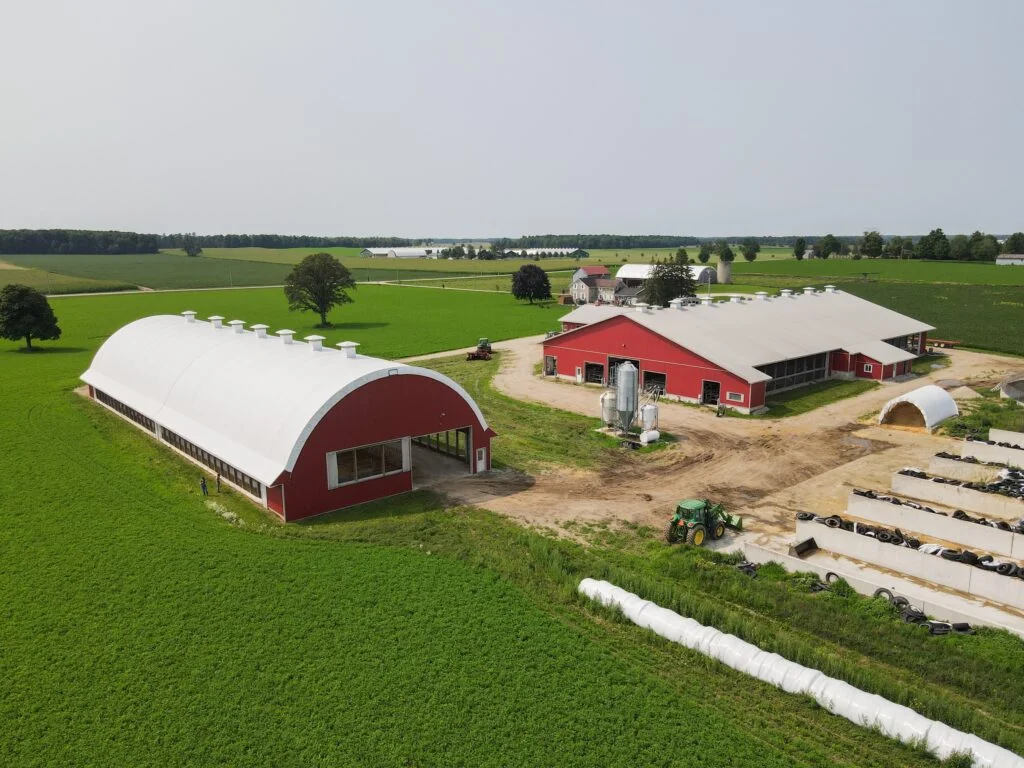
At David Bent Farms Ltd. in Middleton, Nova Scotia, growth meant rethinking how their dairy operation was set up. As herd size increased, maintaining efficient milking routines became more difficult. As a result, the team needed a more efficient layout.
To support this expansion, the team installed a 100 × 120 Epic fabric roof barn building. As a result, the layout improved significantly. The clear span fabric barn design created an open, unobstructed space, allowing for better movement of both cattle and equipment while integrating seamlessly with their robotic milking system.
As a result, the impact was immediate. The expansion added 36 stalls, bringing total capacity to 120. At the same time, improved workflow inside the dairy cow fabric barn reduced daily milking time by 76 percent, helping the operation run more efficiently while supporting their 170 kg quota.
In addition, the natural light and improved dairy barn airflow created a more comfortable environment for the herd, supporting long-term health and productivity.
Overall, this project shows how fabric roof barn buildings can help dairy farms scale efficiently while improving both performance and working conditions.
How Do Fabric Roof Barn Buildings Improve Cow Flow?
Firstly, every freestall decision touches cow movement. As a result, a clear span fabric barn gives you uninterrupted lanes for steady traffic to feed and stalls. As a result, without interior columns, you can size crossovers for your herd and equipment, keep neck rail lines clean, and place waterers where cows can drink without blocking others.
Practical layout tips:
- Align feed lanes for one-way equipment travel to reduce backups at the bunk
- Size alleys for your loader and bedding strategy, then keep turns gentle
- Use pen fronts and crossovers that support calm returns to stalls after milking
What Should Fabric Roof Barn Buildings Include in Dairy Freestall Design?
In practice, a good dairy freestall barn design starts with stocking density, stall geometry, and a clear plan for bedding and manure handling. So, fabric roof barn buildings make the most of that plan by pairing open spans with adjustable sidewalls and ridge outlets that match your climate.
Key elements to discuss with your designer:
Stalls and alleys: size to mature cow body length and lunge needs, with scraper routes that fit your equipment
Feed access: set bunk length and crossovers to reduce competition and keep cows eating instead of waiting
Water access: place waterers on high traction surfaces, in locations that do not create social bottlenecks
Future growth: modular length additions allow you to expand as the herd grows without reworking the site

What Ventilation Works Best in a Fabric Livestock Barn?
In practice, ventilation is about steady, gentle exchange. In a fabric livestock barn, height creates stack effect while ridge outlets and sidewall curtains provide controllable paths for air. The goal is to remove moisture and contaminants without chilling resting cows.
Vent fundamentals that support milk quality:
- Ridge outlets: continuous open area or chimneys to exhaust warm, moist air
- Sidewall curtains: simple controls you will use every day, sized for the building length
- In-cow-zone movement: air speeds that keep bedding drier while avoiding drafts on stalls
How Do Materials and Frames Hold Up Over Time?
At the same time, the frame is the backbone. Hot dip galvanized steel helps resist corrosion in splash zones, wash areas, and along feed lanes. Furthermore, the fabric membrane is selected for UV stability and light diffusion, which supports a natural light dairy barn while keeping glare low. Down the line, re-tensioning and routine checks preserve membrane performance.
Planning for life cycle:
- Follow a simple schedule for tension checks and hardware inspections
- Use curb heights and splash details that protect steel near manure and moisture
- Plan for re-cover cycles when the time comes, which can refresh the envelope with minimal interior disruption
For more information, you can also explore our warranty for long-term coverage details.
How Do Fabric Roof Barn Buildings Manage Energy and Cost?
As a result, a fabric roof barn building starts with advantages that lower operating costs. For example, diffuse daylight reduces daytime lighting hours. In turn, natural airflow reduces fan runtime in shoulder seasons. Plus, faster installs help you hit seasonal windows and limit interruptions to milking routines. When you expand length later, modular bays let you add space without a new footprint or major foundation changes.
Cost levers to consider:
- Shorter schedules to reach useful occupancy
- Daylighting that lowers energy use for task visibility
- Vent strategies that control humidity and reduce bedding waste

What Do I Need To Specify For Dairy Cow Fabric Roof Barn Buildings?
To get the best results, dial in these items during early planning to match your herd and workflow.
Clear widths and heights
Choose a span that removes interior posts and an eave height that fits your loader and bedding delivery. A dairy cow fabric barn benefits from generous clearance at pen fronts and in transfer lanes.
Curtain and ridge packages
Select curtain height and ridge outlet area that make daily adjustments simple. Consistency matters more than complexity.
Openings and access
Size doors for your largest machine and consider door placement that supports one-way travel and safe walking paths for staff.
Foundations and drainage
Use curbs and slopes that move water away from bedding and protect steel from splash. Plan washdown routes and keep utilities clear of manure lanes.
Lighting and electrical
Bright, even light supports inspections and safety. Plan receptacles and drops where you need them for fans, scrapers, or future equipment.
Quick Answers for Busy Farmers
What makes fabric roof barn buildings effective for dairy cows?
For example, even daylight, clear spans without posts, and controllable ventilation support calm cow flow, drier stalls, and efficient chores.
How does a clear span fabric barn help labor efficiency?
Open interiors reduce tight turns, shorten routes, and speed feeding, scraping, and bedding delivery.
What are best practices for fabric barn ventilation in dairy?
Provide stack height, ridge outlets, sidewall curtains you will use daily, and targeted fans where needed to maintain steady exchange.
Can I expand a fabric barn later?
Yes. Modular length additions allow you to grow the footprint with minimal disruption to active pens.
Let’s Talk About Your Fabric Roof Barn Building
When a dairy barn is designed around how cows move, how crews work, and how conditions change through the year, the payoff shows up quickly. Clear span fabric roof barn buildings create calmer cow flow, safer equipment access, and interiors that stay brighter and drier with less effort. Over time, that translates into smoother chores, more consistent bedding conditions, and a facility that adapts as herd size and management strategies evolve.
In summary, the real advantage is flexibility without compromise. Modular expansion allows you to grow without starting over. Durable materials reduce long-term upkeep. And ventilation strategies designed for daily use help protect animal comfort while controlling operating costs season after season.
Finally, if you are planning a new dairy barn, expanding an existing facility, or evaluating a re-cover, a fabric solution can offer both immediate functional gains and long-term value. Reach out to our team to talk through your goals, layout needs, and timeline. Furthermore, a well-planned fabric barn should not just house cows, it should make the entire operation easier to run for years to come.
Written by: Lindsay Kenny | Technical Review by: George Lawless